after experts excluded, slack fill class action fails

Krause-Pettai v. Unilever United States, Inc., — F.Supp.3d
—-, 2023 WL 6429805, No. 20-cv-1672-AGS-BLM (S.D. Cal. Sept. 30, 2023)

This case is about “nonfunctional slack fill,” or useless
empty space, inside underarm-deodorant sticks. The court rejected the claim on
summary judgment despite not finding it completely preempted.

Both the FDCA and California’s Sherman Food, Drug, and
Cosmetic Law set the same baseline requirements for drugs and cosmetics: an
item is “misbranded” if “its labeling is false or misleading in any particular”
or if its “container” is “filled as to be misleading.” Because the Sherman
Law’s standard “is identical to” the FDCA’s, it is not preempted. But the
California Fair Packaging and Labeling Act (CFPLA) is explicitly preempted
because it states that any opaque container is “misleading” if “it contains nonfunctional
slack fill,” with some exceptions. Such a per se rule was not identical to the
FDCA. That is, a state legislature can’t determine that something within the
FDCA’s scope is misleading as a matter of law.

But the preemption wasn’t complete. The FDA’s failure “to
issue specific regulations” about nonfunctional slack fill does not mean
manufacturers may make cosmetics with “any” amount of it, even
refrigerator-sized deodorant sticks that are 99% empty. “[M]ere deliberate
agency inaction—an agency decision not to regulate an issue—will not alone
preempt state law.”

On to the merits. The court excluded plaintiffs’ experts.
The expert on product packaging didn’t adequately explain his testing
methodology or resolve apparent contradictions in his reports about how many
different products he tested; he didn’t have written records of what he did.

As for the consumer perception expert, plaintiffs offered
his opinions that: (1) consumers “spend limited time examining package labeling
information” and generally “assume that larger packages contain a larger
quantity of a product”; (2) “[n]et weight labeling information on product
packages is rarely examined (or understood) by consumers”; and (3) due to these
consumer tendencies and “general unfamiliarity with the concept of slack fill,
the relevant Unilever product package features suggest” that Unilever consumers
got “less product than they might have anticipated.” But he didn’t seem
familiar with the facts; plaintiffs’ central allegation was that Unilever’s
sticks were in larger packaging than competitors’ with the same net weight, but
he claimed that Unilever’s products “are roughly the same size (or larger) than
those used by its competitors,” but “contain less actual product.” He also
apparently never examined the deodorant and antiperspirant market, focusing his
research mainly on food and beverages; his two studies of grocery-shopping
habits that looked slightly beyond that didn’t provide much help, because one
of them lumped everything together, while, in the other, the two non-food
items—shampoo and toothpaste—had the longest average selection times, with
shoppers spending twice as long choosing shampoo as bananas. “If anything,
these results suggest that food-buying habits don’t apply equally to other
commodities.” Thus, the adequacy of his data was concerning, and plaintiffs
didn’t explain why his results could be generalized to deodorant buyers.

With the experts gone, plaintiffs’ deposition testimony that
they were deceived was insufficient to show that reasonable consumers were
likely to be deceived, because they were “unaccompanied by other pertinent
evidence of deception. By contrast, the testimony of even a single individual
may suffice if paired with patently false marketing or relevant extrinsic
evidence.” Here, each product was labeled with its actual net weight, which
could be used for value comparisons, and there were no relevant surveys.

“With so little positive proof, plaintiffs cannot make their
case. And that’s before taking stock of the countervailing evidence that
undercuts their theory of deception.” First, there was no comparative evidence
to corroborate plaintiffs’ claims that Unilever is an outlier and that its
competitors suffer lost sales due to their more aboveboard packaging. Unilever
“introduced compelling comparative evidence” that its “Dove and Degree sticks
are generally in line with competing products.” Second, Unilever’s evidence
that “from 2016 to 2022, there were zero complaints from California consumers
concerning the empty space in the products at issue” was “highly relevant,” and
it wasn’t hard to discover given that all four plaintiffs became suspicious
because Unilever’s sticks seemed top-heavy. Third, Unilever’s expert testified
that any slack fill in the sticks at issue was functional.

from Blogger http://tushnet.blogspot.com/2024/01/after-experts-excluded-slack-fill-class.html

Posted in Uncategorized | Tagged , , | Leave a comment

new article w/Mark Lemley: First Amendment Neglect in SCOTUS IP Cases

First
Amendment Neglect in Supreme Court Intellectual Property Cases

Mark A. Lemley & Rebecca Tushnet (forthcoming, Supreme
Court Review)

Abstract

The Supreme Court decided two cases of central importance to free speech during the 2022 term – in both cases without
addressing the First Amendment implications. In Andy Warhol Foundation
v. Goldsmith, the Court upheld a ruling that Andy Warhol’s
reworkings of Lynn Goldsmith’s photograph of the artist Prince into highly
stylized silkscreens and drawings were not transformative, and thus
were unfair, at least when images of the artworks were licensed
to illustrate articles about Prince. In Jack Daniel’s v. VIP
Products, the court found that a parody dog toy in the general shape
of a Jack Daniel’s bottle, with the label “Bad Spaniels,” deserved no
special protection for its parody against Jack Daniel’s trademark
claim. The Court reached these results using ideas about the lesser
status of profitable speech that it flatly rejected in other cases the
same term, and with rationales that seem directly at odds with
its First Amendment jurisprudence.

 In this article, we show that the Court’s decisions cannot be reconciled with its approach to any other area of speech,
and that they are already having pernicious effects in the lower
courts. We consider some possible explanations for the inconsistency:
the possibility that the Court just doesn’t see First Amendment
issues in IP cases; the possibility that a political realignment has
left conservative justices less enchanted with speech in the
marketplace; and the possibility that this is part of a broader trend
away from holding courts to the same constitutional standard as the
other branches of government, combined with statutes that leave
room for substantial judicial discretion in individual cases.
Whatever the explanation or explanations, the decisions in Warhol and
Jack Daniel’s to cut back dramatically on judicially-created
speech-protective rules may have the ironic effect of forcing the Court to confront
directly the constitutional fragility of much modern IP law.


from Blogger http://tushnet.blogspot.com/2024/01/new-article-wmark-lemley-first.html

Posted in Uncategorized | Tagged , , , , | Leave a comment

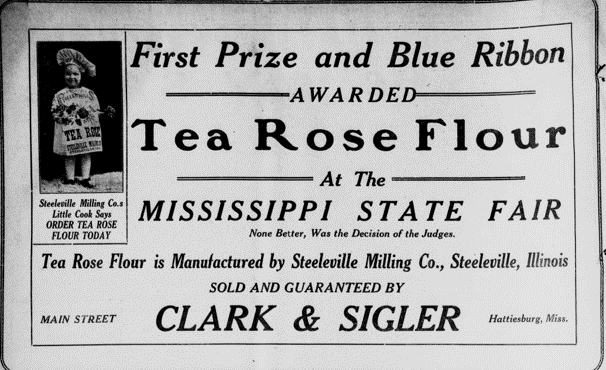
Tea Rose flour ads

 Thanks, Library of Congress! My search for depictions of the dueling Tea Rose flours in Hanover Star Milling Co. v. Metcalf, 240 U.S. 403 (1916), had previously been futile, but not any more.

from Blogger http://tushnet.blogspot.com/2024/01/tea-rose-flour-ads.html

Posted in Uncategorized | Tagged | Leave a comment

“carbon neutral” plausibly misleading because consumers don’t understand it

Dorris v. Danone Waters, 2024 WL 112843, No. 22 Civ. 8717
(NSR) (S.D.N.Y. Jan. 10, 2024)

Plaintiffs alleged that advertising Evian as “carbon neutral”
violated the consumer protection statutes of New York, Massachusetts, and
California, and constituted breach of express and implied warranties, unjust
enrichment, and fraud. Most of the claims survived, though the NY and breach of
implied warranty claims failed.

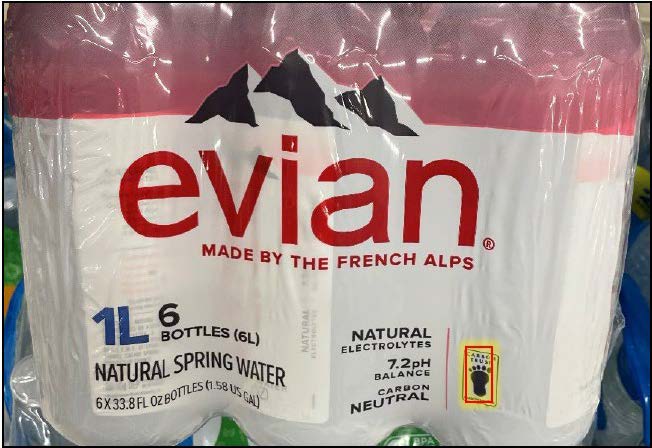
Carbon Trust “Carbon neutral” logo


back of bottle with logo highlighted

multipack packaging with logo highlighted

Plaintiffs alleged that consumers are willing to pay more
for environmentally sustainable products. Carbon neutral” is technically
defined as “having or resulting in no net addition of carbon dioxide to the
atmosphere.” Plaintiffs alleged that manufacturing the products still causes CO2
release, and even if “carbon neutral” referred to offsetting emissions and
complying with the Carbon Trust standard, Danone fails to disclose “how it
calculates its carbon neutrality, the meaning of the Carbon Trust standard and
how Defendant complies to that standard, and whether the standards themselves
are ‘carbon neutral’ in that any pollution output is truly offset by other
projects.”

NY: None of the plaintiffs alleged that they were deceived
in New York, as required by the law.

Danone argued that (1) no reasonable consumer would
understand carbon neutral to mean the Product emits no carbon dioxide; (2)
Defendant accurately represented that Carbon Trust certified the Product
“carbon neutral”; and (3) Plaintiffs cannot challenge the Carbon Trust certification
as false or misleading. The court could not resolve these issues on a motion to
dismiss.

First, Danone argued, no reasonable consumer could
reasonably believe that Evian is transported from their factories in the French
Alps to California and Massachusetts without emitting any carbon at all. Indeed,
it continued, “(1) no carbon zero products exit, (2) the dictionary definition
of ‘carbon neutral’ describes the use of offsets to balance emissions, and (3)
the Product’s website explains evian® water’s approach to reducing and
offsetting carbon emissions.”

The court began with Merriam-Webster’s definitions, “both of
which lack specificity and may be difficult to comprehend”: carbon neutral
means (1) “having or resulting in no net addition of carbon dioxide to the
atmosphere” or (2) “counterbalancing the emission of carbon dioxide with carbon
offsets.” The term “carbon neutral” is

more technical and scientific,
unfamiliar to and easily misunderstood by the reasonable consumer. Consumers
thus may reasonably become confused with the term “carbon neutral” if it has
not previously been explicitly defined for them—as in, before seeing it on the
Product’s label. It is plausible then that the ambiguous term “carbon neutral,”
a technical word not within an average consumer’s common parlance and carrying
multiple meanings, could mislead a reasonable consumer.

While “carbon neutral” “may be understood by manufacturers,
distributors, and other entities within the industry, the common consumer may
attach a layperson’s understanding to the term.” What reasonable consumers
would think was for a factfinder.  

The FTC’s Green Guides supported this conclusion. Massachusetts Chapter
93A incorporates FTC regulations, and the Green Guides warn:

Unqualified general environmental
benefit claims are difficult to interpret and likely convey a wide range of
meanings. In many cases, such claims likely convey that the product, package,
or service has specific and far-reaching environmental benefits and may convey
that the item or service has no negative environmental impact. Because it is
highly unlikely that marketers can substantiate all reasonable interpretations
of these claims, marketers should not make unqualified general environmental
benefit claims.

The complaint plausibly alleged that the average American
consumer does not know the term’s technical definition, as “nearly sixty
percent … do not understand what the term ‘carbon neutral’ means” and that “reasonable
consumers often mistake ‘carbon neutral’ for ‘carbon zero or carbon free,’ ”
even if “carbon zero” products do not currently exist. As for the explanations
on Danone’s website, which links to the Carbon Trust website, “[r]easonable
consumers are not expected to look beyond misleading representations on the
front of the container” or “to do research.” The requisite research was not “minimal,”
either—“reasonable consumers should not be expected to visit two separate
websites and read several pages to fully understand the meaning of ‘carbon
neutral’ and ‘certified by Carbon Trust.’”

Danone argued that, if consumers don’t understand “carbon
neutral,” they couldn’t be misled; the survey cited by plaintiffs showed that
lots of people didn’t know exactly what it meant. “[A]lthough respondents may
not understand the precise definition of the term, they could still be
persuaded by the environmentally friendly sounding representation.” Indeed,
such consumers “are exactly the type of consumers who would be reasonably
swayed by misleading marketing practices.”

from Blogger http://tushnet.blogspot.com/2024/01/carbon-neutral-plausibly-misleading.html

Posted in Uncategorized | Tagged , | Leave a comment

always-available, effortless discount plausibly makes higher “regular” price misleading

Vizcarra v. Michaels Stores, Inc., — F.Supp.3d —-, 2024
WL 64747, No. 23-cv-00468-PCP (N.D. Cal. Jan. 5, 2024)

Vizcarra alleged that Michaels deceptively advertises its
products as discounted when in fact they are always available for at least 20%
less than the purported “regular” price. The court dismissed her unjust enrichment
claim but otherwise allowed her consumer protection claims to proceed.

Allegations: On Michaels.com, Michaels’ entire inventory is
always available at a discount of at least 20% off of the “regular” listed
prices, and these discounts are prominent in stores and on its webpages. E.g.,
in January 2023, in search and product pages, the text “Save 20% with code
22MADEBYYOU” appeared in red text immediately below list prices. At least one
sitewide discount code offering at least 20% off of all merchandise is always
offered (screenshots covered Jan. 2021-Feb. 2023). Similar discounts are
offered in stores via coupons that are available both online and in stores. Thus,
Michaels’ products are always available—in store and online—for at least 20%
off the prices Michaels characterizes as “regular.” For Vizcarra’s in-store
purchase, her receipt indicated she saved $11.65.

California’s FAL specifies: “No price shall be advertised as
a former price of any advertised thing, unless the alleged former price was the
prevailing market price as above defined within three months next immediately
preceding the publication of the advertisement or unless the date when the
alleged former price did prevail is clearly, exactly and conspicuously stated
in the advertisement.”

Michaels argued that it “advertises current—not
former—prices,” so it wasn’t covered by the former price rule. But current prices
can be former prices—or, more to the point, consumers can receive the message
that they are former prices, and that the product was previously available only
at the non-discounted price. (And, since reference prices matter a lot to consumers,
there’s an obvious incentive to advertise prices no consumer ever actually had
to pay, which is where the restrictions on discount advertising have their genesis.)
The question wasn’t whether all discount codes or coupons were covered “former
price” advertising, but whether it’s possible to offer such a scheme in a way that
presents the higher current price as a former price, and whether Michaels did
so. By contrast, club memberships or “[c]oupons offered in exchange for
receiving something from a consumer, like sharing personal information or
repeat purchases, are clearly distinguishable.” The law covered situations
where “former” was implicitly conveyed to a reasonable consumer, rather than only
explicitly. As another court wrote, “the requirement that a consumer enter a
coupon code to obtain the advertised discount is merely a routine, procedural
step in the purchase transaction and is not material.”

Drawing all inferences in Vizcarra’s favor, the court found
it plausible that “most consumers, when confronted with two prices including a
lower price that can be obtained with negligible additional effort, will opt
for the lower price.” That would mean that the prevailing market price was the
lower, discounted price, whether the products were exclusive to Michaels or
otherwise.   

The other consumer protection claims also survived because this
conduct was plausibly misleading to consumers, as did claims for intentional
misrepresentation and breach of warranty.

from Blogger http://tushnet.blogspot.com/2024/01/always-available-effortless-discount.html

Posted in Uncategorized | Tagged , | Leave a comment

where cross-examination exposes lack of TM confusion, out-of-court confusion “evidence” becomes less credible

Florida Virtual School v. K12, Inc., 2024 WL 22039, No: 6:20-cv-2354-GAP-EJK
(M.D. Fla. Jan. 2, 2024)

Some interesting comments on when individual instances of “confusion”
don’t count, as well as their relevance to evaluating out-of-court social media
etc. statements as evidence of confusion.

In 2011, Plaintiff sued defendants for using the marks “Florida
Virtual Academy/Program” and the associated acronyms, “FLVA/P.” The parties
settled in 2015; defendants agreed to cease their use of those marks and to
avoid the words “Florida” and “Virtual” together in a mark. The agreement
listed four examples of prohibited marks as well as acceptable marks, but did
not require defendants to use the acceptable examples. In 2019, defendants launched
the “Florida Online School,” abbreviated “FLOS.” About a year later, plaintiff
demanded that defendants stop using that too, which they did, but plaintiff
sued anyway, seeking (by the time of trial) an injunction and disgorgement.

Plaintiff has seven registered trademarks involving Florida
Virtual School or FLVS; two of the registrations are incontestable.

registrations with graphical elements

The “Florida Online School” mark included an image of a
Florida panther.

blurry panther mark

Strength: Plaintiff’s marks at issue were all highly descriptive. Acknowledging
that the Eleventh Circuit has said that circuit precedent is probably wrong
about this, the court accorded artificial strength to the incontestable ones,
in the form of secondary meaning, but then—also following circuit precedent—suggested
that this presumption of strength was easily rebutted with real marketplace
evidence. And defendants did rebut it—all the marks were commercially weak. (Also,
the incontestability was procured under “dubious circumstances”; although
defendants’ cancellation counterclaim was precluded by the prior settlement
agreement, the plaintiff admitted that it made at least one material
misrepresentation to the PTO in its registration application, and there was evidence
of further misrepresentations “in its effort to establish secondary meaning and
overcome the initial rejection of its application for these marks.”)

The evidence of weakness was substantial:

Apart from the geographic,
descriptive nature of its marks, Plaintiff’s own internal materials tend to
illustrate their inherent weaknesses. While multiple witnesses testified as to
Plaintiff’s significant marketing and advertising efforts, that alone is not
indicative of strength. Plaintiff’s Director of Marketing … testified that
changing a logo and using it in different ways “can dilute a brand” in the same
breath as she acknowledged that, in only twenty-five years of existence,
Plaintiff has changed its logo six times. [Another witness] discussed a nearly
$5 million effort to rebrand Plaintiff’s global operations as recently as 2020.

… Plaintiff argues that “Florida
consumers consistently recognize FLVS significantly more than they recognize
K12 and other[s].” However, upon review, the survey Plaintiff cites shows that
its superiority is marginal—often within ten percentage points ….

In a 2018 survey of parents with
school-aged children that Plaintiff commissioned while researching its brand
effectiveness, its mark had only 15% more awareness than Defendants’ mark and,
moreover, only 30% of respondents recognized Plaintiff’s brand, even when
prompted. Similarly, in a 2020 commissioned survey, without prompting, only 1%
of respondents could name Plaintiff as an online education provider. While
Plaintiff’s full-name marks garnered around 36% awareness among prospective
families, the acronym marks had less than 15% awareness among prospective and
current families. Indeed, in an internal marketing presentation from January 4,
2022, Plaintiff itself used words like,
“plain…bored…uninspired…nondescript…[and] sterile” to describe the brand
identity of its acronyms. This is strong evidence of the commercial weakness of
these marks.

Also, Florida county school districts often incorporate the
phrase “VIRTUAL SCHOOL” into the brand for their online educational offerings,
in partnership with both plaintiff and defendant. A plaintiff witness testified
that these school districts are “using their county name[s] to distinguish
[themselves] from us or anyone else,” e.g., the Broward Virtual School, which
weakened the mark. “Though use of a mark by licensees supports its strength,
the use of Plaintiff’s hybrid marks throughout Florida’s 67 counties to cover
services that are actually provided by both Plaintiff and Defendants weakens
Plaintiff’s marks significantly.” The court thought it was ridiculous to argue
that “Virtual” & “School” together were not infringing, while “Florida”
& “School” together were. “Though some of these third-party users operate
as Plaintiff’s franchise partners, the fact that these franchise relationships
also allow Defendants to provide substantial services (e.g. an entire
elementary school program) under the same marks significantly undercuts the
strength of Plaintiff’s marks.”

Plaintiff also failed to provide evidence of actual
confusion. There’s a lot of general confusion about online education, and about
the fact that, in order to provide their services, plaintiffs have to associate
with public school districts, which are overseen by the Florida DOE, of which
defendant is a subagency.

But trademark confusion? No. The only live evidence of
actual confusion was the testimony of two parents who mistakenly enrolled their
children with Defendants’ Florida Online School. But the initial testimony that
the names were confusing “readily disintegrated under live cross examination.”
One witness “testified on multiple occasions that her confusion stemmed from
her misconception that there was only one online education provider available
to her.” And it was plaintiff’s own delay in assigning a teacher that led her
to switch back to a brick and mortar school. The other, who was vision-impaired,
testified that she enrolled one of her sons with defendants’ Florida Online
School, “not realizing the schedule, and then immediately realized that wasn’t
the right thing for us as a family and put him into [Plaintiff’s school].” Her “repetitive
emphasis on her son’s need for a flexible schedule as the reason for
unenrolling him undercut[] the relevance of that guided testimony.”

Given how the supposed evidence of confusion deteriorated
under cross-examination, the court also mostly rejected twenty-one emails from
the parties’ employees, parents, students, and other third parties. (Portions
were likely admissible as party statements.) For purposes of trial, the emails
were not trustworthy evidence of confusion, even as state of mind: “Was the
author really confused? What was the nature of the confusion? Who caused the
confusion? Was Plaintiff harmed by the confusion? The answers to these
questions require cross-examination.” The court pointed to the fact that the
two live witnesses’ emails could support an inference of confusion, but upon
cross-examination, “it became clear that the source of confusion was not
Defendants’ name.” Thus, these out-of-court statements weren’t reliable.  “[I]f anything, they support the fact that
online educational service providers exist in a muddled marketplace replete
with generically and descriptively named participants.”

In this context—seeking millions of dollars of disgorgement—the
absence of confusion evidence, including survey evidence, weighed heavily
against finding likely confusion, especially given that potentially millions of
consumers were exposed to the alleged infringement over two years, which was
plenty of time for any such evidence to emerge.

Intent: The Eleventh Circuit says: “If it can be shown that
a defendant adopted a plaintiff’s mark with the intention of deriving a benefit
from the plaintiff’s business reputation, this fact alone may be enough to
justify the inference that there is confusing similarity.” This requires a
“conscious intent to capitalize on [its] business reputation, w[ere]
intentionally blind, or otherwise manifested improper intent in adopting [the
Florida Online School] name and acronym.”

Plaintiff’s “strongest evidence” of intent was that defendants
continue to use the words, “Florida online school,” on their website — “contending,
incredibly, that any use of those words in any context constitutes trademark
usage. It was not enough that Defendants completely rebranded their entire
online school; Plaintiff now insists that Defendants—who operate an online
school in Florida—must not use those words anywhere on their websites.” No.
Although defendants did change some website language during trial, the court’s
review found that this just reflected “ill- informed, non-attorney employees
scrambling to avoid the swinging arms of a bully rather than any kind of
concerted effort to alter evidence.” Non-trademark usage of the words “Florida
online school” was ultimately irrelevant to the analysis.

“The complete dearth of evidence of any ill intent on behalf
of Defendants is enhanced by their testimony that the Florida Online School
name was never of particular importance …—they simply chose a descriptive name
that was not on the list of marks prohibited by the Settlement Agreement.” And,
when plaintiff complained in August of 2020—one year after the school had begun
operations as Florida Online School—defendants began “instantly” working with its
contracted school district to change the name. “The fact that it took in excess
of one year to accomplish a complete rebranding of a school name, including
updating email addresses and all school literature, is not unreasonable.”

Ultimately, there was no evidence of intent to trade on
plaintiff’s good will, weighing strongly against infringement.

Mark similarity: Textual similarity in a crowded field with
a limited number of descriptive terms wasn’t probative, and the visual elements
were very distinct.

Consumer sophistication: “Though the expense associated with
a college education is largely absent from these providers, the nature and
importance of a parent’s choice of where to educate their child is comparable
to that decision. The fact that Plaintiff presented two individuals who
experienced confusion with this marketplace—one of whom freely admitted that
she undertook no research while the other plainly changed her mind based on
scheduling concerns unrelated to any mark confusion—does not suggest that the
thousands of other customers of these parties are not sophisticated.”

Similarity of services slightly favored plaintiff; the trade
channels were similar, but defendants’ customers weren’t individual parents and
students, but rather a school district. And they targeted school districts in
their marketing. Plaintiff focuses on parents and students. Defendants market
only their K12 brand nationally. “Indeed, any parent who stumbles onto the
Florida Online School website would be unable to enroll and would be directed
to the main K12 website if they were interested in enrollment.”

Balancing: Defendants win.

from Blogger http://tushnet.blogspot.com/2024/01/where-cross-examination-exposes-lack-of.html

Posted in Uncategorized | Tagged | Leave a comment

“2x Omega” that wasn’t 2x the regular product was plausibly misleading

Caldwell v. Nordic Naturals, Inc., 2024 WL 24325, No.
23-cv-02818-EMC (N.D. Cal. Jan. 2, 2024)

Caldwell alleged that the dietary supplement product
“Ultimate® Omega 2X” misled consumers into thinking that there is double the
amount of omega-3  per serving than the
amount of omega in the Nordic Naturals product named “Ultimate® Omega.” The
court kicked out quasi-contract, unjust enrichment, and restitution claims with
leave to amend and claims for injunctive relief without leave to amend, but
otherwise sustained the basic consumer
protection
theory.

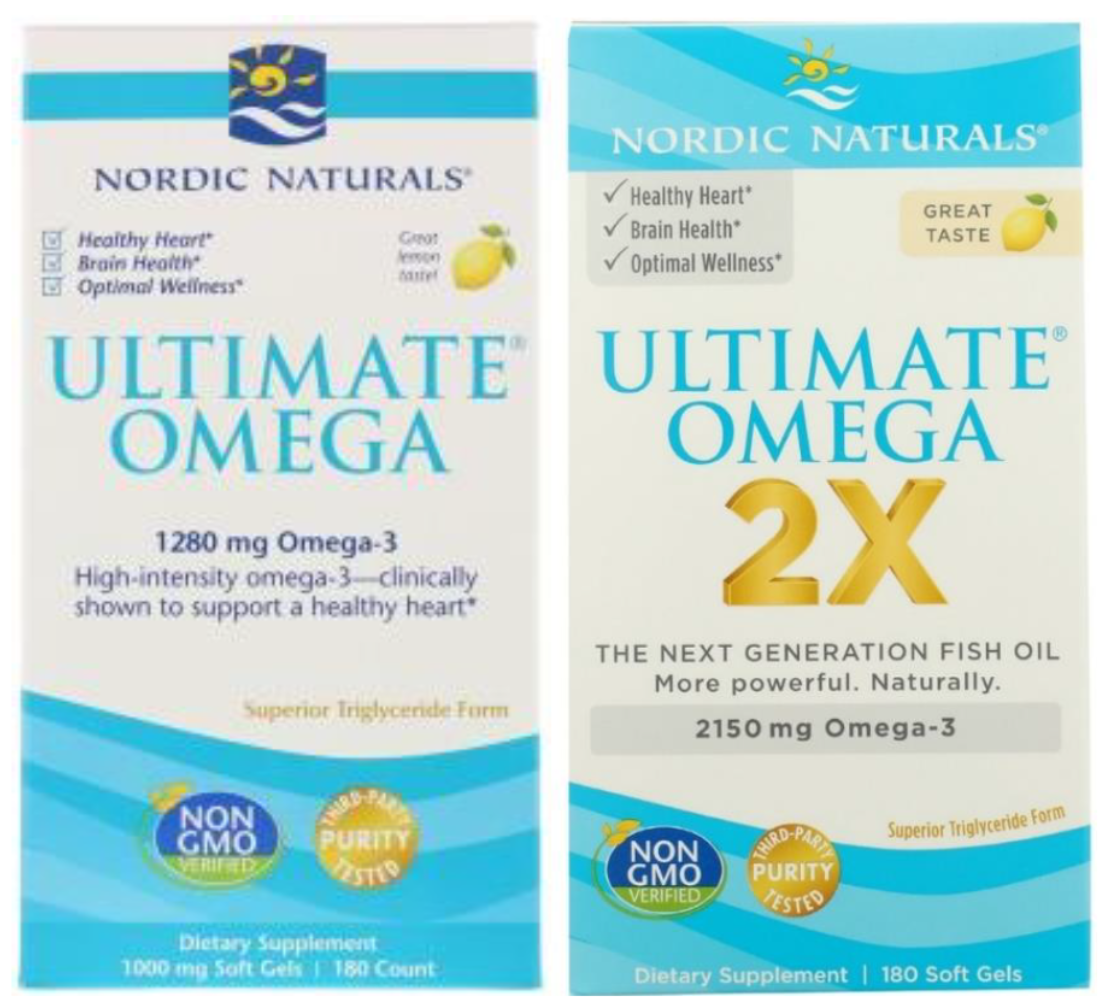
Ultimate Omega contains 1280 mg of omega per serving, while
Ultimate Omega 2X contains 2150 mg, not 2560 mg of omega. Nordic argued that
Caldwell’s claims failed because the product label states on the front, in bold
letters, that the contains 2150 mg of omega.

The packages

The court summarized the relevant principles:

Where the label of a product is
ambiguous, meaning a reasonable consumer would realize the label could have
more than one meaning, the court should consider other information available to
the consumer aside from the label to determine if a reasonable consumer would
be misled. To this end, a consumer might be expected to consider information on
the back label of the product; common consumer knowledge and price of the
product is also relevant to the analysis. On the other hand, where the front of
the product creates more than mere ambiguity, but instead misleads a consumer
into thinking one thing (i.e., that the product contained snacks made of fruit
juice) that in fact is not true, the consumer is not required to dig through
the other information (including the back label) to dispel that falsity. Otherwise,
companies would be allowed to mislead a consumer into thinking one thing is
true about the product, while shielding the company from liability through fine
print.

Here, the front label was plausibly misleading, not just ambiguous,
based on the commonly understood meaning of “2X.” The mg disclosure on the
front label didn’t change the issue: Caldwell argued not that she believed the
product contained more than 2150 mg of omega, but that she was under the
impression that the amount of omega in the 2X product equated to two times the
amount included in the original product. The 2150 mg label “does nothing to
clarify whether the product is two times stronger than the original product on
its face. Rather, the truth can only be learned by viewing the 2150 mg amount
in relation to the contents of the original product – an entirely separate
product with its own label.”

The addition of the phrases “Next Generation Fish Oil,” and
“More Powerful. Naturally.” on the front label was “consistent with the
interpretation that the product is two times the potency of the original
product.” Indeed, Nordic didn’t offer its own intention about what 2X was
supposed to mean, if not twice the potency, only suggesting that it could
mean “next generation.” The court found this “hardly convincing” and certainly
not enough to render misleadingness implausible.

“The label at issue does not include the sort of inherent
ambiguity which might put a consumer on notice to investigate the meaning of
the label further.” “2X” “commonly and clearly” denotes “two times.” Moreover,
the additional information that could be investigated (that two times the omega
of the original amounts to 2560 mg and not 2150 mg) “is contradictory to and
not a mere clarification of an ambiguity in the front label.” Nor would reviewing
the back label have helped. A reasonable consumer is not required to
cross-check a different product label “under these circumstances if at all,”
especially when that would require doing math. “Unlike cross-referencing the
back label of a product, it is not clear if another product will be available
for inspection at time of purchase—rendering it less appropriate for a consumer
to be expected to reference that label.”

Finally, the court declined to dismiss a nationwide class at
this stage. Nordic is a corporation with its principal place of business in
California, shifting the burden to it to show, under California’s choice of law
rules, why California law should not apply to her nationwide claims. This it
had not (yet) done.

from Blogger http://tushnet.blogspot.com/2024/01/2x-omega-that-wasnt-2x-regular-product.html

Posted in Uncategorized | Tagged , | Leave a comment

sending emails under former employees’ names may be reverse passing off

LoanDepot.com, LLC v. CrossCountry Mortgage, LLC, 2023 WL
9022893, No. 22-cv-5971 (AS) (S.D.N.Y. Dec. 29, 2023)

loanDepot alleged that CCM, its chief competitor,
“improperly poached” 32 employees, and CCM and various former employees. CCM
counterclaimed for abuse of process and for violations of the Lanham Act and
related state laws; one ex-employee also brought counterclaims against
loanDepot for breach of contract and breach of the implied covenant of good
faith and fair dealing. I’m only going to discuss the false association/false advertising
bits; as to the latter, state law provides more protection than federal because
of the “commercial advertising or promotion” requirement for Lanham Act false
advertising.

Counterclaims for false association and false advertisement
under the Lanham Act, unfair competition under New York common law, and unfair
business practices under the New York Deceptive Practices Act were all based on
allegations that loanDepot sent blast marketing emails advertising loanDepot’s
services from the loanDepot email addresses of former employees after those
employees had begun working for CCM.

The false association/coordinate state law claims survived.
loanDepot allegedly violated the Lanham Act by using “the name and likeness of
CrossCountry employees, including Scott Bonora, Faheem Hossain, and others, in
false advertisements sent to potential customers in May and July 2022,” which
“wrongly passed off the products and services of CrossCountry as products and
services of loanDepot.” There was no requirement that CCM’s name or reputation
be invoked for a false association claim, because the Lanham Act also covers “reverse
passing off,” in which “A promotes B’s products under A’s name.” Thus, it
sufficed to allege that loanDepot “was falsely passing off the services of Mr.
Bonora and Mr. Hossain as the services of loanDepot rather than services of
CrossCountry.” (I’m not sure this works—at least not without secondary meaning
in Bonora and Hossain’s names.)

loanDepot argues that the names weren’t material, but CCM
alleged that “loanDepot knew that the identity of Mr. Bonora’s and Mr.
Hossain’s employer was material to those contacts, as it was important to the
decision by customers to apply for a loan or by referral sources to refer a
borrower” and that loanDepot was attempting to “influence a consumer to apply
for a loan at loanDepot, or for a referral source to refer a borrower to apply
for a loan at loanDepot.” Claims brought by former employees themselves (citing
Rubris, Inc. v. Ankura Consulting Grp., LLC, 2021 WL 7210782 (D.D.C. Mar. 26,
2021)) were distinguishable because the employee would have to allege “a
commercial interest in his name that could be damaged” and because “nothing
about the advertisement itself gives rise to a plausible inference that [the
employee’s] name holds commercial value.” And CCM pled that it lost customers
based on the use of its employees’ identities in these emails. But the court
noted that loanDepot could reprise its arguments at summary judgment (citing Reed
Const. Data Inc. v. McGraw-Hill Companies, Inc., 638 F. App’x 43, 45–46 (2d
Cir. 2016) (affirming summary judgment on Lanham Act claim when “[d]iscovery
revealed only one customer who arguably relied upon [defendant’s] advertising
in deciding between” the defendant and plaintiff)). This also allowed the
state-law unfair competition claim to move forward; the extra requirement of
bad faith was pled by alleging, inter alia, that loanDepot continued to send
the emails months after the loan officers left CCM and after CCM sent
cease-and-desist letters, and that loanDepot sent similar emails from the
accounts of other loanDepot employees who also left to join CCM.

But false advertising failed because “[m]aking allegedly
false statements to a finite number of identifiable individuals does not
constitute ‘advertisement or promotion’ for Lanham Act purposes.” It was
possible that the emails could constitute “an organized campaign to penetrate
the market,” as the Second Circuit requires, allegations that emails were sent
to “all” of a former employee’s contacts were insufficient. “These allegations
provide no information about the size of the market or the number of customers
to receive the allegedly false advertising.” Dismissed without prejudice.

The result under NY GBL §349 differed, because it requires alleging
only that “(1) the defendant’s deceptive acts were directed at consumers, (2)
the acts are misleading in a material way, and (3) the plaintiff has been
injured as a result.”

from Blogger http://tushnet.blogspot.com/2024/01/sending-emails-under-former-employees.html

Posted in Uncategorized | Tagged , | Leave a comment

comparison charts could infringe, but properly labeled internal search didn’t

Penn Engineering & Manufacturing Corp. v. Peninsula
Components, Inc., 2023 WL 9051998, No. 19-513 (E.D. Pa. Dec. 28, 2023)

Penn Engineering designs and manufactures various types of
fasteners sold under various trademarks, and alleged that Peninsula sold
identical fasteners while infringing on Penn Engineering’s marks.

The court grants partial summary judgment on trademark
claims but reserves some, and a false advertising claim, for trial. There’s a factual dispute over whether
Peninsula’s use of Penn Engineering’s trademarks in its “PEM Family of Marks”
(based on the name of its holding company) in Google search advertisements
stemming from three ad vendors constituted an intent to confuse. But claims
based on Peninsula’s website search tool were dismissed. “Like a person
searching for Domino’s Pizza on Pizza Hut’s website could not be confused that
they are purchasing Domino’s Pizza when being presented with Pizza Hut options,
a customer searching for Penn Engineering products on Peninsula’s website that
presents Peninsula products could not be confused into thinking he or she is
buying Penn Engineering products.” However, there was a factual dispute over
the extent to which Peninsula’s use of sales drawings constituted advertising.

In a previous round of summary judgment, the Court rejected
claims based on “Keyword Conquesting” (which seems to be just keyword
advertising) and “Unlawful Gray Market sale of authentic Penn Engineering
fasteners.”

Search engine ads: Penn Engineering argued that Peninsula
has “continue[d] to intentionally use PEM’s famous mark PEM in [Peninsula’s]
online display ads and that such use was not a ‘vendor mistake’ as [Peninsula]
has alleged.” An August 2023 for “pem standoff” produced a sponsored search
result for “Pem Standoff – Clinch Standoffs” underneath a URL directing the
user to Peninsula’s website.


screenshot showing sponsored “Pem Standoff – Clinch Standoffs” ad

But there was still a genuine factual dispute about whether
this was intentionally confusing.

Things were easier for Peninsula’s internal website search.
A user couldn’t place an order from Peninsula’s website without directly
interacting with Peninsula sales staff. The court first reasoned that a customer’s
use of Penn Engineering’s marks to search constituted “use” of those marks
because of Peninsula’s internal metatags, which provided Peninsula with an
opportunity to reach consumers apparently the court means that the site
redirects searches for Penn Engineering marks to coordinate Peninsula products.
(Abitron could seem to put this in question). Nonetheless, the court
still granted summary judgment to Peninsula on this activity. Although “initial
interest confusion is probative of a Lanham Act violation” as a type of bait
and switch, keyword-generated ads that don’t use Penn Engineering’s marks in
text were not actionable because the results were “clearly labeled as belonging
to Peninsula and there is no likelihood of confusion where the use of
trademarks as trigger words is hidden from the consumer.” The same reasoning
applied here. (For some reason, the court doesn’t cite the Amazon/MTM case.)
Initial interest confusion depends on wrongful diversion, but there could be no
wrongful diversion when consumers were already on Peninsula’s website. Penn
Engineering argued that the consumers might have come from infringing search
ads, but “there cannot be two points of initial interest for a customer.” Penn
Engineering, much like MTM, argued that the search results provided “no
indication or disclaimer that these products are not PEM products,” such that Peninsula’s
website might believe that the site is “under the guise of some affiliation or
sponsorship” with Penn Engineering or believe that Peninsula is a “dealer,
authorized distributor, or otherwise affiliated with PEM” and thus confuse the
customer. But there was no evidence supporting this theory, and summary
judgment was thus appropriate. 

screenshot: search results for CLS-0420-2, showing results with different names

As a matter of law, no reasonable jury could find the
display confusing (apparently Penn Engineering claims the product number as a
trademark), since the results were clearly labeled, as in a Google search. (I
always note when courts are blessing Google’s business model as a reference
point!)


super blurry Google screenshot with targeted ads that don’t use plaintiff’s marks

The same would be true if one got results on Samsung’s
website by searching “Apple iPhone,” or on Toyota’s website by searching “Honda
Civic.” “A customer could not be confused that a part name, wholly different
from the part name entered in the website search tool, is in fact that same
part name, and Penn Engineering has presented no evidence that any consumer has
even searched for Penn Engineering products on Peninsula’s website, let alone a
customer who believes that he or she is purchasing Penn Engineering products
when presented with Peninsula products.” As a matter of policy, businesses
shouldn’t be forced to use disclaimers in this situation; the court noted the
prospect that, under Penn Engineering’s argument, businesses would have to
disclaim affiliation with every possible competitor in every search result.

Website search was distinguishable from Peninsula’s
cross-reference charts that listed Penn Engineering marks alongside Peninsula
substitutes on Peninsula’s website, “because whether the charts led to consumer
confusion depended on the factual question of whether consumers might infer a
business relationship between Peninsula and Penn Engineering by seeing Penn
Engineering’s marks on Peninsula’s website.” There was a factual dispute over
whether the charts that listed the Penn Engineering product side-by-side with
the Peninsula product demonstrated “a manufacturer-distributor relationship, or
that Peninsula is a division of Penn[ ]Engineering or a division of a common
parent.” (That … isn’t really how manufacturer-distributor/divisional
relationships are presented to consumers, as far as I know; it seems like this theory
should have required actual evidence too.) But for the website search, none of
Penn Engineering’s information or marks were side-by-side with the
corresponding Peninsula product.

Indeed, the court was open to the general theory: “had Penn
Engineering presented evidence of customers consistently searching for its
products on Peninsula’s websites and then believing that the search results
yielded Penn Engineering products, that would likely be enough for such claims
to survive summary judgment.” (Note here that this is describing pure source
confusion, not the weird, unprovable, immaterial affiliation confusion theories
that plaintiffs like to assert.) Likewise, false claims to offer a competitor’s
products/labeling the seller’s product as the competitor’s would obviously be
actionable.

Penn Engineering also made false advertising claims based on Peninsula’s use of
sales drawings. Here the issue was “commercial advertising or promotion”;
Peninsula argued that it would provide a single drawing of a single product to
a single customer only when the customer requested that sales drawing. In
response,

Penn Engineering argues that
Peninsula has created over 2,000 sales drawings that Peninsula has distributed
to hundreds of customers over a period of time spanning more than 25 years. For
example, Penn Engineering relies on a letter from Peninsula in which Peninsula
admitted that it created 199 new sales from the sales drawings and provided one
of those drawings approximately 60 times to 30 different customers over
approximately two years. Peninsula’s Chief Operating Officer also testified at
his deposition that the sales drawings are “generally available” to Peninsula’s
customers. At oral argument, Peninsula did not dispute these facts.

Even if the sales drawings were not published but sent only
on request, person to person, they could still constitute commercial
advertising or promotion if they were sufficiently disseminated to the relevant
purchasing public, which was a question of fact. Approximately 2.5% of
Peninsula’s customers over that two-year span received such sales drawings,
which could show that they were “part of an organized campaign to penetrate the
relevant market.”

from Blogger http://tushnet.blogspot.com/2024/01/comparison-charts-could-infringe-but.html

Posted in Uncategorized | Tagged , | Leave a comment

“plant butter with almond oil” plausibly implies significant amount of almond oil

Reyes v. Upfield US Inc., — F.Supp.3d —-, 2023 WL
6276685, No. 22-CV-6722 (KMK) (S.D.N.Y. Sept. 26, 2023)

Reyes alleged that the labeling on some of Country Crock’s
plant butter was deceptive in violation of §§ 349 and 350 of the New York
General Business Law; common law breach of express warranty; common law fraud;
and common law unjust enrichment. The first claim survived, with some sharp
words from the judge on the common-law claims.

Country Crock sells a vegetable oil spread described as a
plant butter “made with almond oil” or “with almond oil.” The label highlights
the terms “Plant Butter,” “Dairy Free,” “79% Plant-Based Oil Spread,” and a
description that the product is made “With Almond Oil.” The label also has
pictures of almonds, an almond flower, and almond leaves.

image of product with almonds on label

Reyes alleged that consumers would, from this, expect a
significant, non-de minimis amount of almond oil, in relative and absolute
amounts to all oils used, but in fact the ingredient list showed a “negligible”
amount of almond oil, both in relative and absolute amounts. Instead, the oil
came from, in order, palm fruit, palm kernel, canola and almond oil.

Reyes alleged both consumer-oriented conduct and injury
(paying a premium price). Moreover, the label was plausibly misleading. Upfield
argued that “the Product’s front label makes no representation regarding the
relative or absolute amount of almond oil in the Product,” and thus that
“including the ingredient list[ ] clearly precludes the possibility of
deception,” along with contesting the description of the almond oil as de
minimis.

At this stage, it was plausible that consumers would expect
the predominant oil to be almond oil, under Mantikas v. Kellogg Co., 910 F.3d
633 (2d Cir. 2018), which found that it was plausible that crackers labeled as
“WHOLE GRAIN” and “MADE WITH WHOLE GRAIN” would mislead consumers into thinking
that the grain content was predominantly whole grain.  As another court said:

While reasonable consumers may not
have a well-defined understanding of what “plant butter” is, they are likely to
understand that a “plant butter” spread is made from plant-based ingredients.
As in Mantikas, they will likely look to emphasized assertions on the packaging
to discern what these ingredients are. It is therefore plausible that the
representation that the plant butter is “Made With Olive Oil” could lead a
reasonable consumer to conclude that the major plant-based ingredient was olive
oil. In this context, the disclosure on the front of the packaging that the
Product is a “79% vegetable oil spread” would not necessarily contradict the
initial impression ….

This wasn’t a case where the touted ingredient was obviously
not the predominant ingredient, as with Kennedy v. Mondelez Global LLC, No.
19-CV-302, 2020 WL 4006197 (E.D.N.Y. July 10, 2020) (no reasonable consumer
would assume that “made with real honey” on a graham cracker label meant it was
predominantly honey and thus couldn’t assume it was the predominant sweetener).
Nor would the back-of-package ingredient disclosures necessarily dispel the
misleading front. And as for whether it was plausible to think that a spread could
be mostly olive oil, “a reasonable consumer is not expected to have an
intimate understanding of the chemical properties of [almond oil] vis-à-vis the
other vegetable oils or a sense of what ratio of oils is feasible.”

Nor was there FDCA preemption; Reyes wasn’t challenging nutrient
claims.

Breach of express warranty failed for want of the required pre-suit
notice. On this and the following, the court noted that plaintiff’s counsel had
made and lost similar claims multiple times in this court, and mentioned Rule
11. Fraud also failed because of failure to allege scienter; it wasn’t enough
to point to the profit motive. And unjust enrichment was duplicative.

from Blogger http://tushnet.blogspot.com/2024/01/plant-butter-with-almond-oil-plausibly.html

Posted in Uncategorized | Tagged , | Leave a comment