variety in superiority claims can add up to disparagement

Deerpoint Group, Inc.
v. Agrigenix, LLC, 2019 WL 2513756, No. 18-CV-0536 AWI BAM (E.D. Cal. Jun. 18,
2019)
Deerpoint sued
Agrigenix for violating the Lanham Act and California’s UCL via false
advertising, violating California and federal trade secret law, and related
claims. Deerpoint allegedly provides chemical water treatment solutions for
agriculture irrigation, using custom-blended fertilizers and patented precision
feeding equipment.  Its former CEO
allegedly took confidential information, sued Deerpoint/filed an administrative
complaint with the California Department of Fair Housing and Employment, and
formed a competitor, Agrigenix.  Its
fertilizer blends were allegedly copied from Deerpoint and it allegedly
installed at least four devices that copy the feeding equipment. Agrigenix allegedly
told Deerpoint’s customers that it is “the same as Deerpoint with a twist,” and
four large clients of Deerpoint, representing $2.4 million in revenues, switched
to Agrigenix. The parties settled the ex-CEO’s case with an agreement including
a provision that acknowledged that his obligations to keep Deerpoint’s trade
secrets secret were still in force. 
Unsurprisingly given the posture, the trade secret claims were not
dismissed.
Intentional
interference with prospective economic advantage: defendants argued that the requisite
independently wrongful act alleged, disparagement, wasn’t sufficient because the
alleged statements were puffery, opinions, too vague, or hyperbole and
invective from a competitor.
The challenged
statements: (1) Agrigenix is the same as Deerpoint with a twist; (2) Deerpoint
is failing and will lose all of its customers to Agrigenix; (3) Mahoney is not
obligated to maintain Deerpoint trade secrets; and (4) Agrigenix’s products are
20% better than Deerpoint’s while being 20% cheaper. Deerpoint argued that
these were necessarily claims that “Agrigenix had superior products when, in
reality, it only had copies of Deerpoint’s proprietary products.”  Viewing the allegations in the light most
favorable to Deerpoint, statement (2) could be disparaging. “While some courts
have held that statements about a company’s future financial stability are
non-actionable opinions, the statement alleged in the FAC is alleged in current
terms – Deerpoint is failing. Moreover, given [the ex-CEO’s] past connection
with and knowledge of Deerpoint’s operations, Deerpoint’s customers may have
been more likely to believe the statements were true ….” 
Perhaps more
surprisingly, (1) and (4) when read together could be disparaging.  By themselves, they were either opinion or puffery,
given the meaninglessness of “with a twist” and the uncertainty of what it
would mean to be “20% better.”  But read
together, they reasonably indicated superiority when in fact they were the
same.  [The problem that other courts
would find is that the nature of the superiority is still completely undefined.]
(3) was a statement
about the ex-CEO’s own obligations, and it didn’t disparage Deerpoint or indeed
say anything about Deerpoint.
The UCL claim
survived because it was based on the intentional interference claim, which is a
little backwards (why not just go for false advertising directly?) but ok.

from Blogger http://bit.ly/2RsQTIp

Posted in Uncategorized | Tagged , , | Leave a comment

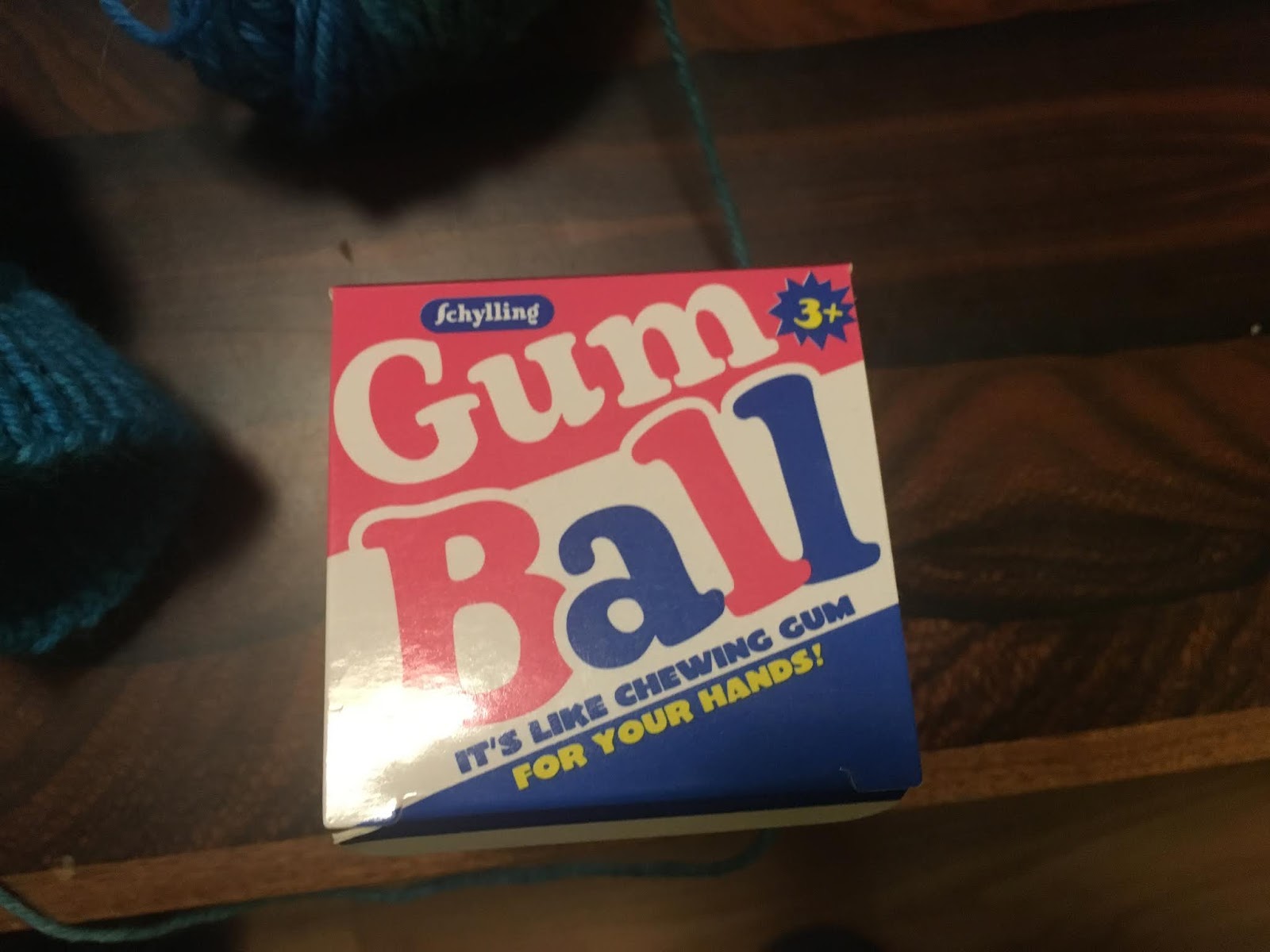
Trade dress question of the day, all out of bubble gum edition

Do the makers of Bazooka have a valid claim against this … whatever it is?  (Toy handed out at a birthday party, apparently known by preteens as a “squishy.”)

from Blogger http://bit.ly/31OfwUH

Posted in Uncategorized | Tagged , | Leave a comment

Uncommon sense on the presumptions granted by registration

Uncommon, LLC v.
Spigen, Inc., No. 18-1917 (7th Cir. Jun. 11, 2019)

The PTO has
sometimes found “capsule” merely descriptive of cellphone cases, but it also
allowed Uncommon to register CAPSULE for such cases in 2013.   (A prior registration for “capsule” for such
cases was cancelled in 2015 for failure to renew.)  Uncommon sued a rival, Spigen, that also used
the term and had done so since 2010, with no knowledge of Uncommon’s use.
Spigen applied to register “Capsule Capella,” “Capsule Solid,” and “Air Capsule,”
but the PTO decided that “capsule” was descriptive. Capsule Solid ended up on
the Supplemental Register, and the PTO required Spigen to disclaim “capsule” for
Capsule Capella.  It also initially
refused “Rugged Capsule” and “Capsuled Ultra Rugged” on grounds of
descriptiveness and confusion with Uncommon’s mark; those applications had been
suspending pending this litigation. The district court granted Spigen summary
judgment and the court of appeals affirmed, saying some things about
registration.
 

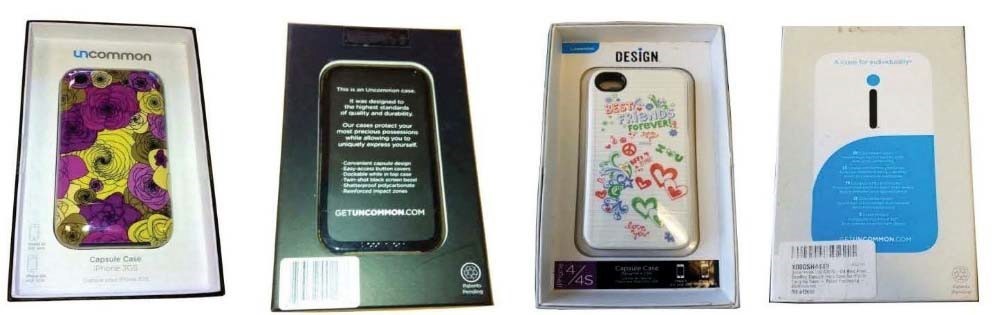
the accused cases

Uncommon’s cases

Spigen produced a
survey to prove that consumers didn’t associate “capsule” with Uncommon’s
cases, and it erroneously disclosed the person who conducted the survey as a
“non-testifying expert.” Admitting the survey anyway wasn’t an abuse of
discretion on these “unusual” facts, because Uncommon gamed the system by not
seeking discovery or other corrective measures when the error became manifest,
and it was reasonable to call the error harmless.  (The court suggested that it also would’ve been
fine to exclude the survey: survey evidence generally requires a foundation,
which will require expert testimony.)
With the survey,
there was no genuine issue of material fact: the registration was invalid and
there was no mark to protect, or any likelihood of consumer confusion.
The registration was
prima facie evidence of validity.  It
allowed one of two presumptions, but not both: if the mark was registered
without a requirement of showing secondary meaning, it would be presumed inherently
distinctive; if it was registered as descriptive with secondary meaning, it
would be presumed to have such meaning. Since Uncommon didn’t register under
§2(f), the presumption was of suggestiveness.
The Seventh Circuit
has said that the presumption is “easily rebuttable, since it merely shifts the
burden of production to the alleged infringer.” The presumption “evaporates,”
or “burst[s],” when the challenger presents evidence of invalidity.  Some have criticized this approach; though
the Seventh Circuit doesn’t say so explicitly (somewhat surprisingly, given the
general frankness of that court’s approach), the PTO’s inconsistent practice
here demonstrates the wisdom of the Seventh Circuit’s rule. Fundamentally,
examination is not nearly as rigorous as the testing provided by litigation,
and where B&B preclusion doesn’t apply, it makes sense to take
another look once the challenger has provided reason to do so.  (Of course, this doesn’t help much for
incontestable registrations, whether or not registered under §2(f), but you do
what you can.)  But anyway, even if
Spigen had both burdens, production and persuasion, it would win here.
A descriptive mark “need
not describe the product completely, but it must depict an important
characteristic of the product.” By contrast, a suggestive mark “requires the
observer or listener to use imagination and perception to determine the nature
of the goods.” Drawing the line can be done by looking at “how, and how often,
the relevant market uses the word in question.” The answer is a lot, and
descriptively.  At least ten competitors
used the word in their case names; one was even named Capsule Case Corp.  Previous cases have used the prevalence of “bliss”
in the beauty care market and “platinum” in the financial services market to
deem those terms descriptive; so too here.
Uncommon argued that
these were all infringers “freeloading on Uncommon’s good reputation with
consumers.” But there was no evidence of such a good reputation, or even evidence
of copying. Uncommon also argued that, in the internet age, people throw lots
of words into their product names to get hits, so competitors’ use of the term
should be discounted.  That didn’t make
sense; in fact, the example showed lots of descriptive terms packed into a long
name.
Likewise, using the
imagination test, “capsule” was descriptive. 
“The mark directly conveys an idea: coverage, storage,
protection—encapsulation—all of which the cellphone cases provide, according to
Uncommon’s registration.” It didn’t depend on the technical meaning of
capsule.  The Seventh Circuit is also
dubious about using dictionaries, “because dictionaries often cite historical
and dated definitions.”  But the dictionary
here reaffirmed what the market’s use and imagination test already revealed:
“capsule” describes cellphone cases. Spigen’s evidence included definitions
like: “a small case, envelope, or covering,” “any object that can be used to
hold things,” and a “small container.” “A cellphone case obviously fits the
bill.”  The district court shouldn’t have
relied heavily on them, but they weren’t “obscure, functionally irrelevant, or
out-of-date” and could legitimately constitute “a piece of the puzzle.” Thus, “if,
hypothetically, consulting dictionaries revealed that they do not define ‘capsule’
in a manner that so easily fits cellphone cases, Uncommon might have evidence
in its favor. A factfinder could potentially infer from such omissions that ‘capsule’
does not describe cellphone cases.”
The court of appeals
declined to rely on third-party registrations. 
The PTO granted Vatra’s registration and Uncommon’s, but “more often
than not, and more recently,” it decided that “capsule” was merely
descriptive.  “[G]iven the internal
inconsistency, we find little that can be reasonably gleaned from the Office’s
registration decisions.”  [Which is why
the bubble-bursting presumption is a good one.]
Uncommon had one
more bad argument, which was that, because “capsule” could describe an array of
products, it couldn’t be descriptive. Although some circuits—including,
appallingly, the Second—have endorsed this reasoning, the Seventh has it
right.  “A term need not ‘bring to mind
the product in question’ to be descriptive, nor must it ‘depict the [product] itself.’
It is enough that the mark in fact ‘refers to a characteristic of the’ product.” 
Uncommon relatedly pointed
to the survey, which showed that consumers don’tt often associate “capsule”
with cellphone cases (only 14 percent of the time). Again: “A descriptive mark
need not immediately invoke in the consumer’s mind the product itself; it must
directly convey a characteristic of the product.” Thus, “Work-N-Play” as a name
for vehicles with convertible interiors was descriptive not because consumers
quickly associate “Work-N-Play” with interior-convertible vans, but because the
vans were in fact “usable both for work and for play.” “Consumers may not
immediately think ‘cellphone cases’ when they hear ‘capsule,’ but ‘capsule’ describes
a quality of cellphone cases all the same.” 
[Other courts, please take heed. Big is descriptive for every one of the
many, many things that are big.]
With the
registration’s presumption of inherent distinctiveness rebutted, the court
turned to secondary meaning.  Since it
wasn’t a §2(f) registration, there was no presumption here.  Spigen submitted one of the more “helpful”
kinds of evidence: the survey, which showed that very few customers (six
percent) were familiar with “capsule” as a brand name; only slightly more (14
percent) could connect the mark to cellphone cases when prompted; and barely
any (less than one percent) associated “capsule” with Uncommon. Even assuming
that manner and length of use favored Uncommon, no factfinder could reasonably
decide that a substantial number of consumers think of “capsule” as the product
of one cellphone-case maker.
Uncommon argued
that, because “capsule” had a similar amount of consumer recognition as a few
other brands in the survey, it had “reached a level of distinctiveness.” No,
because none of the “capsule” comparators had much recognition either (citing
McCarthy and past judicial requirements of at least 37% recognition).
Confusion was also
unlikely. “[V]iewing the record in 
Uncommon’s favor, as we must, the similarity of the marks favors
Uncommon, albeit slightly,” as did product similarity and area/manner of use
(they’re sold nationwide through online retailers).  “But the inference to which Uncommon is
entitled is not a strong one. Selling through Amazon and eBay is ubiquitous,
and it is hard to devise a more generalized customer base than nationwide
cellphone owners.”  The products were
cheap, meaning consumers wouldn’t exercise much care.
But the remaining
factors decisively favored Spigen, particularly strength.  The court of appeals called “capsule” a “weak
mark,” but of course, lacking inherent or acquired distinctiveness, it is not a
mark at all.  There was no other evidence
of the marketing power of the mark, and neither party’s cases featured “capsule”
prominently.”We fail to see how there is a likelihood of confusion caused by a
mark that is hardly featured.” There was also no evidence of actual consumer
confusion or an attempt to pass off. 
“The marks are, at
most, barely similar, and they are too weak to confuse any purchaser,
especially in the absence of evidence of any intentional freeloading.” 
[On this record, they’re
not marks!  You were doing so
well!  I suspect the desire to call these
terms “marks” has to do with the abandonment of passing off as a separate tort,
as indicated by the repeated reference to intentional copying—the court of
appeals has in the back of its collective mind that maybe sometimes intentionally
confusing copying (as opposed to copying to achieve some non-reputation-related
reason, like the fact that “capsule” is a useful descriptive term) should be
actionable.  But you don’t actually need
a “mark” to make that tort work, as Mark McKenna often reminds us.]

from Blogger http://bit.ly/2WMzzE8

Posted in Uncategorized | Tagged , | Leave a comment

A Celebration of the Work of Wendy Gordon, part 4

A
Natural Right to Copy
by Glynn Lunney, Texas A&M
University School of Law
Thanks to the great
women who encouraged intellectual honesty in topics and analysis of topics, not
just Gordon but also Litman, Samuelson, others.  Gordon doesn’t agree w/how far Lunney takes
her argument, but that’s ok.  Gordon’s “A Property Right in
Self-Expression
” shows that Lockean arguments for authors’ rights also
provide limits on those rights that are themselves in the nature of natural
rights.  Lockean proviso: there has to be
enough and as good left over for others in order for property claims to be
justified. Is copying right or wrong? 
There is dispute! 
He thinks natural
rights are nonsense on stilts; natural laws would exist without people.  He thinks it’s often just hidden utilitarian
balancing.  Kant’s Categorical Imperative:
if the Nazis ask you if you’re hiding Jews in your attic, should you tell the
truth?  Utilitarian balancing would give
us a very different answer.  A natural
right should also be technologically independent, which seems inconsistent with
© and its recency.  He thinks of natural
rights as rhetorical tools.  Rhetoric,
though, matters. [Lunney characterizes natural rights arguments about fairness
as “utilitarian arguments for people unable to do math”—but of course none of
us can really do math, in the sense required for doing utility calculations
that would take into account all the knowns and unknowns, especially at the
level of detail required to distinguish two fairly similar policies from one
another.  Thus the appeal of rule
utilitarianism and so on. Obviously this is a much bigger debate than any of us
can do justice to right here!]
Judges sometimes equate
copying with stealing, but he thinks this is wrong.  Moses smashed the original tablets from the
mountain; we only have the Seventh Commandment because Moses copied them and plenty
of others did too. Copying is never stealing and an expansion of the no-harm
principle that equates them is difficult for him.  No-harm principle: Locke says no one ought to
harm another in life, health, liberty or possessions—but there’s nothing in
there about economic harm/deprivation of royalties.  Mixing labor as justification for property
seems inconsistent w/counting economic harm—if value alone justified a property
right, we wouldn’t care about how I got a pile of apples.  This is relevant because of the well
established principle of damnum absque inuria: harm without legal injury, as when
competition decreases profit.  Gordon
does distinguish harm from wrongful harm, but not all free riding is wrongful
harm—Kellogg copying Nabisco shredded wheat and automakers copying the idea of
the minivan are both desirable forms of competition based on free riding. 
Gordon suggests that
utilitarian balancing can trump deontological concerns when the costs are too
great. How do we know when they’re bad enough? Who decides?  Category error: even if you could use Locke
to justify initial ownership of the song, what does that mean when you’ve
shared access w/another? Locke is about initial ownership, not what rights you retain
even once you’ve transferred in the absence of an express or implied contract.
Contributions to value
to a novel other than the novelist’s own work: the people who taught her to
read and write; the people who created moveable type and all the other distribution
elements; people involved in creation of market demand, such as people who paid
workers enough to have money left over to buy the novel. Once you do but-for or
even proximate causation all of those matter. 
He thinks what’s efficient and fair is a cost-based allocation.  Inefficient and unfair to have a rule that’s
cost based for everyone but the © owner who gets a value based reward.
What should be the
default rule? What’s more important to society, copying or creativity? To him,
it’s copying. We talk today b/c we share a language that neither of us came up
with or decided to adopt. We both copied the language and its structure.  What we’re doing in © is important but what’s
more important is the right to copy and talk.

Commentary by Richard Stallman, Free Software Foundation
Defaults are tremendously
important. “IP” is both wrong descriptively and an overgeneralization about the
very different regimes lumped together under that term. It gives you a bad way
of thinking by default.  Law professors
can probably overcome that but if you don’t spend a lot of time with it, that
will mislead you. Natural rights have to be about morality; natural rights
imply natural responsibilities, though that doesn’t mean you have to do a
recommended act every time. E.g., sharing is good/feeding the hungry, but you
don’t have to do so every time you’re asked; it’s instead that if you
never do it then you’re not
a good member of society. Respect natural rights and permit people to carry out
their natural responsibilities to share. 
You don’t “consume” published works. They don’t disappear as your eyes
pass over them. It’s an economic metaphor that also changes your default
thinking. The idea that you have to compensate a business for not being able to
make money from something that it bought is planetary suicide when it comes to
resources, and this relates to © as well. 
Would also distinguish software from creative works; software as a set
of instructions needs to be free or it subjugates users.
Syed: Lunney was
careful and crisp in discussing deontology, but lumped utilitarianism
together.  If you’re truly a maximizer, do
you believe that fair distribution plays no role?
Lunney: people would
choose fair distribution over unfair, because we’re risk averse; distribution
is a utiltiarian consideration. 
Gordon: it’s true that
Locke justifies right to use more than right to exclude. But what he’s
describing is one of many ways of saying, all else equal, if someone has
invested a lot of himself into a project, you have an obligation not to disrupt
that project without a good reason, though we can then talk about what good reasons
might be.
Lunney: prefers the
defaults reversed. Who has to justify a change in the default and what does it
take to do so?
Unfair
Use as Market Failure
 
by Ariel Katz, University of
Toronto Faculty of Law
Fair Use as Market Failure’s
contributions include: theoretically coherent framework for understanding fair
use, at the time a mess; pioneering economic analysis of copyright; offering
economic justification for fair use; showing how broad fair use conception is
economically consistent w/©’s premises. Alas, misunderstood as implying that fair
use should only exist when transaction costs are high and should disappear if transaction
costs become low enough to allow negotiation b/t © owner and user. Instead,
looking at whether there is a reason we can’t be confident that deferring to
the © owner’s self-interest will also lead to overall social benefit? If we can’t,
then there is reason to go to fair use. But this logic presumes that we can
ordinarily be confident that deferring to self-interest will serve social
goals, and if and only if that isn’t true,
such as market failure, then
it might make sense to refuse to defer to © owner’s veto.
But should we ordinarily
be confident of this? Why not require © owners to show that their self-interest
aligns with the public interest?  What
creates pull to overly narrow fair use: (1) market supremacy premise: in general,
social welfare will be maximized if market transactions b/t © owners and users
would precede as many uses as possible bc the market is in general the best way
of doing things; (2) broad entitlement: © owner is ordinarily entitled to
revenue for all substantial uses of the work; (3) when economic value is at
stake, we ordinarily want a potential user to seek permission from © owner and
pay a negotiated price.  Begins with the assumption
that © markets are efficient, but they are usually understood as deviations
from static efficiency done in order to create incentives (keeping prices above
marginal cost). Copyright by design undermines the perfect efficiency of the
market.
Relatedly, do we want
as many uses as possible to be market transactions? The opposite: social
welfare is maximized if we have as few uses as possible as market
transactions.  Nor should we agree with (3)’s
broad entitlement: fair use isn’t an infringement and not part of the owner’s entitlement,
and a © owner shouldn’t get more than necessary to generate works. It is, in
other words, unfair uses that present market failures. Copyright is against
natural rights; it is a legal monopoly and a creature of positive law only.

Commentary by Chris Sprigman, NYU School of Law: Microsoft antitrust litigation was
how he started to learn ©: Microsoft’s argument was that it owned the © so
nothing it could do with the © could violate antitrust law. Court says: saying
you own the © so you can’t violate antitrust law with it is like saying that
because you own a baseball bat you can’t be held liable for killing someone
with it.  Monopolies and market
supremacy: this is the key idea, that property structures markets and that the
markets are run by private transactions by default.  Broad entitlement then follows from that: © owner
is entitled to all rents that market supremacy makes available.  So is the idea that we ordinarily want transactions
to take place b/t © owners and users of the works.  Combination: strong deference to © owner,
which then leads to overly narrow reading of Gordon’s work on fair use. 
Katz’s first best
solution where goods are nonrival: competition. 
Katz would presume fairness until unfairness is demonstrated. But what’s
Gordon’s first-best world?  Have to think
about static v. dynamic efficiency. The holy grail would be to optimize static
+ dynamic efficiency. Gordon’s first-best would be a copyright system that does
this. If you believe that copying causes long term welfare loss, you should end
up with “efficient copyright.” Under that scheme, Gordon’s premises hold.  Rights with appropriate scope, term, and
limitations. But we don’t seem to have that, e.g., it’s hard to understand the
point of © for fine art. Balancing static + dynamic efficiency seems unlikely
given how much lumping together Congress has done, even if you ignore problematic
political economy.
What is to be done? Should
judges interrogate the static/dynamic balance, the scope, the limitations that
Congress has enacted?  Care is warranted,
but Congress has left open some room, viz. fair use. Even if fair use is a
defense, it isn’t an affirmative defense: the P should, once raised, have the
burden of going forward—Lydia Loren’s article and the reasoning in
Lenz in the 9th
Circuit.  Skeptical about judges doing
other things in ©; we don’t have a different term for motion pictures than for
software, even though we probably should, and judges would have a hard time
doing that.  [I would note that anywhere
else in speech regulation judges have no problem saying things like this and
performing their own static/dynamic/other analyses—that’s what strict scrutiny
does.]

from Blogger http://bit.ly/2wRK35Y

Posted in Uncategorized | Tagged , , | Leave a comment

A Celebration of the Work of Wendy Gordon, part 3

Death in Copyright:
Remarks on Duration 
by Abraham DrassinowerUniversity of Toronto Faculty of Law
What would a rights
based account of duration look like?  Really
about death, not duration. Patents have a fixed term; trademark registrations
also persist for a specific amount of time before renewal is required.  © is life plus 70 (US) and 50 (Canada)—the number
isn’t the same for all works.  Something other
than number alone goes into the determination, which is death of the author.  What is it about © that summons mortality so
deeply into its substance?  History is
one answer, but not of as much interest to him. 
Does the concept of mortality fit © in a distinctive way?
His proposal: The idea
of independent creation contains the idea that the author is a mortal being; the
theory of originality is already a theory of duration. Works as messages:
communications from the living.  Not an
owned object but an expressive act. Duration affirms the specificity of the
length b/t author and work as copyright subject matter. B/c author and work are
inseparable, the death of the author must signal the death of the right.

Commentary by Paul Gugliuzza, Boston University School of Law
Original 14 year term
seems to have come from the first patent statute, which itself was double the
usual apprentice term.  There’s no reason
to think any of this was socially optimal for incentives [or otherwise].  And it’s gotten longer and longer b/c of ©
owners’ political power.  Drassinower isn’t
looking for social optimality, which is a pretty impossible Q in the abstract
anyway.  But US law isn’t animated solely
by moral rights; suggest engaging other analytical modes, especially given the
provocative nature of the claim that © should be cut back a lot compared to
where it is.  Utilitarian arguments for
extending some © beyond death, if not for life + many decades.  Older authors might need incentives;
predictability of ensuring some duration beyond perhaps a few days. 
Talha Syed: we can
resist various moves, including that independent creation requires
inseparability of author from work.  We
could also say that conceptual integrity in the system isn’t important: we can
have independent creation and an unrelated term.
Drassinower: takes
independent creation to be fundamental to what we think © is and is for.  That’s why he wants to use it to look at other
parts of the system. 
Litman: earlier US
terms did look at whether the author lived past a certain time for renewal
term/ownership.
Experimental psych confirms Gordon’s
insights about intuitive power of “reap where you haven’t sown” trope. Even
little kids have intuitions about ownership of ideas.  Important pattern in IP law: creation or
extension of common law protection due to restitutionary impulse/ “felt necessities.”
Restitutionary impulse starts young: children apply ownership principles to some
ideas, though not to common words. Kids by age 5-6 don’t like copying as much
as they like original drawings, and they especially don’t like falsely claiming
credit.
Felt necessity: economic hopes of a less
confident, service oriented economy have switched to knowledge goods.  Demsetzian version of property rights: over
time, property rights develop in response to growing (relative) value of
intangible assets and cost-justified ease of defining boundaries. There’s a
political, economic story of limitations and exceptions, whose creation can
also be told in Demsetzian terms; IP rights create victims who can lobby too. 
What’s happened over decades with
restitutionary impulse?  Federal dilution
law; progression from common law to statutory right of publicity and almost
inevitable call for federal uniformity; federal trade secrets law. 
Haelan as a moment of creation: they
tried to create an exclusive right to a player’s image through contract, which
couldn’t be done just by waiving the player’s privacy rights as to the chewing
gum company.  It has to be done with a
new right.  The alienability was at the
heart of the new right. 
Restitution is a substitute for the
market; sometimes comes from failed market transactions. Property is instead
about creating markets: standardized bundles of rights that are easy to transfer.  Restitution is reactive and property is
generative: corrective justice seeks to restore a status quo, while new
property rights deviate from the status quo. Market transactions can be based
on a bundle of rights more easily than on a bundle of duties.
Commentary by Bob Bone, University of Texas
at Austin School of Law
Gordon is a value
pluralist, and this helps with her affinity for the common law, where judges
grapple with various values.  Principles
may incubate in common law, though they can also come from statutes. Public
choice makes it messy. Hard to say anything general about creation of IP
rights.  Maybe original idea is some kind
of moral insight, but they eventually get driven closer to property rights over
the long run.
Intuitions about ownership
are socially contingent in large part.  [Everybody eats, but different cultures find
different foods appealing/disgusting.] 
Plagiarism: Merges slides pretty smoothly between copying and failure to
give credit, but kids seem more interested in the latter: the opportunity to
give authors credit for their work, which would lead to an attribution right
rather than a restitutionary claim.  Deeper
Q: why follow moral intuitions? Some of them are bad!  How do we determine the lower level, more
specific principles entailed by moral intuitions?  One way might be to look at the common law to
see how some principles check others. 
But common law is affected by other factors too; we can look elsewhere.
Q: sometimes children
are mean and manipulative; they may make ownership claims as a matter of
self-interest, but that doesn’t tell us what we should be doing.
Dreyfuss: EU trade
secrets directive: is it property and will it therefore be controlled by human
rights law? That’s a big difference b/t relational rights and property.
Q: fannish community
opinions on ©: attribution and fairness are the norms; social contract idea—authors
should allow fans to engage
in certain types of noncommercial creative work. Moral rights concepts.
[A couple of thoughts, overlapping with the
others: Glynn Lunney’s piece for this conference is all about responding to the
restitutionary impulse. The YA book The Girl Who Owned a City represents a good
example of one of the problems: the book doesn’t mean to do so (it’s supposed
to tout Objectivism) but it demonstrates the impulse to claim ownership of that
which is not new, but which was news to you and thus feels like “yours.”  Relatedly (since the book is about kids who
have to recreate society after all the grownups die), maybe what kids think is a
starting point in need of a justification since we are in fact supposed
to be socializing them.  Indeed,
kids do a lot of copying that isn’t even noticed as copying: trace the letters
to learn how to write; instruction where we have students watch then do, which
is to say copy, then teach, which is to say have others copy you; perhaps this
can often be distinguished as processes v. outputs, but copying letters is
copying outputs, not just tasks. We could say that in those situations copying
is clearly valorized, but we then have to figure out why the valorization doesn’t
carry over.]
Common
Law Conceptualism in Intellectual Property
 
by Shyam BalganeshUniversity of Pennsylvania Law School
Gordon as
conceptualist who attempts to organize analysis/reasoning around discreta
analytical devices that serve a simplifying role w/in relevant context. Takes
legal doctrine and reasoning seriously as a mode.  Different categories of conceptualism:
formalists (e.g. Joseph Beale) who thought that legal concepts had their own
immanent normative logic which gave definite answers to cases. Realist
conceptualism (Frances Bohlen, Wesley Hohfeld): legal doctrines as grounding
for decision making but not “closed”: legal concepts could be deployed towards
social ends, but they meant something. Neoconceptualist—Gordon is somewhere
between a realist and a neoconceptualist. Not wedded to a singular
methodology.  She adopts the Hohfeldian
set for copyright, but is willing to read normative criteria into their
working, and is skeptical of normative essentialism (unlike traditional
neoconceptualists).  Suggests move from
copyright to copy-privilege: move from P to D. Privilege is subsidiary: it
needs protection by a “right” of some kind that allows the exercise of the
privilege. W/o a right, there is no no-right/duty to not interfere w/the privilege.  Privileges of ownership, similarly, aren’t
protected in the absence of a right to exclude.
Implicit moves: the
owner’s entitlement also becomes a privilege, not just a right. Right to
exclude is replaced by exclusivity as a continuum.  Questions the property/copyright analogy,
boundaries, thingness. Evaluative turn: focus on entitlement structure leads to
an evaluation of the utility of property analogies. It reveals copyright’s
conflation of harms and benefits and the move from property to unjust enrichment.
Legal structure of ©
is not contingent—see Drassinower—there are some basic principles that make ©  mean something. These legal concepts allow ©
to accommodate a plurality of normative considerations. This may be messy in
practice, but it is true. Our search for purity should not lead us to oversimplify.
Challenge of copyright
conceptualism: ©’s unique challenge is its legislative origins.  It is not a creature of common law.  Conceptualism is not the same thing as
textualism: looking for analytical logic underlying the text.  An idea acquires meaning through usage within
a context or domain, not through fiat. Thomas is wrong in Star Athletica to
leave behind all normative logic underlying the text of the statute and to say
that we begin & end with the raw text of the statute.
Commentary by Talha Syed, Berkeley Law
Conceptualism begins
as the search for necessary and sufficient conditions for the use of a
word/term—the hunt for essences. 50s/60s: turn to essences/family resemblances.  Third version: capture ordinary uses for good
enough work (HLA Hart). The problem, in any form, is the attempt to fix
meaning; there is always, inevitably, an unargued for smuggling-in of a
normative conclusion. This is what gave conceptualism a bad name.  Hohfeld says rights are definitionally relational:
there are no rights on a desert island. He’s building an idea.  Entitlements implicate different interests in
different contexts: a use privilege and a right to exclude are different.  The unbundling just follows from analyzing
the issue before you. The tools are normatively neutral: focal points for
positive/normative analysis, and immensely useful nonetheless. If you’re
thinking about law, you’re thinking about social relations and there’s always
burden/benefit, entitlement/disentitlement, and the interests vary by context
and purpose and it would be odd to bundle them together and act as if answering
one question answers them all.  This is a
Copernican revolution, and Gordon brings it to ©. Nonrivalry is a constitutive
feature of IP versus intangibles. This is the driver of Gordon’s harmless free
riding: prima facie, using a nonrival resource doesn’t harm others w/r/t
nonpecuniary harms. That’s a conceptual move.
Copyright
Practitioners and Copyright Scholars 
by Jessica Litman,
University
of Michigan Law School
Gordon was one of 9 women
teaching any IP course at any accredited law school when she began teaching.
Then as now the spectrum of views on IP was wide. © lawyers saw each other as a
priestly elite, and debated essential but hypothetical questions under the new
1976 Act, like “if you build a sandcastle below the high tide, is it fixed?”
Then as now, the © bar was essentially a plaintiff’s bar. Genuinely shocked and
dismayed when courts or Congress disagree w/their ideas of how to do
things.  There were insiders and
outsiders, real lawyers and those who research/practice but don’t count.  Litman worked on Gordon’s foundational
Columbia LR article on fair use as market failure as a law student! [Happy
coincidence exclamation point mine.] 
Fundamentally theoretical work, not “practical,” but nonetheless of
great relevance and potential utility to practicing lawyers.
Today, the
relationship b/t academics and practitioners is more fraught; tech has brought
more money at stake and new tech has also made hypotheticals more realistic.
Entry of new players w/significant financial and political clout, which caused
old lawmaking patterns to not work so well any more. Previously, if certain
groups agreed w/each other, Congress would enact it; upstart groups could be
maneuvered around or bought off.  That
stopped working when the new entrants came to the table w/more economic and
political resources than the quote unquote core copyright industries. Many
legacy intermediaries have come to think of © lawyers who represent platforms
and other new intermediaries as not real © lawyers at all—a disqualification
for membership in the real © lawyers club. They began to think of some ©
scholars similarly.  More recently, even
a presumption that academics who teach/write about © must not be real unless we
show allegiance to “real” © values. Oracle funded a study to show that Google
bribed academics to write; many members of the bar believed that story b/c it
matched their priors.  Next: Vicious
attacks w/ immediate goal of getting ALI to abandon its © restatement project,
claiming they were loony, extremist and corrupt enemies of creativity, which
would trash the credibility of the ALI overall. 
Popular press, legal publications, social media: nasty and baseless
(need to read some scholarship of the people attacked) [my brush with this
leads me to agree about the assumptions being made].
© rhetoric has been
overheated (Boston Strangler = VCR; HathiTrust as Plessy v. Ferguson) but seemed
like an escalation to Litman.  Maybe it’s
just the age of Trump and that’s how we do now. 
But underneath unsubstantiated nastiness, there was genuine frustration,
mistrust, and sense of betrayal unless a scholar proved herself loyal to ©
expansion.  A symptom of long simmering
grievance.  Too simple to blame the rift
on the fact we don’t agree; most lawyers get that other lawyers hold opposing
views, and she didn’t see this problem 40 years ago.  The way legal scholars think about © versus
how practicing lawyers and lobbyists think have diverged enough that we’re not
speaking the same language. 
One important
milestone of divergence: 1984, when Reagan Admin and State Dep’t were keen to
join Berne; asked Irwin Karp to get together w/Authors League of America,
Authors Guild predecessor, to write a report indicating that only minor,
uncontroversial changes would be necessary to adhere to Berne. Claimed that American
law already amply protected moral rights through contract, state statutes,
unfair competition/TM law.  This argument
was a lie.  The best anyone could say at
the time was that it was just barely colorable, but no one actually believed
it.  © professors were divided about
whether accession was a good or bad idea. 
Request for their comments put joiners into awkward position—it seemed
like the only feasible path to accession, but lying about the law is not in the
job description.  We see law differently!
We are subject to wishful thinking, but we’re also trying to discover the law
rather than to make it up. Some comments enthusiastically supported Berne
adherence but disagreed with the report’s description; some kept heads down;
some submitted carefully drafted comments that avoided discussion of the touchy
parts.  The gambit left an unpleasant taste.
Inflection point 2:
runup to the DMCA.  1993 discussions: ©
owners were reluctant to involve Congress in changing © at all, b/c only last
year AHRA had been enacted and Congress had insisted on allowing consumers to make
noncommercial copies of recorded music. Wasn’t unimaginable that it would do
the same for digital files. Yet © owners spoke candidly about difficulties of
current system, especially sound recording industry. Hilary Rosen (RIAA) insisted
that w/o public performance right there was no means to assert control over
unauthorized performances online b/c transmissions were performances. Bruce
Lehman asked “can’t you treat that as distribution of copies,” and industry
reps replied they’d thought of that, but first sale was a problem. If
authorized transmissions are distributions of photorecords, then the authorized
recipients could redistribute them.  So
they needed a public performance right. Lehman and his staff pursued a
different tack—they wrote a report claiming that © law already covered almost everything
the © owners wanted.  This time law
professors didn’t wait to be asked, and spoke up to contest the distorted view
of current legal doctrine. It didn’t matter much; academic opposition barely
affected the law’s enactment, but in the ensuing 3 years, supporters of the
Lehman approach managed to persuade each other to develop message discipline. That
message discipline has been on display in subsequent efforts to persuade USTR,
Congress, White House to get on board—“rogue websites,” value gap, etc.  It’s an effective strategy, and it’s hard to
say it’s immoral from a policy perspective, but it’s not what academics do or
like.  It’s an important and respected
lawyerly tool but not a scholarly one: message discipline is inimical to us,
whose norms look for the new and different. 
That means that professors could mess the message up if anyone listens
to us, which has produced a bunch of “stay in your lane” instructions and avoid
advocacy, amicus briefs, etc.
Does it really matter?
Instead of one priestly tent, we have two tents populated by different priestly
tribes?  Yes, it’s worth addressing.  Professors have been sidelined in law reform
arena and limited in our influence on regulation, compared to patent for
example.  That has costs, as in the MMA
which was written to be unreadable. Even if we did read it and had stuff to
say, no one listened, so why put yourself through that? The law we got includes
naked wealth transfers from composers and independents to big three labels, and
it’s much worse for our not being meaningfully involved.  Sure, some have hooked up with new
intermediaries, but many of us have things to say to the “core copyright industries.”  Gordon’s work is not about tech issues, but
about fundamental justifications.

Commentary by Justin
Hughes, Loyola
Law School, Los Angeles
Disagree on moral
rights. He believes that the © lawyers opining then believed they were lying—but
they weren’t public international law scholars. 
(It turns out that complying with Berne on moral rights, like complying
w/ int’l law more generally, is a lot easier than you might think based on what
Berne seems to say.)  Marrakesh: didn’t
recognize the earlier account of the treaty negotiation process. A lot of the
treaty’s prose is his, as chief negotiator. 
It is true that very early on, the deal was to take the MPAA out. He did
that deal. The Holy See didn’t play a pivotal role, but it addressed the EU,
not the Latin Americans.  In fairness to
PK, he was repeating hearsay b/c PK didn’t participate; Gigi Sohn was very
politically savvy and knew PK could help best by staying out, as could Google.
The acrimony b/t © and “anti-©” [my quote marks] people was so strong that disinterest
was better than participation. 
The game is a rough
one at this point.  Ask yourself what you
expect of yourself and what you expect of others. The rules are different for
social media than for amicus briefs.  Some
people [I am one of them; Hughes is not] signed on to an MPAA ad against the
ROP law proposed in NY; if you signed on to that, you are political fair
game.  We need to spend more time
thinking about the rules of engagement for ourselves, including conflicts/appearance
of conflicts, which law professors often discount.  The Oracle study: there was a lot wrong with
it, but we need to spend more time as a community talking about disclosure and
what constitutes conflicts of interest. 
Arti Rai and I have had to disclose everything to serve in government,
which is the cost of service [unless you belong to this Administration], and
not everyone in this room would be willing to do that. 
We don’t spend enough
time talking to people outside our tent. 
It’s scholarly malpractice to write about something where people are
alive and you don’t talk to them, e.g. how the PTO works, but we’ve separated
ourselves so much that we are treated as outsiders. Spend more time talking to
practitioners and interview them, as Silbey does.  The only way you’re justified writing only on
the paper record is if everyone involved is dead. [This strikes me as an
interesting thing to say right after we’ve just heard so much about
conceptualism; I don’t actually have to interview Tam or his lawyers to write
about the implications of
Tam, so I take Hughes to be making a narrower complaint about
when people write about the political economy of decisions, particularly
legislative decisions.]
Yen: For some of us,
this seems like our parents’ fight—CSUSA has been perfectly welcoming to
academics. Don’t poison what can be done going forward.
Litman: the current
barrage of abuse is less than a year old, so it’s not old news. [I would also
point to the rhetoric at the 512 roundtables, which is less bad than the
incidents Litman describes but not exactly welcoming.]
Feld: He’s done
telecom and other fields, but IP is clearly much more poisonous than his comparatives.

from Blogger http://bit.ly/2Xeie6u

Posted in Uncategorized | Tagged , , | Leave a comment

A Celebration of the Work of Wendy Gordon, part 2

Harmless
Free Riding
 
by Wendy Gordon, Boston
University School of Law

 (Additional related drafts from Wendy: Time
and Intellectual Property After Coase
and Proximate
Cause in the Law of Copyright: Linking Liability to Incentives
)
Common law imposes penalties on those who
harm much more readily than it requires people to avoid benefiting without
payment; very few duties to help and lots of duties not to harm.  Foregone benefits don’t receive the same
weight as harm done—which means that “do no harm” is not the same thing as “maximize
wellbeing.”  Special deference to harm
may be hardwired. We’re more “rational” when computing potential benefits.
When it comes to IP, this common law
preference seems largely eliminated b/c most IP is about increasing
productivity, rewarding beneficial behavior rather than penalizing risky
behavior. Damages include lost sales but also lost licensing fees—internalizing
lost benefits.  Don’t require harm to be
proven. Particularly notable in TM: “if value, then right.”  Expansion in © liability too—now, for
example, no economic motivation is required for criminal infringement.
What is “harm”?  Add up everything that people have rightfully
(e.g., exclude stolen goods; removing those doesn’t cause harm), including
things that they might not have a “right” to but do benefit from.  To harm is to cause a setback to a rightful
interest. There should be a presumptive liberty to act in a way that’s not harmful,
though that presumption can be overridden (and I think she also endorses vice
versa: there should be a rebuttable presumption against causing harm).  Right wing libertarians think that only
physical harm matters and only harms to people with entitlements to property
matter, but she considers more kinds of harm relevant.
Foreseeability is a big issue with
harm.  The clearest harm is diversion of
current customers; the next version is copying but making money in a market you’re
willing to exploit; least likely is where someone reaches a market you couldn’t
have exploited or even licensed given privacy/transactional concerns.
Ultimately: thinks you have a weak obligation
to pay for benefits you’ve received as long as you’re not made worse off (can
pay out of the benefits you received), an obligation that can be overridden by
other sufficient concerns.
Why do judges not care about harm? One
reason might be that anyone else’s benefit—harmless free riding—is a source of
inequality or envy.  Maybe envy is
legally important because envy is a big driver of capitalism, for good and ill.
Maybe judges ignore harm/benefit because they think of IP as a benefit-based field
so all the usual constraints are off. Maybe judges don’t like free riding
because it’s a threat to democracy when it means people don’t vote or don’t pay
their taxes. 
It would be hard to persuade courts to tolerate
harmless free riding, but we should try, and that will be easier if we
understand why courts don’t like it.
Commentary by Rochelle
Dreyfuss, NYU School of Law & Fred Yen, Boston College Law School
Dreyfuss: T-shirt cases:
there is a premium for a T-shirt with a team name on it.  The surplus has to go somewhere, and the
judge sees the team v. the guy selling the t-shirt and it’s not a surprise that
the judge chooses the team. The court doesn’t see the guy as standing in for
the public and the surplus being dissipated into the public.  Courts don’t like institutional litigation
b/c they think they’re distorting—school busing, for example, pits particular
groups against each other—but they don’t notice that IP cases are institutional
litigation.  Courts can’t tell that
surplus is being diverted from the public; they can’t tell whether the price is
competitive, which would require several different producers competing to sell
team t-shirts.  The same is true
w/failure to appreciate the public domain, which looks like the place stuff
goes to die. 
Need to vividly expose the
courts to the public for whom the D stands, though that didn’t work w/composers
etc in Golan and Eldred.  Patent cases:
laws of nature aren’t patentable even if we know who discovered them—the benefit
to the public is a cost to the creator.  Breyer
gave an ode to the public domain: patents can discourage research, force people
to avoid potentially good ideas. His concern about follow on invention hasn’t
fully extended to other forms of IP. Why? Amicus briefing? Greater obviousness
that progress depends in tech on using the work of others? Is romantic
authorship an easier sell than heroic inventorship? Does patent’s other
requirements (shorter term, examination, public disclosure) emphasize the public
interest? Is the lure of new stuff enough to get judges to tolerate free
riding?
Adverserial distortions
could be minimized if potential users intervened, but we don’t observe that
kind of intervention. If D wins, others will win anyway (nonmutual estoppel) so
why bother?  That free riding is
tolerated—why do courts allow it? 
Yen: Foreseeability is a
real challenge when one wants to use negligence and similar concepts. It’s not
a static concept in tort; it runs on a dynamic world in which things become
foreseeable. If it happened, it can seem foreseeable that it would and will in
the future happen.
What if we took “if value,
then right” as seriously as possible? 
Consider the ultimatum game. You must make a proposal to split; if you
offer too little and the other person says no, you both get nothing. The
rational amount to offer is a penny, but you can’t do that. Empirically, it’s
closer to 30-40%.  There’s a connection
here to a windfall from a potentially valuable unforeseen use of IP.  Suggests that society is in fact comfortable
w/idea of windfall benefits but we would rather forego them unless there’s some
sharing of the windfall in some way.  Could
apply to the secondary user but also could apply to the people who end up
owning valuable IP.
Envy but also respect is at
issue.  A reasonable offer is a sign of
respect. [I’m thinking of the work showing variations in the ultimatum game
based both on demographics and on perceived desert through specific performance
on a task.]
If we give rights every time
there is value in a litigation, then we don’t necessarily correct a
distributional wrong, because we’ve never asked the P whether she paid off all
the people she borrowed from (though we may come closer in patent with
examination etc.).  We could even let Ds
seek offsets.
Gordon: patent law is not
necessarily about corrective justice: since copying isn’t required, patent
doesn’t trigger the idea of but-for contact w/P’s work, D’s work would’ve
looked different.  That’s another thing
that may protect patent from the dynamic she identifies more than ©.  Once causation is involved, it is vulnerable
to expansion of what counts as causation.
Loren: narrative also
matters: the expectation that things that are valuable must be owned. [But see
things like the ability to read: processes or behaviors are often not subjected
to the same logic.] Judges see themselves as authors; the © pull is stronger in
that they’re less likely to be inventors.
Bone: Custom may also have a
strong normative pull. Don’t need a harm/benefit distinction.
Hughes: idea of gleaning/leaving
for gleaners (from Bible; appears in paper) is a double edged sword. In the
tradition, it’s not inconsistent with ownership—ownership is required
before you can have a duty or injunction to share with others.
12:00pm   Acquired
Functionality
 
by Pam SamuelsonBerkeley Law
At the heart of her work: functionality is almost as difficult as
harm.  Gordon, in How
Oracle
Erred, deals
w/functionality as limit on ©.  Gordon
drew on Baker v. Selden’s explanation/use distinction. Copyright protects explanations;
need a patent to control uses.  Oracle
isn’t complaining about books that reproduce & explain the Java API, only
about use of parts of the API to enable Google & Java programmers to write
code. API is a tool for creation of new works of authorship—it is functional—and
© should enable rather than forbid it. Likewise, Lotus wasn’t going after
people using the command hierarchy in books about Lotus 123; it was going after
competitors using the command hierarchy for functional purposes to enable interoperability
so consumers could continue to enjoy the benefits of their investments in
macros.
Pure Baker: © is never available for functional designs. Congress
created two exceptions: software & architecture—but still recognized that
functionality limits the
scope of © protection in such works.  But what does functionality as a limit mean? Functionality
can come from merger over time as users make investments in using a program.
There’s more than one lens to look at Lotus.
There are many things born functional; channeled to
patent/trade secrecy. After Star Athletica there’s less channeling, but still:
if they’re inextricable from intrinsic utilitarian function, they’re not ©able.  Most ornamental designs
for (as opposed to designs on) articles of manufacture in design patents would fail this
test (or be too abstract to protect, as w/the beveled edge).  Various scope rules serve as functionality
limits: bookkeeping forms, temperature recording charts, designs depicted in
drawings not giving the © owner of the drawing any rights in making the design
as depicted.
Indicia of functionality from case law: mechanically
derived; dictated by function; systematic or methodical organization; necessary
to objective or task; conformance to rules, logic; efficient design; incidental
to carrying out tasks or processes (ABA claimed © in bank transfer numbers);
constrained by health/safety concerns (SmithKline case about drug instructions
where the generic drug was FDA required to use the same language on the label as
the non-generic version; Bikram Yoga); Industry standard; affecting cost,
quality, or effectiveness of design (trademark: Traffix). Fed. Cir. has a
terrible functionality rule for design patents and used to have the same rule
in trademark.  Some cases do recognize
merger of function & expression in software: necessary for interoperability
in game platform, accepted by Fed. Cir. 
This is true even though the first programmer had choices about how to
create the game in the first place. It was a constraint on games that wanted to
interoperate: the merger occurred after the firstcomer’s choices.  Lexmark: had choices about printer software
for cartridges, but Static’s chips couldn’t operate in the cartridges without
the Lexmark code.  That is merger over
time.  CONTU report recognized this issue
as well.
Other examples of acquired functionality: Veeck v. Southern
Building Code: once the city adopts a building code, the choices go to zero;
there is no other way to express what the law is, so posting the code is noninfringing
on merger grounds.  SmithKline: FDA
approved wording, similar result. 
Beck/Merritt Forbes—jury could decide that contract language/bond document
was functional: if you want limitation on liability to work, it has to be
written in a specific way, especially if a court has approved the language.
Merger is one of the relevant doctrines but functionality is a useful label.
Could we be more precise about distinguishing expressive
creativity and functional creativity, the latter of which should be channeled into
patent/trade secret?  We can look at
synonyms for expressiveness and functional creativity.  CAFC has to be wrong in saying functionality
requires that there be no other way to do the thing, because utility patents
routinely identify prior art ways of performing the same function.
Also occurs in trademark law: Inwood Labs.  Initially the colors of drugs may have been
arbitrary/nonfunctional, but over time they assist patients in identifying medications
and reducing anxiety over a switch to generic alternatives; useful to
pharmacists in sorting drugs to fill prescriptions.
Gordon
wrote about restitutionary impulses that create risks of overprotection,
witness CAFC’s idea that Google just has to be made to pay for its use of the
API. Free riding can be a good thing: 9 million Java programmers have invested
in learning that API and created millions of programs that run on Android and
other Java platforms. The Lockean proviso should limit IP rights: “enough and
as good” must be available to subsequent creators; Sun promulgated the Java API
to be widely used and endorsed distinction between no-© interfaces and ©
protectable implementations. When intellectual creations become standards, the
public’s interest overrides the initial creator’s interests.

Commentary by Rebecca Tushnet, Harvard Law School
I
assume I was asked to comment right before lunch because I talk fast.  Also perhaps because I have notes for a paper
that has the exact same title as Samuelson’s, except my paper was going to be
about trademark. And this amusing coincidence signals something important about
the topic: it is about channeling between different IP doctrines. Functionality
is our most well articulated (which doesn’t mean well implemented) channeling
doctrine, and it is important across the areas of ©, TM, design patent, and
utility patent.  Samuelson asks us to
distinguish between expressive and functional creativity as a way to
distinguish the distinctive subject matters of copyright and patent
respectively, which might also help us think about different types of
functionality in TM.
Functionality
as a matter of necessity: link should make us think of various fair use tests
that sometimes frame the issue as whether the defendant took more than was
necessary, both in © and TM.  I’ve been a
critic of the tendency to shove all tough issues into fair use, but the
correspondences signal the presence of a pattern that needs to be handled by
some protective doctrine: functionality as a separate doctrine focuses us on
the desirability of channeling a claim into a specific IP regime, while a fair
use defense in TM or © holds out the prospect of overlapping rights in the
subject matter at issue in at least slightly different circumstances.
Lexmark
poem hypothetical is the perfect example of necessity derived from previous
unnecessary choices: the poem didn’t need to be the password that opened a
lock, but having become so, the claimant’s own choices rendered the defendant’s
necessary. Ties into Gordon’s important work on how some copyrighted works can
change the communicative environment enough that a subsequent creator feels
compelled to respond. That is, the Lockean proviso about having as much and as
good left over is applied to a dynamic world, in which what’s left over changes
depending on what the author created.
Implications
for TM? TM already recognizes acquired genericity—a term like aspirin can enter
the public domain as the name of a kind of thing, rather than a brand name,
when the public uses it as the name of the thing.  Genericity and functionality are very similar
and perhaps identical ideas: some things are preserved for public use even if
that means some rump amount of confusion among people who think they’re
privately owned.  Acquired functionality
would be no different from this kind of genericity.
Samuelson’s
work shows us that neither expressive nor functional creativity should be
protected by TM, since both © and patent are separate regimes with different
demands and constraints.  Specifically:
With Betty Boop in the public domain, the creativity involved shouldn’t itself
be allowed to serve as a source identifier for things on which Betty Boop
appears—we see this handled various ways in the case law, from using Dastar to
nominative fair use to the idea of aesthetic functionality to the idea that a
song can’t serve as a trademark for itself but rather would have to represent
some separate product or service in order to be a valid mark.  TM is going to confront this more often as
well-known works resume entering the public domain. 
Expired
© as one example of acquired functionality in TM; Terracycle in recycled Coke bottles
is another: it’s functional because Coke comes in bottles of a certain shape,
but it doesn’t have to be that way in alternate universes with the same rules
of physics and even the same humans that we have here.
Functionality
requires us to ask questions about timing. 
Not all of Samuelson’s examples of functionality in TM are acquired over
time—maybe better to say result of conscious decision: Inwood v. Ives, the
functionality of a known capsule color is definitely acquired; the black motor
that looks smaller because it’s black (Brunswick v. British Seagull (Fed Cir
1994)) isn’t acquired functionality in the same sense: it’s functional
because of larger patterns of human perception which were known or knowable
before the trade dress was initially adopted. Hot pink just couldn’t have
served the same function if the original producer had chosen that color
instead, whereas the Inwood colors were chosen initially with a fair amount of
freedom. Justin Hughes has offered an interesting idea of aesthetic
functionality that depends on whether a consumer preference preexists the
development of the challenged design. His idea of functionality would encompass
the black motor but not, without some further tweaking, the Inwood v. Ives
capsule color for that reason.  Hughes
adds in the idea that matching can be functional—a larger preference for things
that match can justify finding certain kinds of designs, mainly but not always
color, functional, at least as applied to durable goods. You need more than that
to get Inwood v. Ives capsule color functionality, because pills aren’t durable
goods, and a general human preference for consistency might not be hugely
helpful in distinguishing the shape of the Coke bottle from the color of a
pill.  And yet it seems hard to deny
evidence that consistent pill color and shape improves medication compliance as
relevant to the functionality of pill color and shape for generic versions of
name brand medicine.
Broader
question about Counterfactual reasoning: what are you allowed to change about
the world in order to assess whether other choices were possible for the
defendant?  Maybe not decisions of third
parties like Boeing or a golf association that makes the rules for what
equipment has to be shaped like. SmithKline/Drug labeling: FDA rules that
mandate the adoption of identical language: a rule operating on all parties
regardless of what choices were initially available before the P entered the
market. Counterfactual moment as when the D seeks to enter the market because
it’s the D’s conduct that interests us and that raises questions of harm and
benefit.
Vetter:
under this analysis, would translation into Braille for nonsighted access count
as acquired functionality?
Samuelson:
imagined it as using something exactly; adaptation is worth thinking
about.  Are all things that constrain
aesthetic choices functional? Not ready to say that, but the more constraining,
the more likely it is to be functional.
Lunney:
should functional mean the same thing across different areas of IP?  Utility patent has a different history than
PGS works in ©.  Disagrees with RT that
genericity is for words and functionality for symbols—the words Merry Christmas
on a ribbon aren’t generic, they’re functional. [I guess I’d say that there is
no difference in meaning or implications for TM law as between the two terms of
art except that one is usually applied to words and occasionally symbols while
the other is applied to trade dress/design, and to the extent that there is
differential legal treatment of generic v. functional I don’t think there
should be.]
Gordon:
something can be both a fact and functional (that is, the content of the
law). 
Samuelson:
happy to say it’s merger, but calling the law a “fact” isn’t persuasive to a
lot of people.

from Blogger http://bit.ly/2XhI8Go

Posted in Uncategorized | Tagged , , , , , | Leave a comment

A Celebration of the Work of Wendy Gordon

Workshop Schedule
Intellectual Property
Harms
 by Jessica Silbey, Northeastern University School of Law
From book focusing on
the idea of progress in IP law, with more interviews w/people in creative
industries. Is it just more IP?  What IP
is today has shifted dramatically from past concepts.  Uses of IP in various ways, including using
the patent act to remove inventors from a patent when a relationship has failed
when that provision of the Patent Act contemplated adding them.  IP is grounded in fundamental interests/values:
equality, privacy and its evolution, distributive justice, harm.  The book considers equality and privacy in
the case law and looks at concepts of justice/harm.  Many harms are not about individual injuries
but about systemic dysfunctions, though usually conceived of as individual
(pirates, trolls, greedy companies). 
Cases about volition and intentional inducement: individual motivations
and bad actors. But what we might hear as individual harms/abuses are in fact
descriptions of failing, dysfunctional institutions: poisoned barrels, not bad
apples.  Hard to see in our everyday
life. Imbalanced, corrupted by incumbency bias, plagued by breakdown of
civility norms—not foregone licensing fees, zero-sum contests. The critiques
are about bias, imbalance, structural disadvantage. A moral critique of how IP
should function.  Precarity: late stage
capitalism produces insecurity and vulnerability around the uneven distribution
of cultural and economic resources; insecurity about future.  Feelings of belonging are about
identity/difference rather than about a shared fate, and that’s what she’s
hearing in the interviews: this isn’t a story just about IP but about late
stage capitalism and the naïve promise of technolibertarianism.
Interviewees:
patentees are cynical about it; the system enables and even incentivize forms
of nonphysical assault.  It’s about men
spraying testerosterone.  Interviewees predict
who will win based on characteristics of the parties: Ps identify the “weak
links” in a change—who can survive “squeezing”—the language of coercion.  Many use “feudal” or “rapacious.” And this
infects the quality of the work they do. 
A system where the rewards aren’t proportionate to who’s doing the work
and how: e.g., an archive gets a collection of photos for free and then insists
on large fees—ineffective competition and market restriction. We should talk
about the values embedded in IP and how they’re being achieved: a shared fate is
a good way to think about what progress ought to mean for IP.
Commentary by Mike Meurer, Boston
University School of Law
Silbey’s previous book challenged IP as
incentive story. Public debate now includes lots of sociopolitical issues such
as diversity and nationalism, esposing debates about progress that are no
longer centered around economics/incentives. The Patent/© clause of the Constitution
isn’t helpful in figuring out what to do b/c there’s not enough from the
Founders to interpret. Graham v. John Deere & Feist talk to us about the
rationales—utilitarian even if not entirely incentive based—but Silbey is
really interested in propertarian concepts of IP, not incentive/economic
accounts; lots of economists are not propertarians.
Many interviewees feel screwed by the
system, but there are other examples of successful collaboration/openness—The
Knockoff Economy
.  There is sharing at
conferences, e.g. open source/AI (except Apple).  Informal “research exception” for genetics
researchers who just ignore existing patents. 
Precarity is a problem in low tech and high tech—not limited to
knowledge economy or US. Decline in labor’s share of value/productivity
divergence. The solution probably isn’t changes in IP; employment and labor law
would be an area for intervention; policies that speed diffusion of new tech,
perhaps by essential facilities doctrine.
Bob Bone: how do you distinguish between
the harm and the cause of the harm?
Silbey: answers have to be
interpreted.  Filmmaker complains that
she can’t get access to photos and the $ demanded doesn’t even go to the
photographer!  Have to attach meaning to
that narrative, and have to justify explaining that as a result of systems and
not individuals.
Q: IP is not autonomous, but the project
may be too big if it’s about malaise/social breakdown. [Although if nothing
will help authors without bigger changes outside of IP, that seems like a fact
worth knowing.]
Copyright
Jumps the Shark: The Music Modernization Act
 
by Lydia Loren, Lewis & Clark Law School
Gordon has written about © as tort; the MMA can’t be justified on tort
theories. It’s a complex licensing deal worked out by industry insiders to fix
(in several senses) aspects of music licensing. 
Added 24,072 words to the Copyright Act, which was 33,759 words in total
in 1976.  The Musical Work Modernization
Act is the bulk, largely in §115, which is now 18,324 (up from 2742
words).  Mechanical copies of musical
works and “covered activities” for purposes of a blanket license.  Blanket/compulsory licenses reduce
transaction costs.  Streaming previously
didn’t create a mechanical copy; now it is considered to do so for certain
circumstances—created a transaction cost and then solved it (though the problem
started in ratesetting proceedings).  An
interactive stream is a digital phonorecord delivery, so a mechanical license
is needed, so a blanket license comes to the rescue.
Harm v. benefit: harm matters to most
people on a moral level; prohibitions against doing harm are deeply embedded
whereas not paying for a benefit is iffier. 
To have any moral bite, harm must mean something other than a benefit
not achieved.  What is the harm the MWMA
seeks to remedy? The right to be paid for mechanical copies created in the
course of streaming.  But it was a public
performance before, and still is, and musical work owners got paid for that—they
just wanted to be paid more, and now they’ll get paid for the public performance
and for the mechanical copy.
Another possible harm: unequal treatment
of different creators.  Sound recording ©
owners were getting more money!  This is
subjective distress: harm comes from someone you see as similarly situated
getting treated better.  So what would
keeping authors at the core of © look like? 
Title II of the MMA is the Classics Protection and Access Act, dealing
with pre-72 sound recordings.  Now they
have federal rights, though not federal ©. 
Rights not to the performing artists, but to whoever owned the
reproduction right in the sound recordings under state law, and that’s the
record labels. Fails Gordon’s standard for expanding © by granting rights to
non-authors who disseminate works: it should be in aid of authorial creativity.
Another violation of authorial preeminence:
MMWA covers royalties collected for “unmatched works.” Collected, but not owed
to an artist. After 3 years, if uncollected, the statute says they should be
given to matched © owners—allocated to the owners of the most popular works,
furthering inequality in the music industry. 
Statute says “equitably” distributed to known © owners (which
most people assume mean distributed by market share); can’t do anything
creative like providing health care to session musicians or fund arts in
schools.  Only if there’s a side deal
will money flow to the artists.
Equality and fairness: for musical
works, interactive streaming is now a mechanical copy, license set under
willing buyer/seller standard; noninteractive: not a mechanical copy, no
license needed. For sound recordings, we don’t know about interactive streaming
and there’s a statutory license for noninteractive streaming. So in fact there’s
no equity in any of this treatment. And when you add in nondigital transmission
it gets worse! For musical works there’s PROs subject to antitrust supervision
because they have a public performance rights, but sound recording © owners get
nothing.  Each type of treatment is
different.
There is also not equity as between pre
and post 72 sound recordings.  One place
where it’s equal: digital payments to performing artists for non interactive
streaming royalties: the statute prevents diversion to the labels.  For post 72 artists, for noninteractive
streaming, there are no requirements whereas the pre 72 artists get direect
payments.  (Note that many of these pre
72 artists are dead; the money will go to the heirs or the labels.)  Pre 72 artists have no termination rights, and
post 72 artists may.
Commentary by Greg Vetter, The University
of Houston Law Center
Theme:
mischaracterization of creators’ interests by disseminators in their advocacy.
Why is this area so reliant on Congressional writing of licensing schemes?  Is it about which industries focus on
creators more than disseminators?  E.g.,
theater/performing arts is creator focused and software is disseminator
focused.  Why is music (and broadcasting)
so overly dependent on congressional codification versus movies, books, news,
etc. [I’d add in market concentration among disseminators—without that, there’s
less legislative pull]. Software has its own private licensing systems (FOSS).
More generally, why is it so industry-specific compared to patents, which is a
much more unitary system?  Patent people
use © as an example of why we don’t want industry specific patents given all
the rent-seeking.
Even with the inequity,
is getting licenses for orphan works a net win for transaction costs? [Compared
to what? If there’s a no-right situation, then there’s no holdup either way.]  The issue is possible state law protection—standardization
from that could have benefits.
Loren: true, the
standardization from state rights was a benefit.
Litman: a couple of
bombs hidden in the text: one of the reasons to say the pre-72 works weren’t “©”
was to deny a termination right, and also another was that many state laws didn’t
require written transfer of © interests, so lots of record labels don’t have to
demonstrate that they actually own the rights—that’s cheating. With MWMA, the
major labels all have direct deals with the streaming services—so the statutory
license is really covering independent/self-publishers, but the result is that
the organization gets to collect and keep the royalties, even though pretty
much
all the royalties are from
other people’s music. No academic had any input into this bill at all, as far as
she can tell. 
Hughes: paper should
make more clear that digital photorecord delivery was already messed up. Now
that Spotify etc. permit tethered downloads, there really is a copy, so it’s
less messed up than it was. Given that we were already in that mess, when you
couldn’t identify the owner, you filed a Notice of Intent w/the Office, and Spotify
& Pandora & Amazon & Google filed 25 million of those. They don’t
have to pay until the © owner comes forward. 
Isn’t this a little better, because at least some of the money will go
to the artists? If the database is good, the unidentified works will shrink.
Loren: there’s
definitely some things that are better, but we should see how the whole thing
works. Has her doubts about whether the unmatched works will shrink a lot.
Chris Sprigman: NOI
issue was a response to the inability to match sound recordings to underlying
compositions, an inability that has been going on for a century.  Blanket license: you can think of the payment
to popular © work owners as a penalty default; independent labels presently
provide very bad data to streaming services. Majors do a better job. Maybe this
is a stick to get independents to provide better data; if it doesn’t work,
their money will get given to someone else, and maybe that’s not an outrage.  Data need to be shared not hoarded.  [He disclosed: he represents Spotify.]  International standard recording codes and
international standard musical works codes are really badly matched.  Congress is resolving a public goods problem
with a penalty default. Not the most kind hearted response, but one with a purpose.
Hughes: Spotify did
propose sending the orphan $ to the arts/musicians; it got shot down.
Traditional Knowledge
in the Image of Private Law 
by Ruth Okediji, Harvard Law School
AKA Locke, the Bible,
and Wendy: Lessons from Marrakesh: Gordon’s A Property Right in Self-Expression
has been one of Okediji’s guiding stars in thinking about int’l ©.  There’s a lack of clarity in Locke’s
treatment of the right to exclude.  The
sphere of liberty excludes other claim rights, but doesn’t resolve conflicts
between spheres of liberty. Liberty is a right of everyone; it doesn’t permit hierarchy.
The public domain has
a heavy burden: tool of choice for policy arguments about the appropriate
limits of IP: distributive justice; misalignments b/t economic incentives to
create and distributional results; access to knowledge for downstream
innovators.  Global context: effects of the
incentive argument and public domain argument on human development needs of the
global South.  Human progress/flourishing
as motivation force behind IP protection, but limitations & exceptions don’t
go to the needs of the Global South. Treating the public domain as property can
also do damage; our doctrinal tools are too limited to counter the influence of
property rights as one of the principal tools.
Implications for
traditional knowledge, where law is silent but there is a conflict. Public
domain advocates, and incentive advocates, often treat access to TK as a good
thing. But takes intellectual capital from vulnerable communities: our theories
essentialize the nature of creativity; reorients society around commodifying
practices.  Nondiscrimination as a
principle in the public domain is a fallacy like colorblindness in antidiscrimination
law.  The notion of the public domain as
a place for more & more goods to consume is impoverished—we need to
challenge the notion of what it means to flourish in human society.
For Locke, liberty is
mandatory—it has a social, relational benefit and not just an individual
one.  Stewardship is the concept for
thinking about individuals who are operating rationally and autonomously but in
a community. 
Tacking
Locke/Gordon/the Bible seriously would require a fundamental change in
limitations and exceptions.  We think of
L&Es as things we’re forced to do; reluctant to recognize constraints on
property rights. Dominant treatment is that L&Es are discretionary; property
rights are supposed to be certain and so it’s ok if L&Es are
uncertain.  Voluntary codes encourage
payment.  Inconsistent w/Lockean idea
that speaking, remixing, creative play shouldn’t be left to the discretion of
the state or institutions that facilitate access to public goods.  Like telling kids they don’t have to learn to
read if they don’t want to. Our L&Es emphasize civil/political liberties
and not community [hey, I
wrote something about that
].  They
are discriminatory (treatment of hip hop in music) and emphasize the economic/material
and not the social. Human rights are less prominent than they ought to be.
Uncompensated L&Es
in the Berne framework are centered around liberties. Some reinforce subject
matter boundaries, such as news of the day. But states can decide whether to
give © to official texts and works of applied art. Need to address different
kinds of users, larger scale of use (including by gov’ts), and cost of bulk
access to works. Need to deal w/formal and informal customs & practices
that don’t have the certainty that we demand of “legal” rules.
Marrakesh Treaty: not
perfect, but it works.  Mandatory
exception; freedom to cross national boundaries, not just institutions but
person to person; recognition of “the least of these”; incentives to structure
institutions that enable human flourishing. Right to property corresponds to
obligations arising from property.

Commentary by Harold Feld, Public Knowledge: Lobbyists can’t usually just hand bags
of money to politicians; they need to create narratives to justify their
interests. MPAA almost killed Marrakesh Treaty at the last minute; there’d been
a deal to exclude visual works and they wouldn’t oppose, but MPAA reneged on
the deal at the last minute, demanding language to protect © owners from the
blind: they didn’t like the narrative that there are rights and public interest
considerations sufficient to displace what MPAA believed was fundamental right
of ownership.  A compelling and simple
story to the contrary—fundamental values can trump this right, as in real
property—is terrifying to them. What changed things: the Pope and Stevie
Wonder.  The Pope sent an official papal
embassy & told them “thou shalt not put a stumbling block before the blind,”
and Stevie Wonder told the delegates that they should do this.

from Blogger http://bit.ly/2ZrCOOq

Posted in Uncategorized | Tagged , | Leave a comment

photo of competitor’s product not false where it’s indistinguishable; also some design patent functionality

Tactical Medical
Solutions, Inc. v. KARL 2019 WL 2435859, No. 14 C 06035 (N.D. Ill. Jun. 11,
2019)
TMS sued Karl and his
sole proprietorship, EMI, for infringement of TMS’s design and utility patents
by selling a “knockoff” version of TMS’s SOF tourniquet. TMS argued that EMI
falsely advertised the knockoff by using images of the SOF tourniquet on its
website and in its product catalogs. EMI counterclaimed for infringement of
EMI’s TACMED trademark and interference with its business relationships with
its distributors by sending them C&D letters. There was a genuine dispute
of material fact exists as to the validity of TMS’s patents on functionality
(design patent) and obviousness (utility patent).
TMS alleged that EMI’s
T.A.T. tourniquet was an inferior, infringing copy of the TMS SOF tourniquet.  As to the design patent, the EMI tourniquet
did have beveled ends, like the design patent; EMI argued that these were primarily
functional because they “allow for easy insertion of the handle ends in the
locking rings to lock the handle in place when the tourniquet has been
deployed.” And indeed, two of TMS’s utility patents for the SOF tourniquet
described the functionality of the beveled handle ends. TMS’s co-founder and
CEO said that, at the time the patent application was filed, he believed the
truncated cones at the ends of the handle “would make [the tourniquet] easier
to use,” and other patents describe the utility of beveled ends to facilitate
insertion.  TMS argued that it didn’t
advertise functional aspects, that the CEO eventually (and conveniently)
realized that he was wrong, and that there were other tourniquets with similar
handles but different handle-end designs. EMI rejoined that none of the other
handle end designs identified were for use with the locking rings that were
disclosed in TMS’s patents-in-suit.  The
court disregarded the CEO’s volte-face on an interesting ground: as long as they
thought the design was functional, then the “question is whether the
design was dictated by function, not … whether it was as effective as it was
initially expected to be for that function after it was designed.”  Still, there was evidence that beveling wasn’t
the only way to fulfill the function, which matters because design patent
functionality is ridiculously restricted (though why it matters if there wasn’t
conscious ornamental design seems like a question worth asking).  An anticipation defense failed because the cited
prior art was for spark plugs and drawer knobs, which weren’t medical
devices.  I feel that this limit on prior
art makes sense if and only if we are confining design patents to truly
ornamental designs—once we’re getting to even semi-functional designs, prior art
on attaching things to one another seems relevant.  But I’m a design patent dabbler.
There were also triable
issues on invalidity (obviousness) and infringement for the utility patents.
TMS also alleged
that EMI used an image of the SOF tourniquet on its website and in its product
catalogs to market the T.A.T. tourniquet, constituting false advertising and
unfair competition:

Although TMS alleged that the EMI tourniquet was inferior to
the TMS tourniquet, it didn’t argue that EMI misrepresented any of its
qualities through images.  EMI argued
that it innocently used the photo from its supplier and that, if they are
nearly identical, then non-high resolution images couldn’t have been false representations
where the product is visually “virtually
indistinguishable.”
The court denied TMS’s
motion for partial summary judgment on false advertising.  There was no evidence of actual consumer
confusion stemming from EMI’s use of the tourniquet image; TMS rested on a
literal falsity theory.  But while
liability can attach from the use of an image of a competitor’s product in
advertising its own, such liability “is not automatic.”  The issue is whether the image is of a
product identical to the one the advertiser is prepared to deliver.  But TMS also argued that the tourniquets were
“virtual twin[s]” and that their appearance was “virtually indistinguishable.” The
alleged inferiorities—lower-quality stitching, coating that chips more easily, a
cap screw that rusts more easily, and lack of pin covers—were “not discernible
from the photo at issue.”
There was also a
material dispute over the TACMED trademark, including over whether the mark was
descriptive or suggestive. Courts don’t understand registration, and this case
offers a frustrating example of that fact. While this case was pending, the PTO
rejected EMI’s application to register TACMED because it found that the mark
was descriptive, and EMI amended to the Supplemental Register.  TMS argued, correctly, that this was a
concession of an absence of inherent distinctiveness, but the court said that
EMI hadn’t said so in as many words so there was no concession and that “the
registration scheme contemplates that a mark registered on the Supplemental
Register may later be registered on the Principal Register on the basis that it
is inherently distinctive,” a surprise to many of us.  [OK, in theory you could let the registration
expire and try to start from scratch with a new application and a new examiner,
but that’s still not the scenario here.] 
The court cited Park ‘N Fly, Inc. v. Dollar Park and Fly, Inc., 469 U.S.
189, 212 n.13 (1985), as “describing [a] process whereby applicant may get mark
from Supplemental Register to Principal Register, including by arguing that
mark is inherently distinctive.”  Of
course, that is not what the Park ‘N Fly footnote says at all; it says
that the applicant can argue inherent distinctiveness and the presence of
secondary meaning in the alternative to avoid the Supplemental Register,
citing McCarthy. The court also cited California Cooler, Inc. v. Loretto
Winery, Ltd., 774 F.2d 1451, 1454 (9th Cir. 1985), which stands for a
completely different proposition: registration on the Supplemental Register isn’t
a concession that the mark lacks secondary meaning at the time of registration;
it means only that the secondary meaning hadn’t been shown to the PTO.  So the court’s alternative rationale—that EMI
might be able to show secondary meaning—is correct, and it would’ve been better
to stick to that.
There were also genuine
issues on tortious interference. Interesting: “EMI’s reasonable expectancy of
continuing or entering into valid business relationships with its
distributors—and EMI’s knowledge of those relationships—is evidenced by TMS’s
decision to send its letters to those customers. TMS did not, of course, select
those customers at random ….” TMS argued that it sent the letters in a
good-faith attempt to protect its intellectual property rights, but EMI “provided
evidence that could give rise to a reasonable inference that the letters were
motivated by an unjustified desire to drive EMI out of business.” Specifically,
emails indicating a desire to put EMI out of business.  Very hard to get clients not to send those.

from Blogger http://bit.ly/2X9iZho

Posted in Uncategorized | Tagged , , , | Leave a comment

preyed on twice over: timeshare and timeshare exit lawyer squabble with consumers as collateral damage

Westgate Resorts,
Ltd. v. Sussman, No. 6:17-cv-1467-Orl-37DCI (M.D. Fla. May 31, 2019)
OK, this fact
shocked me: about 35% of Westgate’s timeshare buyers default some time during
their loan periods, according to the decision here in this battle in the
timeshare wars.  That is an appalling
number, indicating to me a need for greater regulatory action to protect
consumers from a purchase that seems unlikely to work out well, especially
given individual Americans’ distaste for strategic default. [My in-laws bought
timeshares from a different company and it seems like something that satisfies
them, though from the outside it looks like fighting with the management is
half of the fun for them.  Sounds
nightmarish to me.]
The court here seems
pretty unimpressed by both sides: Westgate (which the court calls The Trapper)
sells timeshares via warranty deed, with the aforementioned default rates, and
has a right of first refusal that seems to make it pretty hard to resell the interest,
not that there is a very deep market for such sales.  It will sometimes accept deeds in lieu of
foreclosure from owners who want out and can demonstrate financial hardship, typically
seeking an additional payment therefor, though apparently this doesn’t always
work and default is the only option for unwilling owners.  (Even if you don’t have a mortgage, ongoing
HOA fees continue to be required, so owners can’t just abandon the property.)
Meanwhile, defendant
Sussman (The Weasel)
is a California-based real estate attorney who claims a specialty in
ridding timeshare owners of their timeshare obligations. He does this by
directing timeshare owners to stop all payments to their timeshare, sending
demand letters to the timeshare company, and recording another owner on the
property  deed—all for a fee, of course.
At the end of the day, he tells the timeshare owners they got off scot-free
thanks to his skillful negotiation tactics and ability to drive a hard bargain.
But, alas, it’s not so. Rather, from the timeshare company’s perspective … and
contractually, the owners’ obligations are undiminished. Despite this
inconvenient truth, Mr. Sussman kept on.
(The third group
here is owners: The Prey.) Westgate sued Sussman for tortious interference with
existing contracts and violation of Florida’s  Deceptive and Unfair Trade Practices Act. The
court here grants partial summary judgment to Westgate, leaving
causation/damages issues for trial.
There were various
tactics at issue here, and sometimes Sussman worked through middlemen—exit
companies—but the court found that Sussman directed owners to stop all payments
to Westgate as part of the cancellation process.  Westgate categorically rejected Sussman’s
methods, but Sussman nonetheless told owners they’d successfully exited their
timeshares. “Should trouble follow—such as an owner being told they still owe
money to Westgate, Westgate seeking foreclosure, or Westgate suing the
owner—Mr. Sussman is long gone. As his retainer ‘clearly’ states, he ‘will not
represent them if there is a lawsuit.’” When there is a foreclosure, Sussman
would send a congratulatory letter—not mentioning the word “foreclosure”
because, to Sussman, “[owners] don’t even understand the nature of these
things. [They] are laypeople.” He phrased it as the developer “agree[ing] to
take back their time share”—he sees agreement “by virtue of their conduct”
foreclosing.  [I feel that the California
bar might also want to take an interest.]
On tortious
interference, the court found that Westgate had mostly proven its case as to
Sussman’s instructions to stop paying all obligations. “In Florida, the
elements of tortious inference with contractual relations are: (1) the
existence of a contract; (2) the defendant’s knowledge of the contract; (3) the
defendant’s intentional procurement of the contract’s breach; (4) absence of
any justification or privilege; and (5) damages resulting from the breach.” The
sole hitch was damages, as it was with Sussman’s practice of sending “deeds
back” to Westgate, which led owners to believe that they had no further
obligations.  “As if that weren’t enough,
with these congratulatory letters he instructed the owners that any further
attempt to collect would be invalid.” 
Similarly, Sussman’s practice of sending “resignation” letters and deeds
to third parties (without offering a right of refusal to Westgate) also
intentionally interfered with Westgate’s approved exit process. However, there
was no evidence in the record that any owners stopped payments because of these
practices.  For example, “[w]hile it is
tempting to infer that a congratulatory letter following ‘resignation’ would
induce future non-payment, there is no evidence of that fact.”  A jury would have to resolve the issue as to
both causation and damages. Likewise, the supposed deeds to third parties were
“intentional, unjustified, and non-privileged interference with these owners’
Right of First Refusal obligation.”  But
there wasn’t a showing that Sussman’s interference actually led to further
damages to Westgate—a jury would have to decide.
As for damages,
Westgate claimed over $3.8 million, but the court wasn’t prepared to find that
Sussman’s intentional interference proximately caused all the damages from
delinquent accounts for which it had a letter of representation from
Sussman.  It wasn’t clear that all the
unpaid amounts were proximately connected to Sussman’s conduct, or what methods
he used for each of the claimed owners. While payments stopped at the beginning
of Sussman’s or an exit company’s representation “could perhaps logically be
attributed to an initial direction to stop payments,” that wasn’t necessarily
so for continued nonpayment at the back end.
FDUTPA: FDUTPA prohibits
“unfair or deceptive acts or practices” committed “in the conduct of any trade
or commerce.” As I’ve noted previously, it’s broader than the Lanham Act in
scope and requires: “(1) a deceptive act or unfair practice; (2) causation; and
(3) actual damages.” “To satisfy the first element, the plaintiff must show
that ‘the alleged practice was likely to deceive a consumer acting reasonably
in the same circumstances.’” This is an objective test that doesn’t require
actual reliance.
The court found that
Sussman’s business practice and exit methods were deceptive. Directly or via an
exit company, he “prey[ed] on owners helplessly ensnared by the Sisyphean
obligations of their timeshare trap…. Each method Mr. Sussman employs is likely
to mislead reasonable Westgate owners to believe they are no longer
contractually obligated on their timeshares.” Although the court didn’t find
that his website/ads misled consumers—making my point that FDUTPA is broader
than the Lanham Act’s false advertising coverage of “commercial advertising or
promotion”—his initial setup of telling Westgate owners that his methods could
relieve them of their contractual obligations was deceptive. So were his
letters telling timeshare owners they successfully exited, regardless of method.  Causation, however, remained an issue for the
jury.
In sum, the court
ended with a poem: “The Weasel reneged on his promise. The Prey remains trapped
in the snare. The Trapper is looking for bounty, we’ll see if the jury gets
there.”

from Blogger http://bit.ly/2wZxbLf

Posted in Uncategorized | Tagged , | Leave a comment

Amicus brief in video game/trademark case

With the help of Phil Malone and Alyssa Picard at Stanford’s IP clinic, I and others submitted a law professors’ brief in this case involving Activision’s use of Humvees in depictions of military operations in the Call of Duty games.  AMG (which claims to own the trade dress at issue) has opposed the filing.  The brief argues that this is an easy Rogers case and also that renaming trademark claims with other labels, such as false advertising, shouldn’t be able to evade Rogers. In addition, it foregrounds the serious constitutional issues with dilution given recent First Amendment case law, including but not limited to Tam.

from Blogger http://bit.ly/2F20wZz

Posted in Uncategorized | Tagged , , , | Leave a comment