advertisers’ claim against Google for insufficient credits for bad clicks continues

Adtrader, Inc. v. Google LLC, 2019 WL 1767206, No.
17-cv-07082-BLF (N.D. Cal. Apr. 22, 2019)
Advertisers buy ad space on Google’s AdX, while website
publishers (or network partner managers (NPMs) who act for them) use AdX to
sell ad space on their websites.  Plaintiff
AdTrader is an ad network on the buyer side and an NPM on the seller side.  In 2017, a few days before Google was due to
pay AdTrader its accrued AdX earnings, Google told AdTrader it was terminating
AdTrader’s AdX account ue to violation of Google’s policies. Google didn’t
terminat the individual accounts of AdTrader’s publisher clients, and AdTrader alleged
that Google contacted one of AdTrader’s publisher clients “to begin a direct
relationship.” At the time of termination, AdTrader had a balance of nearly $480,000
in its AdX account, which Google withheld.
AdTrader alleged that Google improperly withheld ad revenue
from it, and, on behalf of a putative advertiser class, alleged that Google didn’t
properly refund or credit advertisers for payments made for clicks or
impressions that Google subsequently, after invoicing the advertisers,
determined were invalid. Aspects of the breach of contract claim based on
Google’s agreements with advertisers survived the motion to dismiss.
California UCL/FAL: Google allegedly “made and broadly
disseminated over the Internet [numerous] untrue or misleading statements”
concerning purported refunds or credits for invalid activity discovered by
Google. “Google’s actions and systematic conduct towards Plaintiffs” in
“refus[ing] to provide credits or refunds to advertisers for invalid
impressions or clicks on their ads” were the basis for the UCL claim.
Google argued that plaintiffs lacked standing because they
were “corporate customers.” But the UCL and FAL apply to any “person who has
suffered injury in fact and has lost money or property as a result” of the
alleged wrongful conduct. And “person” includes “corporations.” However, the California
Court of Appeal has held that, “where a UCL action is based on contracts not
involving either the public in general or individual consumers who are parties
to the contract, a corporate plaintiff may not rely on the UCL for the relief
it seeks.” But this rule only precludes “sophisticated corporations” or “large
corporations” from seeking such relief.  
The complaint sufficiently alleged that plaintiffs are
small, unsophisticated businesses each employing between 3 and 25 people and
that “the vast majority of AdWords advertisers are small businesses” and that
“millions of the participants in AdX are small businesses.” “Moreover, the
relative level of sophistication may be a question of fact.” [Query what effect
these allegations have on class definition/administrability.]
Further, plaintiffs adequately alleged that they relied on
Google’s public statements to “expend[ ] money to purchase advertising through
AdX and DBM that they would not have otherwise spent.” For example, they
alleged reliance on Google’s allegedly misleading statement that “[w]hen
invalid activity is found through offline analysis and reactive investigation,
we mark those clicks as invalid and issue credits to any advertisers affected
by this activity” in deciding to enter the agreements.

from Blogger http://bit.ly/2IUJjEp

Posted in Uncategorized | Tagged , , , | Leave a comment

Shades of the Boston Marathon cases

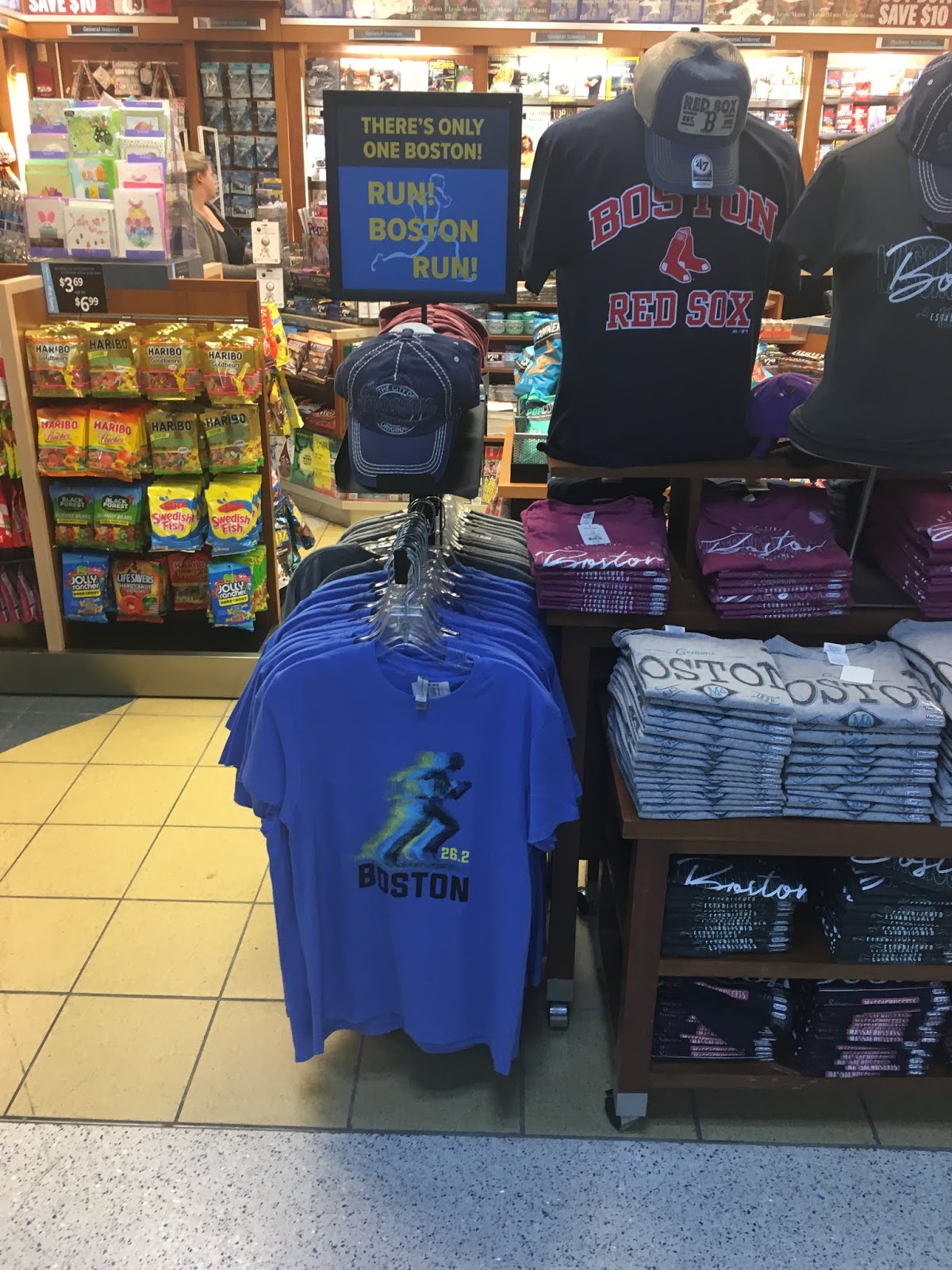
Seen at the airport: 43(a) violation?

Sign: Run Boston Run!  Shirt: Runner with “26.2 Boston”

from Blogger http://bit.ly/2DqXEow

Posted in Uncategorized | Tagged | Leave a comment

Copyright Office event on copyright & sports

Posted in Uncategorized | Tagged , | Leave a comment

TMSR, part 3

Session 3: Defining Marks in Trademark Law vs. Defining
Subject Matter in Adjacent Areas of IP
In formulating rules about defining marks in trademark law,
what (if anything) can be learned from the longstanding debate about defining pictorial,
graphic, and sculptural works in copyright law? What can be learned from the
nascent modern debate in design patent law about defining design patent subject
matter through the disclosure in a design patent document? How do these mainly
doctrinal questions feed into conceptual inquiries—such as, what is a “design”
for purposes of design patent law, and how does that compare to what we think a
“mark” is in modern trademark jurisprudence? Is the ornamental visual
impression associated with an article of manufacture (as per design patent law)
distinct from the non-functional goodwill-symbolizing combination of visual
characteristics (as per trademark law)? To what extent can we use doctrine in
these areas to help draw the line between trademarks and other forms of
intellectual property?
Introduction:   Rebecca
Tushnet
Apologies for not doing a great job answering these
questions directly; I found myself thinking about the analogical project rather
than diving into the details.  Borrowing
lessons may be especially tricky b/c of the temptation to hope that the grass
is greener in another field, where in fact there’s likely to be fractal
complexity/just as much uncertainty on similar details as there is in the
fields we know well. Sarah Burstein’s been doing a great job explaining to us
the unsettled and/or unsettling parts of design patent claiming, suggesting
that we might not get as much help as we want from comparisons to design patent
except in very broad strokes.
A special problem here discussed in detail yesterday, is
that claiming will be lagging in TM as long as Ps can claim that confusion is
the foundation of the cause of action; putting weight on claiming is
antithetical to preventing consumer confusion at least in the sense of having
an individualized inquiry. Claiming only makes sense as part of a broader
commitment to structural features of the regime that we think will produce
beneficial results overall; it is inherently in tension with an individualized
confusion determination though not necessarily in tension with an error costs
account of a regime that overall seeks to minimize consumer confusion. This is
one reason to expect resistance from crossover with non confusion based
doctrines whether copyright or patent.
In particular, TM can resist importation from other
doctrines by contesting how much definitions even matter. We haven’t spent as
much time on the point that unfair competition is the antithesis of
non-case-specific definition—under Kellogg-type doctrines, you may need a
definition of what the defendant can’t do, and you may get a definition of what
people in general can do (as long as they take differentiating steps) but you
don’t necessarily need a before the fact definition of the plaintiff’s rights. My
version of “negative space”: stuff you can do, but it may imply that you have
to do other stuff as well if you choose to do the allowed stuff (e.g., can copy
an unpatented article, but must use your own house mark on it)—not quite
negative in the ordinary sense.
Roland Barthes and the writerly versus readerly texts: The
writerly text is one that demands input from the reader who must herself enter
into the infinite play of meaning of text, becoming herself a writer to receive
it. Readerly texts, by contrast, don’t give the reader a role as a site of the
production of meaning, “but only as the receiver
of a fixed, pre-determined, reading
.” 
I think there might be something there for marks generally, but right
now I want to offer the idea of producerly and consumerly definitions of
marks.  Producer-oriented definitions of
marks can draw more from other fields of IP, where we have normative and
empirical commitments to the scope of rights that are usually less dependent on
the social meaning of a particular work or use and more dependent on social
policy writ large.  Consumer-oriented
definitions of marks set themselves against the usual incentive or
labor/natural rights-based justifications for patents and copyrights, demanding
flexibility to the consumer’s perception. 
Registration is producerly; unfair competition is consumerly.
Lots of our principles are fundamentally producerly: For
example, Why not protect style? What if we were convinced that it was serving
as an indicator of source, as it often does for creative works?  Consider Milstein v. Gregor, involving
die-cut greeting cards in the shape of the objects depicted in a
photograph—bouquet of daffodils, a sunflower, a butterfly, a pair of ballet
shoes: Trade dress does not protect an idea or concept. Note that this is not
an issue of definition of the trade dress. The problem of competitive freedom
to operate does not go away even if you have a very clear definition of the
trade dress; it was relatively easy to figure out what the plaintiff was
claiming, but the claimed matter was still too abstract.  And yet: if people really would be confused,
why would it matter that the claimed subject matter was abstract?  That is, why couldn’t a plaintiff own a
trademark right in a concept, if in fact every implementation of that concept
made people think that the implementation came from the trademark owner? 
Some other provocations: Does the incentive justification
for ©/patent play a role in the definitions of what is the work or the patented
invention? Abraham Drassinower’s work on this is relevant, and suggests that
the answer is that the incentive justification doesn’t do much work on
definitions of the protected matter as a whole, even if it might affect what
parts of the work are free for others to copy. 
As he points out, we don’t generally even ask if protecting ideas would
get us more ideas b/c ideas aren’t w/in scope of copyright.  Implication, and it may contradict what I just
said about consumer-oriented definitions—I’m still thinking this through—is
that many of the tools that we have from other areas of IP might be
transferable because they aren’t fundamentally incentive based; rather, at
least some of them are about what we think judges and juries might be competent
to do. Bob Bone might identify at least some of them as error-cost-based tools,
and error-cost based tools might well be similar across areas of IP with
different justifications.
Static v. dynamic justifications: how responsive do we think
claimants will be to the legal regime? How responsive will consumers be? If one
group is responsive or nonresponsive enough perhaps we need not worry too much
about the other…  And there are reasons
to think that people may be pretty nonresponsive to the legal regime.  References on Twitter as indicating
source/sponsorship—would it even be possible to change Twitter users’
perceptions about who has the right to decide whether a person can use a
hashtag associated with a brand?  On the
other side, I really love the Regents of the University of Wisconsin TTAB case,
which finds that lack of control over the mark for nearly fifty years doesn’t
destroy the university’s rights because public perception continues to
associate the mark with the university—lack of supervision doesn’t work to
eliminate rights. In those circumstances, then, we may have to take consumers
as we find them.
The one very specific point that occurred to me as I
reviewed the materials about lessons to be learned from other regimes comes
from design patent: Sarah Burstein’s argument that we should take the design as
a whole as the unit of analysis, because that’s what consumers see. This is of
course also true for TM—the consumer sees the whole thing, which creates
challenges for filtering out unprotectable elements when trade dress is
claimed. But I’m really intrigued by the concept of limping marks—marks that are
theoretically capable of bearing trademark meaning, and sort of do so, but not
really because consumers always see them with more prominent or salient marks,
usually conventional word marks.  I think
the argument that we should consider the design patent as being for an entire
article or service is actually structurally similar to the argument for having
a limping marks doctrine.
Lisa Ramsey: could we find something in TM law that is
analogous to “article of manufacture” to motivate the rule for looking at the
whole good/service?  [how do you look at
the service as a whole? The visual trade dress of the provider of the service,
perhaps, but why even limit it to the visual?] Distinctiveness might be one
hook.  Morality/illegality (tax evasion)
exclusions in patent—could we connect those to TM morality exclusions?  Could be used to deny TM protection to
culturally significant works, per Martin Senftleben.
Prosecution history estoppel: great argument by Gangjee that
you should use it to limit the scope of the mark.  Standard scenario: Apply for a mark, submit
T-shirt w/specimen that’s a huge print on the front; PTO rejects the specimen
on ornamentality, but when the applicant resubmits w/mark printed on a hangtag,
they get the registration.  But if we
allow such registrations, we shouldn’t allow the TM claimant to sue someone for
putting it on the front of the T-shirt—they’ve accepted that it isn’t
functioning as a mark/to indicate source when it’s on the front of a
T-shirt.  [The I heart DC case might be a
good place to start with this argument.]
Until we have more statutory defenses, categorical
exclusions for certain types of subject matter, the project will be difficult.
Scenes a faire/merger as analogous: should we have a “thin
TM” in certain kinds of marks? Those that are inherently valuable expression,
such as descriptive terms, socially valuable images that had value before
adoption as a mark.  Virtual identity as
w/© should be required to infringe.
Skeptical about channeling—not too troubled by Mickey Mouse
as © and TM subject matter. But more troubled by claiming preexisting symbols.
Discussant:      Jessica
Silbey
Separability as a way to help?  All the doctrines are converging on a big
mess, resisting admitting aesthetic truth that we know to be true when you
study design practice: aesthetics and functionality are not separable.  Various techniques in the doctrines
purporting to distinguish these things are kinds of denial.  Most people who make marks do not distinguish
between their aesthetics and their utilitarian impacts. When you talk to people
about how they developed a mark or why they assert rights (as opposed to how
the complaint is drafted), they don’t talk about confusion as much as they talk
about defamation—attached to a relationship created w/groups of people through
the mark.  Sentimentality rather than
markets.
Interviewers w/designers: what is a design?  One consistent story: they have a metric for
good design/design practice that resists separating functional from aesthetic
as disciplinary matter. Most designers they’ve interviewed don’t even file for
patents though their clients will. 
Design as experience: great design changes the way you relate to your
environment, e.g. the Swiffer that made people’s experience of living
in/cleaning the home better—it’s more pleasurable to clean the floor when you
can rip off the dirty cover and see what you’ve done. Similarly, photographers
say the value they add is the experience they bring—professional behavior to
the production of the work; they sell the work but they’re really selling their
service of creating photos.
Doctrines are muddled b/c of fact that separability is
fiction. Infringement is stuff that’s dishonest or that prevents them from
engaging in the practice/discipline of aesthetic practice. What would taking
inseparability seriously look like?
Lemley: U Wisc. example: interesting juxtaposition b/t that
and all the sponsorship and affiliation cases. 50 years of not policing Bucky
Badger doesn’t change affiliation w/university or harm university’s reputation,
but adopting a color with no logo is somehow going to injure the university in
Smack Apparel. Is there any way to tie these insights together? With TDRA we’ve
done better in defining relevant action as association that diminishes distinctiveness, but can we bring that back into
infringement doctrine.
If it’s the integration of form & function that we
desire, then either functionality will preclude all protection or we have to
abandon functionality as a limit in the design context.  You see design patent & TM pushing
towards alternative formulations: design patent has essentially eliminated
functionality as a constraint and TM has not. But if you believe your designers
perhaps design patent is right [at least w/article of manufacture properly
defined].
Gordon: Drassinower point: he’s big on © as communication
and author v. author conflicts.  Doesn’t
see TM as that kind of Kantian communication. 
Speaker v. speaker no-liability rules don’t have much relationship
between to TM.  Incentives as not
explaining ©: his reasons for saying that doesn’t make sense for me—you can
justify a machine called © where there are long rights and a defense of
independent creation; patent is short and no independent creation defense. What
kinds of things fit into the copyright machine v. patent machine?  Frequent simultaneous inventions and need for
monopoly to profit = justification for patent. 
Structures do lead to definitions of subject matter.  Old TM definitions: only protected against
passing off/real confusion as a requirement—that machine fit TM law better,
though the current law doesn’t work. 
Economic approach shows irrationality of current system. [We had a
debate about idea protection and whether idea torts were designed to
incentivize idea generation.]
Sheff: connection b/t resistance of consumer psychology to
legal rules and vice versa and Silbey’s point about separability/designers’
perception of what they’re doing v. the legal rules that purport to govern what
they’re doing – cf. Beebe’s semiotic account of TM protection.  One account of consumer psychology is that as
rights expand the observed universe of TMs changes; consumers observe that
universe and alter their perceptions of what the law allows accordingly (Jim
Gibson). Another: Zahr Said’s entrepreneurial consumer who is savvy and
skeptical. That’s an empirical question. But the underlying theoretical
question is to what extent legal rules and consumer perception are independent
of one another v. causally related in a deterministic way.  Requires us to distinguish b/t subject matter,
the right itself, and the experience of the right in the market.  One of the issues w/claiming is that each
other system approaches the claim & subject matter differently. Utility:
the subject matter is the invention and the claim is the descriptions drawn to
the invention. ©: Fixation is the claim, which is the thing itself.  This relates to Beebe’s distinction b/t
signifier, signified, but is more complicated. 
[I’m pretty sure I missed a lot here.]
McGeveran: Statutory safe harbors for intermediaries against
claiming are example of borrowing that looks appealing to him, though grass is
indeed always greener on the other side of a doctrine.  But the differences b/t regimes affect the
levers you have to change things.  Note
that statutes are just written with a bunch more detail now, which affects how
dilution looks in the statute v. how infringement looks.  Maybe the US is just broken no matter which
legislation you look at.
Burrell: prosecution history estoppel as promising.  Only reservation: think carefully about how
TM bar would then respond.  At the
moment, they get away with anything b/c not held to what they say. Rather than
messing around w/an examiner, you could go straight to a hearing, make the same
arguments orally and hope that not too much got reflected in the judgment.
McKenna: designers think utilitarian function is nothing
special to them. It’s not a special kind of constraint from the other
constraints under which they operate. 
It’s a legal construct.  The
dimensions of separation, not just separability, are a myth.  Our legal doctrines are protecting
outputs/artifacts, but designers don’t talk about the stuff, which is just
enabling what they’re doing: change how people are going to operate in the
world. The artifacts are not the apotheosis of the design. Sometimes the result
of design is an artifact, but sometimes not. Sometimes they mean digital
experience, but sometimes they mean “what happens when you call the call
center?”—that’s equally designed. Artifacts are ancillary. One area where you
see claims trying to capture that is in trade dress, and we recoil at that as a
description of a business—Fair Wind Sailing case where they use a particular
catamaran to train people how to sail—that actually resonates w/ designer.  Not interested in necessarily conforming law
to designers’ beliefs but understanding the interaction b/t law and practice.
Overwhelmingly designers don’t think about law. That’s the
client’s problem. The law matters, b/c sometimes the clients care enough about
freedom to operate etc., but it’s not how they think.
Janis: in plant breeding, he found plant breeders started
talking about plant variety, which wasn’t a biological concept; they adopted it
b/c of the patent system. 
Heymann: these things are not completely distinct but not
expressed in legal terms. Designer might encourage a client to adopt something
to create a distinction, or might use elements that communicate “this is a
shopping center.”  Distinctiveness/source
indication may come out through the design, as personality concerns, but not
separate legal concepts.
Beebe: lawyers shouldn’t retreat in the face of the romantic
artist concept; they’re subject to law like everyone else.
Austin: narratives of origin v. narratives in the
marketplace. What happens when the assignee gets hold of something, starts
speaking about the object in terms that track the legal constructs more
closely? An artist might design a yacht to create experiences for people on a
boat, but a firm may tout its speed.
Silbey: consulting designers don’t seem to have continuing
attachments to the thing they designed. Have asked them what unfair competition
is; the other day, someone said that they have skills and that the client can
only have a part of that, an artifact, at the end of the day.  Privileged in their distance from the
market.  [Then unfair competition would
involve employment/noncompete agreements, I would think.]
Fromer: precisely b/c designers don’t separate design &
function, we must do so through the law. 
There are a lot of the same people on Apple/Microsoft utility &
design patents. What’s going on?  Design
& utility patents are used in conjunction to capture the design/function
fusion, but that is the opposite of the conceptual framework of patent &
TM. Sometimes design patents are being used to capture elements of appearance
made possible by function, and utility patents are used to capture functions
that appear because of design.  If you
were to protect only the integration and take inseparability seriously, you’d
only protect that precise version—not any difference in function or form.  Protecting the integration of the two
requires the protection of each, form and function, separately. 
McKenna: if what we think designers do is to integrate, then
we should protect the integration. If others can separate them and made a
different use, then why not allow that?
Bone: why should we care as lawyers about this very
interesting work?  We do want to know how
designers will react to a given legal regime. How would a designer want to use
a previous design? That could help understand social costs of exclusivity over
a particular design.  Does the literature
by people who write/teach in the field teach anything different?
Silbey: design industry is relatively new, moving from
automotive & fashion.  Started in the
60s with strong personalities at 4-5 firms. 
New generation of designers may be more attuned to legal issues—they do
worry about trolls and look at prior art. They are trying to make, e.g., the
best safety system for their client, and they’re going to look at other safety
systems.  Resists the idea that law on
the books is distinguishable from behavior in the way posited—ignorance of law
or actual behavior is highly relevant to how the law on the books got there and
develops. C&D practice etc. are part of law on the books.  Not pragmatic as much as this is what it
means to study law.
Burrell: should we be reacting so strongly to an industry so
new?  We had design patent in the UK in
the 1840s; be cautious about temporary change in the design industry.
Dinwoodie: whether we should map legal doctrine to
reality—some depends on why we think we’re protecting the rights. If they don’t
respond to incentives and that’s our justification, that’s a different issue
than if our justification is desert or some other theory. On constraint: Design
Directive excludes things that are dictated by functional considerations, and
British courts interpret that much more broadly than European court—market can
constrain as well as any other utilitarian demand.
Gangjee: why not protect style?  If consumers recognize it.  V. limping/supported marks. Perhaps one
answers the other: you never look at style in the abstract, it’s always
supported by something. Which takes him back to distinctiveness, which may be
the great underlying issue.  [Which means
the no-style rule is an irrebuttable presumption. I’m ok with that!]  History of TM law: injunctions often are
context-specific—requiring differentiation.
RT: Integration of form and function as a kind of aesthetic
discrimination?  That’s not the standard
we actually impose on design patentees.  Normative
and empirical question: why should our rules focus on the experience and
desires or even needs of elite designers? As far as I can tell, that’s not what
most design patents look like, and query whether it’s true of most utility
patents at least outside of consumer electronics.  This isn’t copyright where there is a case
(not fully convincing to me) that the rules should be set for market-incentivized
works even though the rules then cover all works.  Here, the set of people who file for design
patents is going to have a different relationship to the law and responsiveness
to change in the law, and maybe it’s them we should be targeting with our
rules—which gets back to Burrell’s points about looking at the incentives and
responses of people who actually interact with the registration authority.
Grinvald: do the design consultants really avoid the law/get
indemnification?
McKenna: in house designers are different, but consultancies
say that it’s the client’s problem; sometimes the designers have to listen to
the lawyers brought in by clients but that’s not how they try to solve the
problem.
Silbey: contractually they do not have liability.
Heymann: ad agencies say the same thing.
Silbey: photographers too—it’s the client’s problem.  The creators are not that different even if
the legal regimes differ. Designers of multitools think they are art, like
paintings.
Mid-Point Discussants:           Laura
Heymann: Knowing that there’s divergence b/t law and lived experience doesn’t
tell us how or whether the law should change. Especially given feedback loops
in responses to what the law says or what people think the law says.  Remedies are also related to the Q of
experience/written law.  Lawyers say we
need an injunction; designers want an acknowledgement. Maybe that disconnect is
inherent in commercialized world.
Mike Grynberg: TM is the regime ostensibly concerned
w/information in the ordinary sense of the word.  Trade dress is the use of a design qua
design: info that this is pretty or useful or both. Use of design to convey non
design info: this is a cocktail shaker. 
Use of design to convey source info: this is a cocktail shaker from a
particular source.  There is a mix of
potential motivations in use of the design: satisfying consumer expectations;
to compete unfairly (active deception: core of TM); to convey information
(classic fair use). There are litigation mismatches, when D uses design to
convey nonsource information; court may use the label functionality b/c it has
a hard time managing the range of meanings that might be embodied in a TM.
Auto-motive Gold: use is associational/complementary, but court reacts as if it
endangers the core of TM meaning. Courts lack good language for talking about
interplay of meanings. Exists for word marks as well too, possibly exacerbated
w/design marks.  Hydraulic expansion of
design patent: maybe we can tell courts they don’t have to do this in TM b/c
there’s a place people can go to protect the value if there’s really something
there.  Word mark choices are also
affected by “design” considerations. 
Flizzatz is a protectable mark for deodorant, but a bad name.  An attractive name would be something like
Clean, which comes prefilled with information, but TM law would make it harder
to protect. Wal-Mart does the same thing with product design, but courts
haven’t necessarily internalized that we should also be careful at the
infringement inquiry stage to ensure that we aren’t allocating rights because
it’s attractive/has positive connotations.
Silbey: so many descriptions of harm are personal harms:
integrity. They are also complaints about a system that’s abusive, not working
for them. Lack of proportionality in return for labor. Lack of
transparency.  Incumbency problem.
Linford: has written about how things like sounds can convey
features. We make assumptions about marks from the category from which they’re
picked.  Courts don’t allow generic terms
to become marks even if meaning changes over time. Are these stories about how
designers aren’t thinking about source significance when they design relevant
if source signification develops over time? We can be skeptical about whether
this process has actually occurred, or is likely to occur, but shouldn’t we offer
the option?  [Style?]
Burrell: our sense of what harm is in TM: in Australian law,
when “confusion” is established, they describe the harm as: customers used to
look at you as provider of unique products, and now that relationship is
disrupted, so here’s some money. That’s where the harm of “brand” analysis is
coming.

from Blogger http://bit.ly/2XkmH4d

Posted in Uncategorized | Tagged , , , | Leave a comment

TMSR, part 2

Session 2:  Defining
Markets: Doctrinal Settings for Market Analysis in Trademark Law
Trademark law clearly already undertakes market definition
in the analysis of genericism and also for functionality. Are current
approaches adequate? Are markets defined the same way, through the same
inquiries, in both settings?   Should
they be?   If so, what are the essential inquiries?  How does market definition operate within the
factors test for likelihood of confusion – superficially, through the similarity-of-products
or similarity-of-market-channels factors? Or more profoundly? Is market
definition in fact ubiquitous in trademark law analysis because it is an
inquiry implicitly undertaken whenever a mark owner defines the underlying
goods or services with which the mark is used? In which other trademark
doctrines—if any—is market definition doing substantial work, even if below the
surface? Is there a coherent concept of market definition in operation across
trademark law doctrines? If not, should such a concept be developed and
imposed?
Introduction:   Jessica
Litman [sadly missed, due to teaching]
Bob Bone [midtalk]: How careful we want to be about market
definition may depend on error costs. If we’re worried about anticompetitive
effects of product trade dress protection and we know other marks are
available, we may tilt in favor of narrowing market definition.
If we cared more about commercial morality, market
definition would be less important. 
[Unless we thought that the TM owner’s market gave it preemptive rights
in nearby markets.]
Discussant:      Bill
McGeveran: in what sense is this even a market? Is that word even meaningful for
some of the things that are packed into this prompt?  Two roofing contractors; one claimed a TM in
orange and had a registration in orange, more or less. For what, though?  In one sense, clearly a defined market—two geog.
competing providers of identical services. Scope? Hue?  Claimed orange on T-shirts that workers wore—but
orange for safety equipment is pretty functional.  Is the market “the market for orange
T-shirted workers”? Market definition is often not about defining markets.
Second, increasing detachment of modern brand-oriented law
from TM is putting pressure on markets as a working concept. Increasing
merchandising; detachment of online purchasing from presence; cross-licensing—all
involve assertions of rights well outside the traditional “market.” One reason
those doctrines have been so messy is that we’re using market-anchored concepts
to talk about marks that are no longer anchored in markets.  This work is necessary, but if every doctrine
instructs you to go back and consult the market, and you can’t identify the
market, the doctrine is broken.
Dinwoodie: we’re more concerned as a group seemingly about
defining the mark than defining the market. But if TM law is a law of
competition, that matters; why be so comfortable w/allowing parties
opportunistic definitions in litigation v. mark definition?
Silbey: Interaction b/t TM and other fields matters here—bankruptcy.
Lemley: Lynn LoPucki suggested that we could take
franchising more seriously—if you hold yourself out as a McDonald’s, you’re a
McDonald’s and your employees are McDonald’s employees.
McKenna: confusion isn’t found in nature; you have to know
where to look to do a survey and once you ask a set of people you’ve defined a
market.  Happens all the time if we’re
trying to think about confusion. Happens implicitly every time an examining att’y
decides that goods/services are remote enough to avoid confusion. Almost always
done by uninformed, intuitive judgments.
RT: it seems as if one difference from antitrust is that
antitrust takes markets as they are. Functionality in TM at least takes markets
as they could be, if there were perfect information—we’re not going interfere
w/ the potential, even if people don’t understand that this design produces
some specific benefits.  Similarly
infringement takes markets as they could be with the idea that producers can be
in multiple markets and consumers can expect that cross-market presence—the
lack of substitutability of salt for sugar doesn’t directly bear on whether a
producer of one would produce (or license its marks for production of) the
other.
Dinwoodie: bridging the gap; ITU/non use based systems are
allocation of future markets—TM law in some ways constructs markets rather than
reacting to them.
Grynberg: Market definition does little work b/c of approval
confusion in cases like Diageo/red dripping wax for alcohol, or court just
makes up its idea of the market.
Linford: path dependencies? Do you take Simon Tam at his
word that he can’t get a record label to sign him without a ® for his
band? 
McGeveran: we’re not defining a market any more, we’re defining
a class of potential harm (poorly) and a class of potential perceivers of the mark.
Dinwoodie: vehicle for implementing levels of
paternalism/competition/choice.
Austin: TM law assumes everyone wants to use a “virgin” mark
and put it on everything, but doesn’t often ask whether that’s what producers
or consumers want.  UK SCt: Starbucks
decision gives an embarrassing attempt to segregate markets internationally. Eschewed
consumer perceptions/desires and segregated markets along geopolitical borders,
incoherently. Maybe there’s a degree of relaxation about defining markets b/c
there’s so many ways to do it badly.
McKenna: maybe we’re using market in different ways compared
to RT’s example (sugar/salt related?). 
TM law says that if people think both would produce, then they’re in the
same market. But we’d still look at the D’s consumers: if Morton’s Salt sued
Morton’s Sugar, we’d still look at sugar consumers—if they overlap that’s fine,
but we shouldn’t assume that.  That’s one
way Ps manipulate their surveys: by baking that in to the structure of the
survey [no pun intended, I assume]. If you find confusion among sugar
consumers, you could find that Morton’s should own the rights in sugar, but you
can’t assume you found in nature an existing set of consumers.
Dinwoodie: he thinks you’re allocating the sugar market to
the salt producer, but it’s still two markets.
Mike Meurer: antitrust considers things like whether a
producer might enter the market if there were a price rise by existing
producers—could that be analogized to anything like TM and what the TM owner
might like to do if things change?
Linford: Belmora as a case where US consumers may be tricked,
though maybe not problematic if the chemical composition is the same; the party
seeking to vindicate this harm may be the wrong party.  Is the Morton Salt company the right enforcer
of rights against Morton Sugar?
Gangjee: Market highly relevant/picky definitions for
registration.  Exhaustion/first sale:
markets matter a lot. But by the time you get to infringement, we’re just
interested in perceivers (per McGeveran).
Beebe: dilution signals a a fundamental issue about size of “market”
and disappearance of market inquiry; dilution makes the mark everything.
Expansive doctrines like IIC, approval, and post sale confusion tend to be
market-limit-busting arguments.
Dogan: if we define markets broadly consumers come to expect
more crossover/more easily confused. [I wonder about this.  How do we know how consumers learn the rules?
In my class the other day we were talking about the public understanding that
use of a hashtag on Twitter is not controlled by TM owners. Is it just a matter
of its there-ness for us?]
Heymann: aesthetic functionality: what is the market in
which a ring pop/baroque silverware producer is seeking to compete?  The court there wanted to know who they
thought their competitors were.
Dinwoodie: are courts better on this for product
design/functionality than for other issues? 
It’s more important to define the market in such cases.
Dogan: TM owner meaning v. intrinsic appeal—very hard to
segregate those things (which turn out to be important to resolve the issue of
what the market is). No one would argue that Burberry plaid lacked substitutes
before Burberry developed secondary meaning [though no one would dispute it had
intrinsic appeal before that, I think, forcing us to figure out whether there
was something nonsubstitutable about the intrinsic appeal].
Gordon: as a Veblenite, wants to reject the idea that
consumers’ desire to purchase status should be part of the TM.  Burberry plaid purchase often has nothing to
do w/actual appearance of Burberry, or with quality of product; they want to
wear something that will signal status. That’s functionality to her.
Diamond: the survey expert is the person who does market
definition in a TM case. We often make immediate assumptions and there might be
different perspectives upon a deeper dive. 
Session 2,  Cont’d
Mark Lemley: point of TM law from producer perspective is
product differentiation. That shouldn’t matter in a world in which I own the
market for another reason; if I own the only patent, I shouldn’t need a brand,
and using it is just preparation against impending expiration. TMs, to have
value, should operate against a background of differentiated competitors. But how
imperfect is the competition? A function of how broad the differentiation is
and how broad IP rights are. And there is an antitrust/IP mismatch.  One implication: there may well be
circumstances in which the brand defines its own market.  RT wouldn’t respond to a small, significant,
nontransitory price increase of Diet Coke; if enough are like her, it’s its own
market.
We reach beyond the market in lots of doctrines—post-sale
confusion, dilution, etc.—look beyond expected consumers to a completely
different group. The core may be about differentiated product competition, but
we’re also starting to think of the brand itself as a market. Part of that is
abandoning similarity of goods as a touchstone for confusion. Luxury goods,
team logos, school colors: the thing I want is the identifier/participation in
the group.  Has tried to resist this
change, but it seems to be the way the law has gone.
If we took brand as market seriously for antitrust purposes—fine,
you want to own the market, we will treat you as a monopolist for antitrust
purposes—lawfully acquired monopolies are ok but get scrutiny of some of their
practices.
Further emphasizes need for materiality/TM injury doctrine
to measure when we should care. D’s benefit theory of remedies is completely
circular once we’ve abandoned a market definition attempt; thus we should look
for actual injury to TM owner, even injury that goes beyond lost sales.  Why do consumers care about this confusion?
What is the connection b/t D’s benefit and P’s harm?
Right now we seem to reject the weight similarity of goods
as a factor when it might help Ds and consider it very significant when it favors
Ps; perhaps we should be more evenhanded. [I thought Beebe’s empirical survey
suggested that similarity of goods could be dispositive when it favored Ds.]
Shari Diamond: Dilution and markets: fame is general consuming
public. But when you get to tarnishment, what’s the relevant market? Can you be
tarnished among nonconsumers? The statute is silent.
Courts spend a lot of time thinking about relevant population—it’s
relatively easy for court to look at universe to decide whether the survey is
helpful to the position the court has decided will prevail. Flexibility to
declare the survey universe too broad or too narrow. For a prescription drug:
is it physicians? Physicians who can prescribe the drug?  Users who might take the drug?  For toys: who buys the toys? But who sees it
advertised and lobbies for it?
How much do surveys cost? 
Online surveys have helped a bit for demographic diversity w/o too much
costs. But it depends.  It can be
$50,000-$100,000.  It depends on how hard
it is to get a respondent who’s qualified. If you want a physician, you’ll pay
a lot b/c the panels pay them a lot. If you have toothpaste, it’s much cheaper.
Though that wouldn’t include expert time—just the survey itself.
Discussant:      Leah
Chan Grinvald: real world consequences for how we operate for SMEs and
others—uncertainty about how a court would treat a survey even if you have one.
This really squishy notion of market definition hurts b/c they will narrow the market
definition if they can or they may have a less visionary view of future market
as they try to make it in their small market category. This has a feedback
effect and contrasts w/ Amazon getting bigger and bigger.
McKenna: TM as information but we presume that TM owner has
control over production of goods. As design and production separate (3D
printers at home) it will be more an abstract notion of design rather than
production quality. That’s another path to making the mark its own market.
Goldman: there are multiple market segments for any product.  Some may be confused and others may not
be. 
Diamond: what is a judge supposed to do with that?
Goldman: may allow more defense arguments; when he sees 15%
confusion, he thinks about the other consumers who aren’t confused.

Bone: the brand may not be a market in itself if it competes w/other marks that
communicate the same kind of information. But at the end of the day, a brand is
not a TM.
[much discussion about brands v. TMs, rights in gross v.
rights appurtenant to particular products, rights that are appropriated from
preexisting meaning (e.g. rights claimed in the Mona Lisa) versus supposedly
self-generated value (versus strong sentiment that no one makes value on their
own/Felix Cohen was right)]
McKenna: Any use of Coca-Cola [as a mark] would cause
confusion under current doctrine. And that also affects what counts as “use as
a mark.”  The only limits that allow
other people to use Coca-Cola are nominative use, Rogers, etc. However: The
doctrines we have created so that Coca-Cola can do that are not limited to
Coca-Cola strength marks and that’s what creates havoc.
McGeveran: Basically any brand will get the right to put its
mark on a T-shirt: undifferentiated licensing markets, in places like PacSun
and Hot Topic, where NASA and movies and bands and all sorts of other things
are simply displayed as possibilities.
Austin: classic view: seeing a Rubik’s cube on a T-shirt
doesn’t mean you think it’s from there—we look at the label.
Lemley: but post-sale confusion gets rid of that. Proposal:
when suing actual competitors, give latitude on mark similarity
(Cyclone/Tornado for fencing). Maybe for brands, with this new vision, we’ve
given them every right in the world except for the old carve-outs [first sale, Rogers],
but that applies only to identical marks.  Schecter, but modified.  He wouldn’t allow rights in pure text, only
the copying of the logo.  There are some
cases where courts happily distinguish between using the word mark to talk
about the TM owner, but don’t allow use of the logo. People might well
distinguish in their minds b/t those two corresponding to TM v. brand.
Dinwoodie: Europeans are familiar w/ the difficulties that
come from “same mark” standards.
Lemley: yeah, but it’s better than nothing.
Dogan: what do we do to emphasize social benefits of limits?
Cheaper spare parts; price of T-shirts may go down. Numbers matter.
Linford: he’s not sure that maximizing price competition is
always good. Consumers can lose, whether from Veblen satisfaction or otherwise.
Lemley: he agrees to an extent, but his reaction is yeah,
that seems like a real social value and I don’t see why people would give it to
the TM owner. If people putt better b/c they have a Nike putter, then we should
let everyone call their putters Nike. Veblen goods are harder b/c barring the
great unwashed is what gives value, but the power of a placebo should belong to
the public.
Linford: you’re presuming it’s sticky—that if copying is
allowed that value won’t be lost. But that’s an empirical question.

from Blogger http://bit.ly/2GjZcT6

Posted in Uncategorized | Tagged , , | Leave a comment

Non-party video provides plausibility to falsify claim that hose is “tough enough to tow a truck”

Telebrands Corp. v. Ragner Technol. Corp., No. 16-3474 (ES)
(MAH), 2019 WL 1468156 (D.N.J. Apr. 3, 2019)
“The dispute between these parties spans multiple lawsuits,
multiple jurisdictions, and even multiple countries.” Ragner owns patents for
expandable hoses.  Telebrands sells
expandable hoses and is the exclusive licensee of another patent directed to
expandable hose technology.  It filed for
declaratory judgmeint that the patents-in-suit are invalid and that Telebrands
has not infringed any of them, and Ragner counterclaimed for infringement,
unfair competition, and false advertising.
Defendants alleged that one video falsely and misleadingly
stated that the Telebrands product was “strong enough to pull this 5,000 pound
SUV,” while another falsely and misleadingly stated that the product was “tough
enough to tow a truck.” Defendants also alleged that Telebrands improperly
obtained a Ragner prototype from a third party, and then used that prototype to
develop its products.
Telebrands argued that Ragner didn’t plead literal falsity
because “[i]t’s strong enough to pull this 5,000 pound SUV” and “[i]t’s tough
enough to tow a truck” “only communicate a message that the hoses could pull
the vehicles shown in the advertisements—not that the hoses could pull a
vehicle generally.” The court disagreed; Ragner pled that “[e]ach of [the
previous] statements is unequivocally false.” It provided a link to a non-party
video purportedly demonstrating the falsity of the statement. “These pleaded
facts, accepted as true and read in a light favorable to Defendants, lead to
the reasonable inference that the statement in the video is unambiguous and
false, or at least that it has a tendency to deceive.” [Note that consumers are
often not treated nearly as well when submitting evidence that third parties
have tested and disagreed with an advertising claim.]
Defendants adequately pleaded materiality by alleging that
“[u]pon information and belief, [Telebrands’] false and misleading
advertisements led to increased sales of Pocket Hoses, to the detriment of
Defendants.” This led to the reasonable inference that the deception “is likely
to influence purchasing decisions.” Telebrands argued that “[i]t is implausible
that any customer is being induced to purchase the POCKET HOSE products to pull
their vehicles,” but acknowledged that the video ads spoke generally to the
high strength of the products, which could plausibly influence purchase
decisions.
Likewise, the statements weren’t puffery as a matter of law.
“The claims at issue appear specific (e.g., ‘[i]t’s strong enough to pull this
5,000 pound SUV”) and directed to a product attribute that the Court at this
stage can only assume is measurable (i.e., strength).”
A counterclaim for tortious interference with prospective
advantage also survived, based on the alleged improper taking of Ragner’s
prototype, even though Telebrands argued that Ragner’s failure to identify a
specific, interfered-with transaction was fatal. The court found this “meritless.”  Courts have found ‘a reasonable expectation
of economic gain in as slight an interest as prospective public sales.’ ”  As to malice and causation, “[i]f anything
constitutes the ‘luring away, by devious, improper and unrighteous means, of
the customer of another,’ it is taking a confidential and proprietary prototype
of another and selling your own version of it to their prospective customers.”
However, the counterclaim for misappropriation of
intellectual property under New Jersey law failed. Allegedly, counsel at defendants’
law firm copied claim language from the patent exclusively licensed to
Telebrands into patent applications that issued as Ragner patents; during
prosecution, the inventors and Frost Brown did not disclose this conduct to the
USPTO, in violation of their duty of candor; and because of this improper
conduct, the patents were obtained fraudulently. “The Court is not aware of any
New Jersey state court or federal court decision recognizing misappropriation
of a patent, or the legal language contained in a patent claim, as a valid
cause of action.” And as pled, it would be preempted by federal patent law
anyway, despite Telebrands’ argument that there was an additional element of
direct competition.  [Which wouldn’t seem
to solve the conflict/field preemption problem anyway.]

from Blogger http://bit.ly/2Uwbdxi

Posted in Uncategorized | Tagged , | Leave a comment

Eleventh Trademark Scholars Roundtable: Defining Marks and Markets

Session 1:  The Process
for Defining Marks (Registered, Unregistered)
What are the different ways to define marks? What are/should
be our goals in defining marks? What are the costs of permitting fuzzy
definition? Are there costs to 
imposing  strict requirements in
defining marks? What are the next steps in the debate about claiming trade
dress? What would happen if we extended that critique to more conventional
(verbal) marks? What might the law relating to verbal marks learn from the
restrictive claiming principles that some courts have articulated (or at least
gestured towards) in Section 43(a) cases involving unregistered trade dress?
How might we approach the definition of marks consisting of distinctive and
non-distinctive elements? How might these different principles shape what we
allow or encourage in registration practice? Would disclaimers be useful?
Should our  approach to mark definition
in the registration content apply equally if we embrace a distinct law of
unfair competition?
Introduction:   Jeanne
Fromer
2D aspect to TM rights: Central claiming as opposed to
peripheral utility patent claiming. As long as we tie TM to marketplace we are
likely to have some form of central claiming. 
We could do otherwise & say use in market has to match but that’s
unlikely.  This creates problems that McKenna
& Fromer puzzled over: what happened when there are multiple different
claims out there, e.g., a claim in the registration and then another claim in
litigation. A standard character mark registered but will be evaluated in its
actual font in an infringement case.  Central
claiming means claiming again and again. That can affect notice. To decide: How
much do we care about notice? 
Claiming by characteristic tells us what characteristics to
focus on; claiming by exemplar creates another level of inference, which claims
made in the market context tend to be. Registration claiming could be either
way.
Claiming timing: before or after use?  Can look very different depending on timing
relative to infringing conduct alleged. 
Can also alter the mark over time—font, etc.
How much should registration matter in determining
substantive rights?  YSL v. Louboutin is
a great case b/c it’s so odd compared to the rest of US TM law. Shows
registration matters very little; the court just orders it amended (at the
appellate level! Reevaluating the facts!). 
How much do we want a shadow TM system of registration versus
marketplace?  One possibility: we ought
to have broader benefits for aspects of marks that are registered—presumption of
validity, etc.  But the expansion of
rights should be scrutinized.
Distinctive v. nondistinctive elements—as TM scholars we don’t
think enough about what to do with this; in © there’s a strong analog about
dealing w/ original and nonoriginal aspects of the work and how to deal with
those in an infringement inquiry. Not clear we have a right answer in © but at
least we’re thinking about it.  Focusing
on defining marks is important b/c multifactor infringement test often zooms
back & forth b/t what the mark is in analyzing the different factors.  [Also notable in keyword ad cases where there’s
no consensus on what the comparison is between—D’s use of the mark or D’s resulting
ad text.]
Discussant:      Robert
Burrell
How should registration fix the boundaries of the TM monopoly?
 Registration based systems aren’t
thinking about this very clearly. We lack an integrated procedure for deciding
the scope of an IP right (Lemley/McKenna on scope). Two further problems: (1) Confusion
about the audience for the registration system underpins lack of clarity.  (2) Uncomfortable about relationship b/t
registration and reality of marketplace.
Who is a registration for? 
IP Translator: CJEU decision in which the court held, in effect, that
the use of class headings in specification isn’t a claim for all goods in that
class but only the things that appear in the heading. Most scholars like it for
reducing inadvertent, lazy overclaiming: if you want to claim it, write it
down. But if you look at the CJEU decision, there’s no reference to the need to
play overclaiming. Instead, the need is to provide econ. operators with clear
and precise information. But that’s only sensible if we assume the audience is
an unrepresented SME.  If it’s TM
insiders, there’s nothing wrong with saying “the claim covers all
goods/services in the class.”
Another case: When you’re interpreting a specification, you
can take into account the scope of the class in question.  He supports that too as restricting scope of
TM monopoly.  But that’s very much an
insider’s rule; a SME claiming use of gloves in class 10 wouldn’t understand
that it doesn’t cover gloves worn by Xray techs that are in class 9.  In Australia, we have a case that came to the
opposite conclusion: class numbers should be disregarded in interpreting the
specification b/c people who “peruse” the register should be able to understand
it. But TM attorneys would naturally assume that the class in which you’ve
chosen to apply has relevance to the specification!  Sec. 70 of the Australian TM Act: color is
not to be regarded as a feature of the mark unless the applicant has lodged a
statement.  Produces undesirable outcomes
for unrepresented people—you see green on the register, you’re going to think
green is part of the mark, but that’s not the rule.
Need to descend into the details of office practice:
sometimes the system is aimed at unrepresented SMEs—systems designed to help
self-filers. But doesn’t help you draft specification—just helps you find
conflicting marks. We should be unsurprised that an unrepresented SME will find
that they start making claims for things they have no intention of using. 
When overclaiming is inevitable, the consequence shouldn’t
be complete invalidation.
But in other areas the office prejudices SMEs.  A scattergun approach to potentially
conflicting marks: the examiner finds a potential problem in a quick search and
throws it back to the applicant, even if the conflict is an overlap in an
entirely descriptive element (shared use of CARS in car-related mark)—but for
the applicant, that extends the scope of the earlier mark beyond anything
reasonable.
Grenada case/realestate.com: justification is that
disclaimers don’t go into the marketplace and public has no notice of them, so
we disregard disclaimers of, e.g., the descriptive word component of th emark.  So we get the idea that we’re concerned w/TMs
as they exist in the market, and we need to be skeptical about any rule that
sees registration as a thing in itself. 
Max Planck study and USPTO practice shows similar dynamics.  Applicants may be clearly bad actors: awful
lot of evidence that defendant in realestate.au case had chosen the domain name
to cause confusion, w/similar color scheme. 
There was scope for confusion [ah, unfair competition].  We need to think more clearly about what we
ought to do other than say “tough luck, you chose a bad TM.”
Stacey Dogan: Why is TM clarity important?  Notice and notice failure, as Mike Meurer
demonstrated in patent context, imposes all sorts of costs, and also in TM.
Risk analysis is very indeterminate when someone has a registration of a sort
of similar word in sort of a similar market; decision turns partly on the
actual registration, partly on the nature of the use in the market, and partly
on how aggressive you expect the registrant to be. Tremendous impact on
commerce.
Different values underlie negative space of allowed use:
speech and competition are primary ones. 
Need to be aggressive about reminding courts of that negative space as
valuable. Notice problems especially tricky for design in terms of defining
rights, as in Taco Cabana, but also because they’re seldom registered so we don’t
have a preexisting claim to point to. Relation b/t standard for defining the
right and infringement: as in patent law a generous doctrine of equivalents can
defeat clarity in claiming, a generous infringement standard can defeat clarity
in TM.  That may be why courts like it so
much—it allows them to go after the actors they think are bad—but it makes it
hard to give reliable legal advice to people who want to use words and product
features that are themselves unprotectable by TM. Definitions should thus keep
an eye on the back end, making sure infringement standards don’t undermine the
rule, especially since C&D practice plays such an important role. W/o clear
rules, TM owners aggressively claim in ways that can diminish the negative
space.  Crowded field doctrine—narrower rights
in a crowded field—encourages TM owners to claim aggressively to keep people away
from their space.
Fromer’s comments about © made her think about, in connection
w/importance of rigor in likely confusion analysis, parallel b/t vague likely
confusion analysis & early look & feel cases in ©. Courts have an impulse
that there’s something to protect and that the D has done something similar. In
©, courts have disciplined that doctrine at least some.  Remind courts of the importance of discipline
in the TM context as well.  Distinguish
b/t those that might remind you of the TM owner and Ds who are in fact creating
likely confusion.
[I had to teach]
Jake Linford: worries that requiring inherent
distinctiveness/limiting marks favors big players.
Graeme Austin: discomfort w/bait & switch in registration
(or bait & evolve); part of that is what’s held constant. If we had
sensible doctrines about harm, then it would be less of a problem.
Laura Heymann: Louboutin’s been mentioned: the court is
actually thinking about aesthetic functionality as a way to limit the scope of
the TM right but not eliminating it entirely—registration would cover D’s use,
which is aesthetically functional, if given full scope, so we’re limiting its
scope. [But they didn’t admit that! Instead they just said there was no use and
no confusion!] Maybe there are limits that can’t be anticipated and only come
out at a later time.
Sheff: Thinking about estoppel: most estoppels require
evidence of reliance and harm. What would reliance by a user look like?
Reliance on freedom to operate based on past representations to tribunals could
also look like bad faith to a judge—copying things they’ve disclaimed.
McKenna: thought about assertions across different proceedings—different
definitions of the rights across disputes. 
It’s not surprising that mark owners emphasize different things in
different contexts—is the mark claimant asserting rights or just highlighting
aspects? Might not be “claiming” w/o a clear public document.
TM practitioners spend lots of time and money crafting the list
of goods. Two different kinds of notice problems: ® may not help the definition
of the right in assertion of rights contexts—but it sends a signal in
situations where you don’t have to assert your rights because people shy away.  Chilling effect is meaningful there. May also
matter for international export of rights. 
Lemley: shadow DMCA realm—lots of circumstances in which
internet companies accept TM registration as basis for takedown and not other
things—CafePress, Zazzle.
Ramsey: importance of Supplemental Register—registrants can
assert “we have a ®”! Are there rules to restrict overclaiming, even if we
maintain the SR for international purposes.
Linford: is it a category error to think of marks as things
v. use of marks as transactional or communicative events?
RT: ICANN: note that this product/service limit has been completely
removed in Trademark Clearinghouse, Sunrise, Claims Notice for new gTLDs—you need
a TM registration for something somewhere and then it gives you preemptive and
notice rights for any domain name matching it anywhere. E.g., BMW’s MINI for
cars lets it register mini.bike.  Registration
for “cloud” for pens in Switzerland
gives access to every “cloud.newgtld.”
It could be and is getting worse.
Dinwoodie: was a panelist in a sunrise dispute between Merck
& Merck—complicated process.
Litman: Shadow 512 and real 512—American Airlines logo
copyrightability fight. Why do this, she asked the AA lawyer? The answer was
512(c) notice and takedown access.  Maybe
we should have 512 for TM rather than pressure on the © system to expand to cover
all logos.
Beebe: If TTAB has a different approach to specification of
rights, then this distinction b/t PTO practice & courts might break down
because of the preclusive effects stemming from B&B v. Hargis.
Dev Gangjee: if we were interested in TM’s negative space,
the one really clear space is the international generic names of
pharmaceuticals. Could we learn from that?
Burrell: one way of defining negative space was to get your
own registration—there used to be a defense that you weren’t infringing as long
as you were using your own registered mark—a few places in the Commonwealth still
have that.
Some previous discussion of letters of protest as a way to
give public input, increasingly being used and successfully so at the PTO.  He suspects that its success might kill it.  Similar procedure existed in Australia and
people started using it so often that the agency said “oppose or nothing,”
basically.
McKenna: tracked post B&B cases—as of last year, no likely
confusion cases except for B&B itself. In every other case the court said
registration inquiry was different. B&B was having effect on things like
priority, though. Fed. Cir. has also said that B&B estoppel doesn’t apply
as against the PTO.  We’ve heard discussions
about how registration matters in the world—bullying has some writing on it, but
the other things we’ve talked about—DMCA like notices and other uses of
registration should get more scholarly attention.
Leah Chan Grinvald: smaller platforms, where the DMCA request
is combined w/TM, they’re scared & taking down the TM portion based on the
claims w/o counternotice even if they screen for compliance w/©.
Bone: discussion of negative space: if it’s contextual, then
it doesn’t much relate to definition of the mark; more about carveouts for particular
uses such as Rogers v. Grimaldi.
Litman: descriptive w/o secondary meaning is an example of
negative space.
Bone: sure, but if I’ve got a mark, what’s the negative
space?
Lemley: sure, it’s contextual, but we can either say (1)
anything can be a TM, so we’ll do factfinding on anything or (2) there are
definitional exclusions, like a style or basic building block.  Uncertainty and delay and chilling effects
are reasons to have (2). 
Bone: can see the exclusion of product design trade dress.
But if you have a mark, do we force people to define that more specifically and
exclude certain parts?
Dinwoodie: if you have a series of limits on registration,
you have to figure out to do with what 43(a)—can it be used to remove those
limits?
RT: Amazon’s program for verified rights owners requires
ownership of a registration for a word mark; a design mark will not do. This
strikes me as the right call, but clearly influenced by Amazon’s commercial
interest in having lots of competitors on the market—maybe Amazon is actually
an ok proxy for the competitive environment here. Compare the TMCH which accepts
design marks even if the only protectable element is nonverbal; the TMCH will
extract the verbal component and put it into the system; that creates rights in
the domain name space over the verbal elements—another expansion of scope
beyond the abandonment of goods/services limit.
Barton: machine learning aspects: for purposes of Amazon’s
algorithms, it’s easier for them to program verbal aspects than having to
figure out what is visual similarity.
Fromer: there are 100,000 applications in her set w/every
single word in the mark disclaimed, some of them verbal only (composite, e.g.,
COMPUTER SERVICE PROFESSIONALS, some of them up to 8 words) and some of them
w/images.
Wendy Gordon: remedies like fee-shifting can help defend
negative space.  Sears/Compco could have
been read to create a real negative space against state law extension of rights
beyond federal—and maybe you should have gotten a remedy against those who
tried to claim such rights anyway.
McGeveran: negative space as rhetorical tool to emphasize
the public good aspects of freedom to operate the way we have in patent/©–it’s
not just about one person’s freedom to operate. 
Substantial value of having matter outside of TM protection. 
Dogan: any such tool for deterring overclaims has to be
available in C&D practice too, where rights claimants assert in subsequent
letters that X people have given in as if that established their actual rights.
Austin: Dastar as negative space: TMs can’t be for origin of
intellectual content of works.  That kind
of marking out of negative space provokes us to think about normative
justifications for negative space.
Linford: shouldn’t import patent and © notions b/c context
matters so much. We can make simplifying assumptions about what consumers care
about or think about and that can help us move on as in Dastar, though that’s
not consistent with what we’ve done elsewhere in TM. But the kinds of negative
spaces that will likely matter in TM are likely different from those in patent/©.
Grinvald: customs enforcement is another area where ® practice
matters a lot. Almost AI in human format—they reach out to the TM owner and w/o
much analysis the TM owner says it’s counterfeit and the burden is on the
importer.

from Blogger http://bit.ly/2Gaaacq

Posted in Uncategorized | Tagged , | Leave a comment

Virginia State Bar IP writing competition for law students

INTELLECTUAL PROPERTY
LAW STUDENT WRITING
COMPETITION (2019)
Sponsored by the
Virginia State Bar Intellectual Property Law Section
The
Virginia State Bar Intellectual Property Law Section is seeking papers written
by law students who are attending law school in Virginia or are residents of
Virginia attending law school outside of Virginia and relating to an
intellectual property law issue or the practice of intellectual property law.
PRIZE: $5,000
Plus publication on the IP Section’s website
The IP Section may also award a Second Place prize of $2,500 in its
discretion.
for complete rules and information about prior winners.
ENTRY
DEADLINE: MAY 31, 2019

from Blogger http://bit.ly/2v1wCiK

Posted in Uncategorized | Tagged | Leave a comment

Different meaning of Fizzkids and Wizkids defeats infringement claim even for similar products

Wizkids/NECA, LLC v. TIII Ventures, LLC, No. 17-CV-2400 (RA),
2019 WL 1454666 (S.D.N.Y. Mar. 31, 2019)
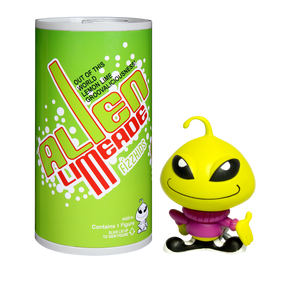
TIII sells “soda-can-themed toys, specifically, vinyl
characters that are sold in packaging resembling a soda can.” The “Fizzkids” are
called “Cranked Cola,” “Bone Crusher Root Beer,” “Vicious Dog Sparkling Water,”
“Rummy Cola,” “Zombie Juice,” and “Alien Limeade.” NECA “is a leading provider
of collectible figures, games and game equipment in the United States and
abroad.” It has registered “WIZKIDS” for “game equipment, namely, miniature toy
figurines and role playing equipment in the nature of game book manuals;
collectible toy figurines for role playing games; and role playing games and
game pieces and accessories therefore.” Some NECA figurines are licensed characters
from well-known brands of comic books, television shows, movies, and video
games, such as THE SIMPSONS, STARK TREK, MARVEL, DC COMICS, DUNGEONS &
DRAGONS, PATHFINDER, and PORTAL.  NECA
sued TIII, staying its opposition to TIII’s pending application to register its
mark.

TIII’s survey showed consumers who’d bought a “collectible
toy figurine” costing more than $10 in the past six months, or expecting to
purchase one in the next six months, an image of the Rummy Cola figure and can
and asked: “What company makes or puts out this collectible toy figurine that
you just saw?” Those that named a company were then asked: “Why do you say
that?”  Then: “do you believe the company
that makes or puts out this product … IS sponsored or approved by another
company, IS NOT sponsored or approved by another company, or you don’t know or
have no opinion.” The “is sponsored” respondents got a follow-up.  One of 617 respondents identified WIZKIDS as
sponsoring or approving the FIZZKIDS product. NECA’s expert criticized the
survey, mainly for not being able to detect confusion given that Wizkids isn’t
a “top of mind” trademark.
 

Wizkids package with Guardians of the Galaxy
The court found that Wizkids was, at most, moderately
strong: it was suggestive (not arbitrary or fanciful) and it had some
marketplace success, but no direct evidence of secondary meaning.
Similarity was the real hurdle.  The marks sounded similar, but gave “notably
different commercial impressions.” 
Visually, they weren’t similar, with “distinctly different fonts and
color combinations.” They were in different places on the packaging, “undercut[ting]
the similarity of the sound of the marks.”
But the real killer was the meaning/context differences.  “Fizz” evoked a beverage, and obviously connected
to the soda can theme.  “Wiz” is short
for “wizard,” and has no soda theme. Further, Wizkids had a reverse house mark
problem: that mark was “used primarily with products that bear more famous
licensed brands.” The “Second Circuit has repeatedly found … the presence of
a distinct brand name … weigh[s] against a finding of confusing similarity.”
Even if some Wizkids products are sold in cylindrical packages, that didn’t
make them soda-themed.  And even if
Wizkids has just launched two product lines without licensed characters, there
was no evidence that “products bearing only the WIZKIDS mark present a similar
commercial impression to the soda-themed products bearing the FIZZKIDS mark.”  Sound similarity was “eclipsed by the
differences in their meaning, modes of presentation, and the overall impression
they convey.” Strongly favored TIII.
There was a factual issue on product relatedness/bridging
the gap, so that factor could favor NECA.
Where a defendant submits survey evidence “tending to rebut
charges of actual consumer confusion,” plaintiff’s “failure to present its own
consumer survey weighs against a finding of consumer confusion.” NECA argued
that actual confusion evidence was understandably lacking because only a few
hundred of FIZZKIDS’ products have been sold. Moreover, the court gave the
survey little weight (though didn’t deem it inadmissible, even though it lacked
a control and didn’t leave the image in front of the consumer when asking
questions, as would have been more accurate to replicate market conditions).
But even without the survey, lack of evidence of actual confusion weighed in
TIII’s favor.
There was no evidence of bad faith. Choosing a mark because
it “reflects the product’s characteristics,” as TIII did, supported a finding
of good faith, as did the evidence that TIII chose the FIZZKIDS mark before it
was aware of the WIZKIDS mark, and that TIII previously engaged in trademark
searches and sought the advice of counsel.
Quality, that Second Circuit makeweight, managed to favor
TIII as well (though deserved little weight) because the quality differences
between the parties’ products made confusion less likely.

Consumer sophistication: NECA’s predecessor-in-interest, responding to the
PTO’s initial rejection of its application to register the WIZKIDS mark based
on the registered third-party mark “WIX-KIDS” for toy vehicles, argued that the
“consumers of the goods offered under the [WIZKIDS] mark populate a community
of gaming enthusiasts … that are thus likely to be knowledgeable about the
goods they have chosen.” But that was sixteen years ago, and NECA argued that
it had expanded the product line greatly since then. This was enough to create
a factual issue, since there’s no trademark file wrapper estoppel.
On balance, the dissimilarity of the parties’ marks and the
lack of evidence of bad faith weighed strongly in TIII’s favor. The strength of
the mark weighed moderately in NECA’s favor, but even assuming the factors that
were factually disputed were resolved on NECA’s side, no reasonable jury could
find likely confusion. “[T]he maximum weight that can reasonably be assigned to
these factors cannot overcome the finding that ‘looking at the products in
their totality,’ consumers are not likely to be confused.”  Summary judgment for TIII.

from Blogger http://bit.ly/2VBsu4Q

Posted in Uncategorized | Tagged , | Leave a comment

Allegedly defamatory claims in e-recycling report weren’t commercial speech despite some economic incentive

Electronic Recycling Ass’n v. Basel Action Network, 2019 WL
1453575, No. C18-1601-MJP (W.D. Wash. Apr. 2, 2019)
Plaintiff ERA is a Canadian non-profit corporation that
specializes in recovering, refurbishing, and reusing discarded electronic
equipment or “e-waste.” When it determines that equipment is no longer
reusable, it allegedly transfers that equipment to “regulated and approved
facilities to be recycled.” These entities, not ERA, allegedly then ship
dismantled components to further destinations.
Defendant BAN is a non-profit environmental advocacy
organization based in Seattle that investigates and reports on e-waste,
including whether its exportation violates the Basel Convention governing such waste.
In October 2018, BAN published “Export of e-Waste from Canada: A Story as Told
by GPS Trackers” along with a press release titled “GPS Trackers Reveal More
Canadian e-Waste Exported to Developing Countries.” It said that BAN affixed
GPS trackers to 43 “non-functional and economically unrepairable” electronic
devices, which it then delivered to “various electronics recyclers or recycler
collection sites” in Canada, including ERA. The report said that ERA (1)
shipped three of the tracked devices to China and Pakistan, “showing
substantial evidence of likely illegal exportation”; (2) is a “repeat offender”
with “a history of making similar exports in the past”; and (3) failed to
remove “sensitive and private residual corporate data” from computers that it
allegedly refurbished and re-sold to BAN. In addition, the report said that
ERA’s founder “threatened BAN volunteers photographing his property and later
sent people to confront and intimidate the volunteers with large dogs.” The press
release said that ERA was “in likely violation of the Basel Convention.”
ERA sued for defamation and false advertising, alleging that
(1) it has “no record of ever selling BAN any electronic devices and has no
record of receiving any GPS-tracked devices from BAN or anyone else”; (2) it
has “extensive policies and procedures to ensure [residual corporate data] is
not retained on items that are reused or result”; (3) it did not export any of
the shipping containers identified in BAN’s Report’ and (4) its founder “did
not threaten BAN volunteers photographing his property and did not send anyone
to ‘confront and intimidate the volunteers with large dogs.’ ”
On defamation, BAN challenged the sufficiency of the
pleadings.  “While it is not sufficient
to plead falsity in vague, conclusory terms,” it wasn’t always necessary to plead
“specific facts proving the falsity of the statements in dispute.” Here, it was
enough to allege the facts above, and that it “does not ship hazardous e-waste
material within or outside of Canada.”  [Question
about defamatory gist/sting, though: if ERA’s contracted facilities did the shipping,
does it matter that ERA didn’t technically do the shipping? Causing them to be
shipped—or even not ensuring that its partners didn’t ship them to China and Pakistan—would
seem to be enough to blame ERA for the behavior BAN criticizes.  The court noted BAN’s point that the
allegations “artfully avoid an actual denial” of the statements in the report
and press release, but still thought that the court shouldn’t determine falsity
at this stage as long as the complaint gave rise to a plausible inference of
falsity.]
Statements about whether the founder threatened or
intimidated BAN volunteers were factual enough to be falsifiable.  Even if the size of the dogs/perceived threat
were subjective matters, on the whole the statements implied an assertion of
objective fact.
However, statements about the “likely illegal[ity]” or legal
implications of ERA’s conduct under the Basel Convention were nonactionable
opinion made by laypersons in the context of an ongoing public debate, as well
as being based entirely upon “disclosed or assumed nondefamatory facts” (i.e.,
the data set forth in the Report) and ddin’t “impl[y] that there are undisclosed
facts on which the opinion is based.” “Arguments for actionability disappear
when the audience members know the facts underlying an assertion and can judge
the truthfulness of the allegedly defamatory statement themselves.”
Tortious interference claims also survived. ERA alleged that
a specific customer ended its relationship with ERA based upon BAN’s report and
press release.
Lanham Act claims, however, failed.  ERA alleged that BAN advertised commercial
services including (1) its e-Stewards certification program and (2) its EarthEye GPS tracking technology for companies in the e-waste industry,
giving BAN an economic interest in encouraging consumers to use e-Stewards
certified companies over those not so certified.
That didn’t make the report and press release into
commercial speech, under the Bolger
factors.  The report wasn’t a typical
ad.  There was no evidence that the
editorial content was a mere sham added to advertising. Instead, references to
e-Stewards and EarthEye were minimal—in approximately 13,000 words in the
Report, “e-Stewards” appeared five times and “EarthEye” appeared twice.  As for references to specific products or
services, the reference to e-Stewards was in connection to comparing other
recycling standards, e.g.: ERA does not “operate under any certified
environmental management systems such as ISO14001, nor do they possess
recycling or data security certifications (e.g., e-Stewards, R2, NAID) – that
are expected of responsible electronics recyclers.” The report did say that
e-Stewards is comparatively “stricter with respect to exports, occupational
safety and health, and downstream due diligence” and is “the only North
American standard that audits and rewards companies for upholding the Basel
Convention and the Ban Amendment.” But it also suggested that the apparently competing
R2 standard should be amended to do the same.  Likewise, it recommended some form of GPS
tracking to enforce the Basel Convention, but didn’t suggest that EarthEye was
the only solution.  “[T]he overall
impression left by these statements is not that readers should use any specific
product or service, but rather that the e-waste industry is rife with
violations of the Basel Convention, and e-Stewards and EarthEye are but one
means of encouraging compliance.” Finally, BAN did stand to benefit economically
from convincing corporations and governments to pay for its products and
services. But “economic motive in itself is insufficient to characterize a
publication as commercial…”
Just as a matter of common sense, this was not commercial speech.  The Lanham Act didn’t apply. Still, BAN wasn’t
entitled to attorneys’ fees.  The report’s
status was “somewhat of a close question, and ERA’s false advertising claim is
not groundless or unreasonable as a matter of law,” at least on the current
record.

from Blogger http://bit.ly/2VBrqxX

Posted in Uncategorized | Tagged , , , | Leave a comment