Post-parmesan: 100% grated parmesan still doesn’t have to be 100% grated parmesan, court reiterates

In re 100% Grated Parmesan Cheese Marketing & Sales
Practices Litig., 2018 WL 5717799 No. 16 C 5802, MDL 2705 (N.D. Ill. Nov. 1,
2018)
On an amended complaint, the court again dismisses the
claims that a cheese product whose label touts it as “100% Grated Parmesan
Cheese” isn’t false or misleading because, on shelf-stable products, the courtis of the opinion that a reasonable consumer shouldn’t have believed that name,
even though plaintiffs this time around pled a survey, conducted in connection
with this litigation, purporting to find that more than 85-90% of consumers
stated that they believed that the products “are 100% cheese and fully grated.”
Two expert reports by linguistics professors also opined that the phrase “100%
Grated Parmesan Cheese” is “linguistically subject to only one plausible
interpretation … that the Product contains nothing other than grated parmesan
cheese.” Plaintiffs also cited a Kraft patent stating that fully cured parmesan
cheese “keeps almost indefinitely.”  But
the court disagreed, because of its greater understanding of reasonable
consumers and exactly what they know about shelf-stable products (and what’s in
that set of products).
Argh.  These aren’t
cheese crackers or other cheesy products where a reasonable consumer would
immediately understand a reference to an ingredient; they’re sold as cheese with which to top something
else.  Not only is a consumer who reads
that label as meaning “this is 100% cheese” incredibly reasonable, the court’s willingness
to dismiss specifically pled facts worsens its prior decision by not allowing
the plaintiff to resolve the so-called “ambiguity” of the label with further
information, even though to date the idea of “ambiguity” has allowed plaintiffs
to add more facts. Heads, the defendant wins; tails, the plaintiff loses.
Anyhow, the accused products with “100% Grated Parmesan
Cheese” and similar labels in fact contained cellulose and other non-cheese
ingredients. With the exception of Publix, the ingredient lists say that the
cellulose was added to prevent caking, when in fact it also allegedly acted as
filler. Some of the filler claims got a bit further, but not far.
Because “100% Grated Parmesan Cheese” was ambiguous, the ingredient
label would dispel any confusion.  How do
we know that ambiguity plus a back-panel label avoids deception?  It appears to be a rule of law, not a rule of
fact.  And the court reiterated its conclusion
that “ ‘100% Grated Parmesan Cheese’ … also might be an assertion that 100% of
the cheese is parmesan cheese, or that the parmesan cheese is 100% grated.” The
linguistics experts didn’t help because a reasonable consumer “does not
approach or interpret language in the manner of a linguistics professor.”
Instead, she apparently approaches language as a federal judge.  More seriously, this reasoning seems to
misapprehend a big chunk of the profession of linguistics—the court cites a
case holding that a “reasonable consumer need not be exceptionally acute and
sophisticated,” and that “the reasonable consumer test focuses on the
perspective of ordinary minds,” and this is true, but descriptive linguistics studies
exactly how ordinary people interpret ordinary language, and if the experts are
opining about that then they are opining about precisely the relevant question.
Still, the reports didn’t specify that they examined the
phrase in the context of shelf-stable, unrefrigerated containers of cheese, which
makes their opinions valueless. How do we know the context is so significant?  The court does, no matter what facts are pled,
because reasonable consumers are “well aware that pure dairy products spoil,
grow blue, green, or black fuzz, or otherwise become inedible if left
unrefrigerated for an extended period of time.”  [Consider a pleading that reasonable consumers
do not have strong ideas about the boundaries of shelf-stability for cheese
even if they do for milk, and that reasonable consumers take their cues from
labels.  Would that be implausible under Twiqbal? 
I don’t see how it could be.  Brady
v. Bayer Corp.
has by far the better take: consumers should be able to rely
on the name of a product from a reputable company, and they are likely to
presume that the company understands the relevant technologies far better than
they do; if the company presents a low-moisture cheese in a can, they can
presume that it knew how to do that.]
The surveys were also irrelevant because a court, on its
own, may “determine as a matter of law” that “an allegedly deceptive
advertisement would not have misled a reasonable consumer.” [In a Lanham Act case, this wouldn’t be true for an ambiguous representation–I’m not a fan of mashing up the two kinds of law, but I would prefer the rule that survey evidence is never required but often relevant for both bodies of law.] Also, because not
every single survey respondent thought the product was 100% cheese, that proved
ambiguity.  [I have some bad news about
surveys and, in particular, survey respondents, for the court, though perhaps surveys’
inability to get 100% correct responses to any question would be good news to
the court.]
As for the patent, there was no reason it would be familiar
to a reasonable consumer “with an ordinary understanding of how dairy products
generally fare when unrefrigerated.” Anyway, the patent necessarily implied that pure grated parmesan will not keep indefinitely if left unrefrigerated. [By the way, canned products
don’t keep indefinitely either. The court’s certainty about consumer
expectations shows one of the weaknesses of Twiqbal,
especially with contrary evidence pled.] Thus, the court remained convinced
that a reasonable consumer would not presume that a shelf-stable dairy product
was 100% cheese or would disregard the “well-known fact[ ] of life” that pure
dairy products spoil if left unrefrigerated.
The filler claims: Allegedly, grated parmesan “usually
available in the marketplace” is cured and dried in such a way that there is
“little problem of clumping or agglomeration,” so there is little need to
ensure that grated parmesan does not clump or “cake.” The anticaking statement
on the ingredients list was allegedly false or misleading because the products
contain more cellulose than necessary to accomplish this “anticaking” purpose,
and instead serve as cheaper filler. However, the Target/ICCO defendants got
out of the claim because there wasn’t any allegation of how much cellulose was
in the product, and thus plaintiffs couldn’t plausibly allege it was
excessive.  Other percentages alleged for
other defendants were 3.8% (Kraft), 8.8% (Albertsons/SuperValu), 7.8%
(Wal-Mart/ICCO).
However, though falsity was pled, causation wasn’t, because
plaintiffs alleged that they bought the products believing them to be “100%
Grated Parmesan Cheese,” meaning that they didn’t consult or rely on the
ingredient list [because they saw no need to do so given what they thought they
were buying].  Thus the state law
consumer protection claims all failed as to the anticaking misrepresentation.
Express warranty: certifying multistate or nationwide
classes of this type is not categorically prohibited, though Connecticut and
Michigan require privity (which didn’t exist with the manufacturer). New York
requires reliance, which (as above) was missing.  Some implied warranty claims also survived,
as did some unjust enrichment claims, all based on the anticaking part. 
Tactical question: drop the remaining claims and appeal, or
continue to fight?

from Blogger https://ift.tt/2qp8GUj
Posted in Uncategorized | Tagged , , | Leave a comment

Roca Labs’ weight loss claims are losers, and its gag clause fares no better

FTC v. Roca Labs, Inc., 2018 WL 5629875, No. 15-cv-2231-T-35TBM
(M.D. Fla. Sept. 14, 2018)
The FTC sued Roca for its advertising and sale of
weight-loss products and the use of contractual provisions barring purchasers
from providing negative commentary, bringing in at least $20 million since 2010.
Among other things, defendants used “Gastric Bypass No Surgery” or “Gastric
Bypass alternative” and claimed that the products were safe for children
as young as six years old. They described the forumula as “a medical
innovation that creates a natural gastric bypass effect in the stomach.”  In the fine print, they stated that “[n]o clinical study has been
performed on this product” but the main copy touted scientific proof, along with testimonials and
third-party reviews. The testimonials were paid, but Roca didn’t disclose this.
They, or someone working on their behalf, also posted testimonials etc. on
third-party websites without disclosure. Nor did they disclose that they ran Gastricbypass.me,
a website that discusses bariatric surgery and features a “Surgical Alternatives”
page devoted to positive commentary on Roca Labs products and which sold the
products.
Although they didn’t actually get insurer reimbursement,
they advertised that the basic package cost $480 with “valid health insurance”
or $640 without. Purchasers had to submit answers to a “Questionnaire” or
“Health Application,” which included questions about psychological or emotional
issues relating to weight, past weight-loss failures, depression, and binge
eating.  Purchasers got a “Summary”
document that stated the customers’ information would not be shared with anyone
and a document warning that those who cancel or dispute installment payments
may face legal action and $3,500 in charges. Roca also included a non-disparagement clause
that prohibited customers from publishing disparaging comments about Roca Labs
products, claiming that (at a minimum) the purchaser agreed to pay the full
price of the product, $1,580, if the purchaser breached the gag clause; at some
times the gag clause demanded $100,000 for talking “badly about the Formula,” while
other versions demanded $3,500 and claimed that Roca could force purchasers to
sign a notarized affidavit stating that the disparaging remarks were incorrect.
The FTC sued over all these things, including in its theories that the promise of confidentiality was false, and
that the statement that purchasers agreed to pay the difference between the
“full price” and the purported “discount” price if they post negative comments
or reviews was a deceptive claim about the price.  It prevailed.
The court granted summary judgment on the falsity/lack of substantiation of weight loss
claims.  Such express claims, “which significantly involve health, are
inherently material.” The websites etc. “intentionally contained medical images
and terminology to bolster the credibility of Defendants’ claims and induce
customers to believe that the claims were scientifically validated by the
medical community.” And Roca lacked a reasonable basis for the claims because
they weren’t supported by competent and reliable scientific evidence. The FTC’s
expert, an expert in obesity treatment and weight loss, additionally opined
that no competent and reliable scientific evidence for the claims existed:
“experts in the field of obesity treatment and weight loss would require
well-designed and properly conducted clinical trials.” A valid trial should be
double-blind and placebo-controlled; it would have at least eighty participants
and last at least three months; and it would test the substance, not the
individual ingredients, because it is well established in the scientific
community that the efficacy of individual ingredients is insufficient to
establish the efficacy of those ingredients combined.
Roca argued that a randomized controlled test isn’t required
to provide competent and reliable scientific evidence, citing a case that found
that Bayer didn’t violate a consent decree by failing to provide a RCT for
different claims. This wasn’t a consent decree, which requires violation by clear
and convincing evidence.  “[T]he absence
of the RCT is just one piece of evidence demonstrating the lack of competent
and reliable evidence of the truth of the claims or their reasonableness.” The
Center for Applied Health Sciences ran a clinical trial on the Roca products:
seventeen adults used the products for twenty-eight days, and didn’t lose
weight, though there was a “slight but statistically insignificant ‘trend’ that
active users reported feeling less hungry three hours after taking the product.”
The FTC’s expert found the trial design flawed, and opined that the scientific
articles on dietary fibers relied on by Roca didn’t support Roca’s claims.  Roca’s witness, a board-certified surgeon,
wasn’t shown to be a relevant professional or expert in the field of obesity
treatment and weight loss.
Roca’s establishment claim that their products were
scientifically proven to have a ninety-percent success rate in forcing users to
eat half their usual food intake and cause substantial weight loss was also
false. They provided no evidence supporting this claim, which was therefore
false.
Roca’s failure to disclose its relationship to Gastricbypass.me
and the paid testimonials also violated the FTCA. “Material misrepresentations
or omissions on which a consumer would likely rely to decide whether to make a
purchase constitute deceptive advertising.” One of Roca’s principals testified
that he created Gastricbypass.me to “educate and scare people about” gastric
bypass surgery, but he did not see any value in letting consumers know “[h]ey
we are Roca Labs.” Purportedly satisfied customers depicted in the videos
posted on RocaLabs.com were actually Roca employees, one of whom testified that
she was directed to post positive comments monthly on Facebook. The defendants
directed their employees to create fictitious reviews. Roca argued that “Roxie’s”
testimony was valid because she lost weight before being hired by Roca, though
her video was recorded afterwards. That missed the point: Rcoa failed to
disclose the financial relationship with Roxie and others who gave
testimonials.
The financial relationship with the testimonial-givers and
ownership of Gastricbypass.me was material because they were deliberately used
to entice prospective buyers and because they involved health matters, weight
loss claims, and other information important to the consumer in deciding
whether to purchase the products.
Likewise, the false representation of confidentiality for
private health information violated the FTCA. 
An express privacy promise is presumptively material.  Despite the promise, defendants published
customers’ sensitive details and disclosed their personal information to
payment processors in response to disputes. Roca argued that the information was necessary to disclose to resolve the disputes,
and pointed to 2014 terms & conditions stating: “Your information will not
be shared or sold for as long as you do not breach the Terms and we will have
to use the information provided.” There was no evidence that  revealing this information was
necessary to respond to disputes, and the terms and conditions postdated the
purchases of some consumers who had their information revealed [also, not that
it’s needed, fine print can’t take back express representations in the purchase
process].
The “discount” claim also succeeded. Roca didn’t dispute its
materiality, but argued that its statements weren’t deceptive because customers
agreed to the discount and its requirements.  Defendants argued that customers were provided sufficient notice in
the Terms and Conditions prior to purchase as well as in the documents being
shipped.
Nope. First, Roca created an overall net impression that the
price of the product was $480 without reference to a discount or any
concessions as to publishing negative comments, including using that number in
ads on Google, Bing, and Facebook touting “GASTRIC BYPASS NO SURGERY
$480.”
Second, the Terms and Conditions did not dispel the net
impression. “Although the Terms and Conditions were disclosed on a hyperlinked
page, it was unlikely that consumers would have noticed or clicked on the link.”  Although they were required to check a box
next to the statement “I have checked and do not have any medical reason that
can prevent me from suing the Roca Labs Gastric Bypass Alternative procedures
and I have read and agree to the terms, privacy and money back reward / return
policy,” they were not actually required to read the T&C, and even if they
did, the disclaimer about the discounted price and non-disparagement clause was
“inconspicuous and buried among legal, contractual language.”
This misrepresentation was material and deceptive
because it is an express claim that
involves important information to customers: the price of the product and
limitations on what customers could say about the products or Defendants. A
customer would likely be misled to believe that he or she had the option to
purchase the product at “full” price and maintain the ability to post negative
but truthful comments. Customers also would likely to be misled to believe that
they had actually agreed to refrain from posting negative comments, when they
had not agreed to do so, by paying the purportedly discounted price.
Relatedly, the gag clause practices were unfair. Roca argued
that the clause wasn’t illegal and that they lacked fair notice that the FTC
would interpret their practices as unfair. Although Roca cited a lot of cases
about the enforceability of online “clickwrap” contracts, the enforceability of
the contract wasn’t at issue. An act or practice is unfair if it “causes or is
likely to cause substantial injury to consumers which is not reasonably
avoidable by consumers themselves and not out weighed by countervailing
benefits to consumers or to competition.” The FTC presented evidence that restricting
the flow of information, specifically truthful negative reviews, causes or is
likely to cause substantial injury to consumers and to the marketplace. Indeed,
one of Roca’s principals testified that he paid a company $40,000 to “make the
false comments not show up up front” because false comments “create the wrong
impression” and hurt Defendants’ sales by at least $40,000. Likewise, Roca’s
threats to sue and filing of lawsuits caused or was likely to cause substantial
injury. Roca threatened legal action against customers who complained or said
they would complain to the Better Business Bureau or who said they had plans to
post negative comments online.
Roca argued that there was no evidence of tangible harm, but
the FTC is not required to provide such evidence. Though the legislative history
says “Emotional impact and more subjective types of harm alone are not intended
to make an injury unfair,” that doesn’t impose a requirement of proof of “tangible”
harm; “the FTC Act contemplates the possibility that conduct can be unfair
before actual injury occurs.” The court found these practices caused or were
likely to cause substantial injury to consumers. “The record demonstrates that
some consumers paid hundreds of dollars for the Roca Labs products and
unsuccessfully sought refunds because of Defendants’ practice of issuing
threats under the guise of enforcing the gag clause.”
Nor was this problem reasonably avoidable by consumers because
prospective customers who searched for information about Roca Labs products
would be prohibited from making an informed choice. Roca argued that consumers
could have reasonably avoided injury by reading the gag clause or using another
weight loss program, but that missed the point. The FTC argued that defendants’
gag clause practices were unfair, not the gag clause itself, and there was no way
prospective customers could reasonably avoid a dearth of negative reviews, “which
the Defendants assiduously prevented from being available.”
Nor were there countervailing benefits to competition or
consumers that outweighs the injury caused or likely to be caused; Roca offered
no evidence but asserted that there should be a cost-benefit calculation and
that consumers benefited from the products by losing weight, increasing their
confidence, and taking steps toward a healthier lifestyle. Roca’s claims of
benefits ignored the question of whether the gag clause practices had any
benefits, and no quantitative cost-benefit analysis is required by the law.
Roca argued that it had no fair notice of the FTC’s
claim.  The fair notice doctrine prevents
“deference [to the regulator] from validating the application of a regulation
that fails to give fair warning of the conduct it prohibits or requires.” But
this only applies in limited circumstances not present here.  Roca again whined that the harm it caused was
“intangible” and it couldn’t have anticipated that this was unfair.  [By the way, what’s “intangible” about the
suppression of reviews and the failure to pursue a refund for fear of being
sued?  The former is tangible: it clearly
changes the information actually available to consumers. The latter is also not
just tangible but monetary.] The FTC’s policy statement distinguishes “trivial
or merely speculative harms” from substantial injury, but also clarifies that an
“injury may be sufficiently substantial … if it does a small harm to a large
number of people, or if it raises a significant risk of concrete harm.” Nothing
there excluded intangible injury, and there was no evidence that the FTC
abruptly changed course in its enforcement guidelines or in its statutory provisions.
The court granted a permanent injunction. Roca’s principal testified
that he has moved away from using the Roca Labs brand and is now using
“gastric.care,” but “[t]he formula is the same formula.” He also told his Facebook
boot camp customers: “I’m allowed to tell you anything I want; to do anything I
want with you that would lead you to a healthy weight …” and that he will
show the customers “any images I want. I will do anything I want for them for
as long as I lead them to achieve a healthy weight.” Given Roca’s extended
history of deceptive and unfair practices and continued promotion of their
products and comparisons to gastric bypass surgery, there was a cognizable
danger of recurrent violation.
The FTC was also entitled to monetary relief under Section
13(b) for consumer redress, including disgorgement in the amount of net revenue
(gross receipts minus refunds). Roca wanted to use the number of BBB complaints
based on ineffectiveness, multiplied by 25 to account for customers who didn’t
complain to the BBB.  The proper measure
of disgorgement is unjust gain, not consumer loss, and the appropriate measure
for unjust gains is net revenue. FTC has provided sufficient evidence as to the
amount of gross sales revenues, which totaled $26.6 million during the relevant
time period, but there was not enough evidence about refunds, so the record
needed to be supplemented. Key principals were also individually liable: they knew
of the deceptive acts and either participated directly in or had authority or
control over the acts.

from Blogger https://ift.tt/2RpxAyu

Posted in Uncategorized | Tagged , , , , | Leave a comment

We Buy Houses registration defeats fee award despite its genericity

Express Homebuyers USA, LLC v. WBH Marketing, Inc., No.
17-cv-00736, 2018 WL 5303327 (E.D. Va. Oct. 25, 2018)
Disappointingly, the court here treats assertion of
registered trademarks as what seems like a complete defense to arguments that
defendant should receive a fee award because of the exceptionality of the
case.  This discounts any recognition
that trademark examination is far from complete compared to the factual
development at trial, and also any inquiry into what the registrations were for. 
Here, Express initially sought cancellation of the “We Buy Houses” and
“webuyhouses.com” marks, the former of which was registered for things like “printed
instruction, educational, and teaching materials for real estate,” and the
latter for “real estate and investment services, namely providing on-line
information in the field of real estate procurement for others.”  Of course, both were used to attempt to
control the advertising of services provided by—you guessed it—firms that buy
houses.  I once wrote that “Applicants
and the PTO spend much time and effort crafting the equivalent of an
exquisitely detailed origami crane; rather than considering the details, courts
then ask the equivalent of ‘is this paper folded?’ and move on.”  This case illustrates one of the consequences
of that mismatch.
Despite the fairly clear genericity of the “marks” at issue,
the court was decisive that “by no stretch of the imagination is this case ‘exceptional’;
it is not a rare, extraordinary or otherwise unique trademark case. To the
contrary, this case is a garden variety trademark case challenging two
registered trademarks that use a phrase that is used in common parlance to
signify a service.”  Except that most
registrations aren’t of “a phrase that is used in common parlance to signify a
service”!  Still, defendant WBH’s
position that the marks weren’t generic could not be objectively unreasonable
because “the fact that the PTO had registered the Marks gave defendant an
objectively reasonable legal and factual basis to argue that the Marks were not
generic.”  Note again the failure to
continue the sentence: generic for what? 
Then the court says the registrations “weigh[] strongly
against” a finding of exceptionality, though it seems to mean “decisively
against” in the absence of abusive litigation practices.  The registrations created a presumption of
validity, which made it “not objectively unreasonable for defendant to take the
position that the Marks were valid. To find otherwise would undermine the
policy of encouraging trademark owners to defend and enforce their
presumptively valid trademarks.”  Again,
the court doesn’t take into account the limited information available to the
PTO and the special knowledge trademark claimants have about their own
business, increasing the incentive to abuse the process—and note that the
reasoning means that no case in which a party successfully claims for
cancellation of a registration can be “exceptional” even though Octane Fitness (which the court applies)
indicates that objective unreasonability of a defense can be considered in
exceptionality. 
(Patent examination is much more rigorous than trademark examination, yet
Octane Fitness pretty clearly stands
for the proposition that objective unreasonability of a substantive claim by a
patentee, not just unreasonable litigation tactics, can be exceptional. Given
the presumptive validity of a patent, why would this be possible if the court
is right about the objective reasonability of asserting a registered
right?  One possible answer, though not
the only one: it depends against what the plaintiff is asserting its registered
right—but the court doesn’t consider that here, probably because the parties
are direct competitors, which still shouldn’t excuse it from examining what the
registrations were for, as well as whether the PTO had equal access to the information that market participants had.)
This case also wasn’t exceptional simply because WBH made
erroneous claims about the law (arguing that clear and convincing evidence of
genericity was required, and that the evidence of generic use was
unauthenticated hearsay). A case should not be deemed “exceptional” simply
because “snippets of the record or isolated arguments clearly lack merit.” So
too, WBH’s futile motion for reconsideration of the summary judgment decision repeating
arguments that were already made and rejected on summary judgment wasn’t
enough, nor were its counterclaims about false advertising and actual harm
therefrom.  WBH’s position that Express’s
statements were factual and thus actionable was rejected only after careful
consideration of the context of the statements. WBH’s position that it was
harmed by Express’s advertising wasn’t sufficient for exceptionality, even
though Verisign, Inc. v. XYZ.COM LLC held that a Lanham Act false advertising
claimant must show actual rather than mere presumed damages. WBH acknowledged
that it lacked evidence that any lost potential customers as a result of
plaintiff’s allegedly misleading advertisements. “Still, defendant confronted
and attempted to distinguish Verisign I
at the motion to dismiss and summary judgment stages, which weighs against a
finding that defendant’s position was frivolous even though that attempt was
ultimately unsuccessful.”
Finally, this case wasn’t exceptional because of the need
“to advance considerations of compensation and deterrence,” given that WBH
acted as a trademark troll that bullied competitors to stop using an important
marketing phrase—“we buy houses.” “This argument fails because courts have
sensibly concluded that it is not appropriate for a district court to police
the marketplace and punish so-called trolls who take steps to protect their
presumptively valid rights in intellectual property. Indeed, plaintiff’s
argument conflicts with the Fourth Circuit’s clear policy that trademark owners
should be encouraged, rather than deterred, to enforce their presumptively
valid trademark rights.”
That’s dispiriting enough, but it’s even more depressing
that the court doesn’t think this case stands out from an ordinary trademark
case even at the sub-fee award level. Does the court think that most trademarks
are used to suppress useful information from competitors?  Suggestive, arbitrary and fanciful
marks—which comprise the vast majority of registered marks—don’t pose even the
risks of granting rights in descriptive terms, much less generic terms.  This failure to recognize that trademarks
vary in the risks they pose to competition may explain why the court concludes
that “if the proverbial bell curve representing the range of trademark cases
was developed, this case would clearly fall in the middle, or at least within
two standard deviations of the mean.”

from Blogger https://ift.tt/2Rl7igN

Posted in Uncategorized | Tagged , | Leave a comment

Cents and sensibility: NY Ct of Appeals weighs in on credit surcharge law

Expressions Hair Design v. Schneiderman, — N.E.3d —-,
2018 N.Y. Slip Op. 07037, 2018 WL 5258853 (Oct. 23, 2018)
GBL section 518 states: “No seller in any sales transaction
may impose a surcharge on a holder who elects to use a credit card in lieu of
payment by cash, check, or similar means.” This allows differential pricing,
but the circumstances under which that’s allowed are hotly disputed. The Second
Circuit certified a question: “Does a merchant comply with New York’s General
Business Law § 518 so long as the merchant posts the total dollars-and-cents
price charged to credit-card users?” The court here answered yes (meaning that the merchant can use the label “surcharge” to describe the practice, but can’t use percentages to describe the extra amount being charged for credit.)
Plaintiffs wish to tell their customers, for example, that
“a haircut costs $10.00, and if you pay with a credit card you will pay 3%
extra” or “a haircut costs $10.00, and if you pay with a credit card you will
pay an additional 30 cents.”  The
legislative history of the defunct federal version of the statute is
paradigmatically concerned with “a completely undisclosed surcharge, discovered
at the cash register.” It also operated to ensure “that consumers will be
seeing at least the highest possible price they will have to pay when they see
a tagged or posted price.” “GBL § 518’s legislative history demonstrates the
identical concerns Congress had: a desire to allow differential pricing, but to
avoid the duping of customers by posting or tagging low prices that turn out to
be available for cash purchases only.”
Thus, the court concluded, GBL § 518, “like its federal
precursor, permits differential pricing but requires that a higher price
charged to credit card users be posted in total dollars-and-cents form. In that
way, credit card customers are ‘exposed to the highest price when they see a
tagged or posted price’ and, without further ado, apprehend the actual price
they will pay. By contrast, single-sticker pricing would require a consumer to
engage in arithmetic, which may be difficult depending on the cash price, in
order to calculate the actual price for a credit card purchase.” I would say, and the majority seems to agree, that
this is a disclosure rule, mandating “purely factual and uncontroversial
disclosures regarding the product it is offering for sale.” This is significant because of what will happen in federal court: sellers shouldn’t
be able to get Central Hudson’s
harsher scrutiny just by positing another way they’d like to make the
disclosure, especially when there’s a sensible reason (many consumers’
difficulty with math/difficulty making absolute to percentage comparisons) for
the state’s decision.
As cleanup, the court held that, as long as the total
dollars-and-cents price for credit card purchases was posted, merchants can use
“surcharge” to describe the difference in price, because they won’t be imposing
a surcharge as the law defines it (which is to say, a charge imposed without
dollars-and-cents disclosure). Posting the dollars-and-cents price for credit
card purchases means that “consumers see the highest possible price they must
pay for credit card use and the legislative concerns about luring or misleading
customers by use of a low price available only for cash purchases are
alleviated.” Plaintiffs’ proposed single-sticker price, by contrast, was prohibited
by the statute.
There was also a concurrence, a partial dissent, and a
dissent.  The concurrence would have held
that “all conduct complies with the law, because the law is unconstitutionally
vague, and therefore cannot reasonably be said to prohibit anything.”  The dissent would have held that GBL § 518
isn’t a disclosure statute, but a law that regulates the seller’s description
of differential pricing and bars credit card “surcharges” but not cash “discounts”
because of the credit card industry’s interest in manipulating consumers’
decision framing.  A true disclosure
requirement, the dissent thought, would have more requirements on how the
requisite information has to be presented (e.g., type size). For this reason,
the NY AG has historically used other laws targeting deceptive business
practices and false advertising to fight undisclosed surcharges and similar
bait-and-switch tactics.  “Under the
majority’s disclosure-centric reading, GBL § 518 is effectively redundant of
these existing provisions,” and similarly undermining its consumer protection
goals, government entities are apparently exempt from GBL § 518 in many situations.  
I think the point about government treating itself better than other entities is a good one, but the redundancy point is mistaken: many other states’ unfair trade practices laws list specific practices that are prohibited because of how likely they are to harm consumers through deception alongside a general prohibition on deceptive practices.  The point of having a specific prohibition is to relieve the state of the burden of showing likely deception in a specific case, given how likely it is that deception is to result, the lack of justification for the practice, and the costs and error risks of individualized determinations.  One could compare speed limits + dangerous driving prohibitions.  The general ban deals with the infinite capacity of fraudsters to invent new schemes, but the specific prohibitions provide clear guidance for situations that experience has shown are likely to be repeated.

from Blogger https://ift.tt/2OSNEfl

Posted in Uncategorized | Tagged , | Leave a comment

Some Lanham Act/UCL claims against TM filing entities can proceed despite potential difficulties of proof

LegalForce RAPC Worldwide P.C. v. Swyers, No.
17-cv-07318-MMC, 2018 WL 4961660 (N.D. Cal. Oct. 12, 2018)
RAPC alleges that Swyers, an attorney, owns TTC and
Trademark LLC, which provide “trademark related services,” and also owns
Trademark PLLC, a law firm that provides “legal services in trademark related
matters.” TTC allegedly made false statements on its website, and the
defendants’ business is allegedly “built upon the foundation of the
unauthorized practice of law” and involves “submitting or aiding and abetting
their customers in submitting fraudulent specimens to the USPTO” in violation
of the Lanham Act and California’s UCL.
The court partially granted defendants’ motion to dismiss,
with limited leave to amend. In terms of standing, direct competition means
that “a misrepresentation will give rise to a presumed commercial injury that
is sufficient to establish standing,” and RAPC alleged it “compete[s]” with TTC
to provide “small businesses” with “services that allow them to protect their
marks through filings with the [USPTO].” As for proximate cause, RAPC alleged
lost customers, supported by the allegation that, from the year TTC was formed
until the lawsuit was filed, its market share declined from “nearly 2.4%” to
“approximately 1.8%,” or “approximately 2670 trademark[ ] filings per year.” RAPC
alleged that it had to reduce its prices from “$499 to $199 and lower to match
the unfair competition of TTC.” Though proof might be difficult, these
allegations were sufficient at the pleading stage.
As for specific challenged statements, most of them were actionable.
“Created by USPTO Attorneys” and similar statements were allegedly false because
TTC was created by just one former USPTO Attorney – Swyers, and statements that
didn’t include “former” were also allegedly false because Sywers “was excluded
from practice by the USPTO in January 2017” and cannot apply for reinstatement
for “at least five years.” The court found Rule 9(b) satisfied given the
specificity of the allegations.  “We’ve
Prepared and Filed Over 20,000 Office Action Responses” was allegedly false
because TTC hadn’t done this in the time since 2015, when it was formed. The defendants
argued that its statement “may refer to TTC’s successor entities, or to other
lawyers.” But the complaint made no reference to any such successors or
predecessors, and defendants didn’t identify any mentions of such on its
website. Thus, the court couldn’t find as a matter of law that a customer would
reasonably understand “we” to refer more broadly to successors or predecessors
in interest, or to “other lawyers” from TTC’s “Network of Independent Attorneys.”
Indeed, the webpage the defendants cited “distinguishes between ‘we’ and ‘your
attorney’” by stating “Depending on the package you select we, or your attorney
you select through our Network of Independent Attorneys (NIA) will work with
you to assemble your office action response ….” For similar reasons, “Trusted
by over 100,000 Businesses Since 2003” was sufficiently alleged to be false,
since TTC was only formed in 2015 and allegedly hadn’t had over 100,000
customers.
“Created by the Top Trademark Law Firm in the United States”
was allegedly false because TTC was created by Swyers personally as a sole
member, and that if Trademark PLLC, a law firm, created TTC, the reference to a
“top” firm is false because Trademark PLLC’s owner Swyers was disbarred by the
USPTO.  However, this statement was nonactionable.
First, the pages on which the statement was found couldn’t reasonably be read
to say that TTC was created by a law firm. Instead, TTC stated that one of its “packages”
was “created” by the unnamed “Top Trademark Firm” and that the other two
packages include “software” the unnamed law firm “created,” neither of which
were alleged to be false.  Also, the use
of “top” to describe the firm was puffery.
TTC’s website allegedly contained the false claim “As
featured in,” under which were displayed “rotating banners showing logos” of a
number of businesses, specifically, “Yahoo Finance, CNNMoney.com, CNBC, Compare
LegalForms, Bank of America Small Business Community, Time, NBCNews.com, the
Wall Street Journal, and INC500.” But the allegation that “upon information and
belief, TTC has never been featured on these websites” was not accompanied by a
statement of the facts upon which the belief was founded, so it was dismissed.  
State law claims: RAPC alleged that TTC has violated § 17200
of the UCL by submitting to the USPTO “fraudulent specimens” and by engaging in
the “unauthorized practice of law.” 
However, RAPC lacked standing to bring the first claim; it failed to
allege any facts to support a finding that its injuries occurred as the result
of the submission of fraudulent specimens. 
Plus, the allegations of fraud weren’t specific enough to satisfy Rule
9(b).  By contrast, RAPC had standing for
the unauthorized practice of law allegations because it alleged that it “suffered
losses in revenue and asset value and was required to pay increased advertising
costs specifically because of the [alleged unauthorized practice of law],” even
though the general purpose of the law is to protect the public and not to
protect lawyers from competition.  Rule
9(b) didn’t apply because this part of the claim didn’t sound in fraud; rather
than being based on advertising that defendants could engage in the practice of
law, it was based on the unauthorized practice of law itself, which was
sufficiently alleged in the complaint. Nor did primary jurisdiction bar the claim:
“although the USPTO, as set forth above, has identified on its website conduct
that, in its view, constitutes the unauthorized practice of law, the USPTO has
made clear its position that ‘Congress has not authorized [it] to regulate
entities such as TTC.’” However, RAPC was limited to seeking injunctive relief,
not restitution because it failed to allege that TTC obtained any property from
RAPC in which RAPC had an ownership interest.
§ 17200 claims against the Trademark defendants were
dismissed because there were no allegations that the claims arose out of or
resulted from California-related activities (e.g., submission of a fraudulent
specimen or unlawful practice of law on behalf of a California customer).

from Blogger https://ift.tt/2yJoFQW

Posted in Uncategorized | Tagged , , | Leave a comment

FDCA doesn’t preempt false advertising suit based on claims about protein source

Durnford v. MusclePharm Corp., — F.3d —-, 2018 WL
4938190, No. 16-15374 (9th Cir. Oct. 12, 2018)
Durnford brought the usual California consumer claims
against MusclePharm for making false or misleading statements about the protein
in one of its supplements. The district court dismissed Durnford’s action as
preempted by the FDCA, reasoning that any declarations of protein content
anywhere on a product label could not be false or misleading if the listed
amount of protein reflected measurements made in accordance with federal
regulations concerning the federally mandated nutrition panel. The court of
appeals reversed: the FDCA and its implementing regulations governed the
calculation and disclosure of protein amounts, but Durnford could still base
state-law claims on allegedly false statements about the source or composition
of protein.
The supplement is marketed as a muscle-building or
weight-gain product, with a focus on its “revolutionary 5-stage mass delivery
system.” The second stage is described as “Muscle plasma protein technology:
40g of a potent blend of hydrolyzed beef protein and lactoferrin protein.” The
fourth stage is described as “Performance growth & muscle volumizer: Creatine
and BCAA nitrates help promote muscular strength, size and endurance.” The
ingredients correspond to the stages, including the “Muscle Plasma Protein
Matrix,” consisting of “Hydrolyzed Beef Protein, Lactoferrin” and the
“Performance Growth & Muscle Volumizer,” consisting of “Creatine
Monohydrate, L-Glycine, BCAA Nitrates (Leucine, Iso-Leucine, Valine) … ,
D-Ribose” respectively. The nutrition panel states that a single serving of the
supplement contains 40 grams of protein, or 72% of the recommended daily value.
Durnford alleged that MusclePharm engaged in “protein
spiking” or “nitrogen spiking” — the practice of inflating measurements of a
supplement’s protein content using non-protein substances, specifically
creatine monohydrate and free-form amino acids (l-glycine, leucine,
iso-leucine, and valine), and that its true protein value was not 40 grams per
serving, but 19.4 grams per serving. 
MusclePharm also tweeted that product reviews accusing it of nitrogen spiking
were “fake …. We don’t do anything like that. All products legit and
scientifically backed[.]”
FDA regulations allow a manufacturer to use nitrogen content
as a proxy for protein content, thus permitting the practice of nitrogen
spiking, and the FDCA preempts non-identical state law requirements, so that
was it, according to the district court.
The court of appeals began with a presumption against preemption
for areas of traditional state police power such as consumer protection. Nonetheless,
Durnford’s protein content theory of misbranding—that he was misled by the
40-gram figure on the nutrition panel—was foreclosed by the FDCA, which
requires the disclosure of the total amount of protein; FDA regulations set out
the proper means of calculating that amount, using nitrogen as a proxy, so it
doesn’t matter whether doing so is misleading. (The court noted that Durnford
didn’t challenge the regulation under Chevron
for authorizing an inherently misleading means of calculating protein.)
However, Durnford’s “protein composition” theory of
misbranding was that the label misled him into believing the protein, in
whatever amount, came entirely from genuine protein sources — hydrolyzed beef
protein and lactoferrin — rather than nitrogen-spiking agents. The court of
appeals found his premise correct: the label twice identifies specific protein
sources, then apparently distinguishes those protein sources from nitrogen
compounds, which are listed and identified separately not as protein, but as
“performance growth and muscle volumizer.” The label continues that the
proteins are present in the amount of “40g of a … blend of … beef protein
and lactoferrin” — the same amount of protein claimed per serving on the
nutrition panel. The ingredients list repeats the distinction: hydrolyzed beef
protein and lactoferrin are part of the “protein technology,” and the free-form
amino acids are “muscle volumizer.”
Durnford’s theory was thus that the label falsely disclaimed
nitrogen spiking. This adequately alleged misbranding, and was not preempted by
rules about how protein was to be measured, though the complaint didn’t
sufficiently connect the one tweet to Durnford’s injury and was thus on its own
inadequate.

from Blogger https://ift.tt/2QVna9N

Posted in Uncategorized | Tagged , , | Leave a comment

RipoffReport review isn’t “advertising or promotion,” without more evidence of reception

Wilson v. AdvisorLaw LLC, No. 17-cv-1525-MSK, 2018 WL
4932088 (D. Colo. Oct. 11, 2018)
Wilson and defendant Kennedy allegedly did business through
corporate entities, Wilson Law Ltd. and AdvisorLaw LLC, respectively. The
relationship ended badly, with Kennedy accusing Wilson, via email, of “competing
with my business” and asserting that Wilson was using AdvisorLaw without
authorization and to its detriment. The day of that last claim, a “Patrick
Erickson” posted a negative review of Wilson Law on the website
ripoffreport.com claiming that Wilson “lied to me with no reservations,” that
Erickson had needed an experienced lawyer for FINRA and IRS issues from a
divorce, and that Erickson paid over $15,000 before learning that Wilson lied
about his expertise/progress; when confronted, Erickson said, Wilson told him “good
luck getting any money back” and “I am very good at hiding from judgments and
collections.”  Forensic evidence
indicated that the review came from Kennedy’s home, though the parties dispute
whether Kennedy or another person posted the review.
The court granted summary judgment to defendants on the
Lanham Act claim and declined supplemental jurisdiction over the coordinate state
law claims.  I was a little surprised
that the court accepted the argument that a widely available post on the
internet wasn’t “commercial advertising or promotion” because there wasn’t
enough evidence that it was “sufficiently disseminated to the relevant
purchasing public such that the industry would consider it advertising,” though
perhaps the court would have reacted differently to a single, standard paid-for
ad.  Still, to be actionable, the
dissemination “must reach some significant number of actual or potential
customers of the parties’ products.” Evidence of that dissemination didn’t come
from the number of AdvisorLaw’s clients compared to those of Wilson, because
the mere fact of defendants’ success didn’t show that the review was a causal
factor.
Nor were general facts about RipOffReport.com helpful:
[T]he mere fact that
ripoffreport.com is a heavily-trafficked site does not mean that the Review
itself was broadly seen by the Plaintiffs’ potential customers. Just as opening
a storefront on a busy street does not guarantee a steady flow of actual
customer traffic, the fact that ripoffreport.com may attract millions of
visitors does not guarantee that any of those millions of viewers went looking
for reviews of the Plaintiffs’ services in particular, much less that such
visitors saw the Review in question. And even if they did, the Plaintiffs offer
no evidence to show that the visitors reading the review were otherwise
potential customers of the Plaintiffs’ services, rather than, for example, disinterested
internet scamps vicariously enjoying particularly scathing poison-pill notes.
Nor was Wilson’s own opinion that he had difficulty getting
clients after the review was posted, absent facts indicating that this happened
and that the review was the cause.  Nor
was it helpful that internet searches using 12 different search terms (e.g.
“wilson law, ltd.”; “mark h. wilson attorney”; “mark wilson finra”) routinely
yielded a link to the review on the first page. That didn’t prove that the
review was seen; even Wilson’s expert
report didn’t provide evidence of how potential customers of the parties’
services typically investigated those services. 
“It may be that the Plaintiffs’ potential client base consists of
unsophisticated and credulous individuals who might be influenced by an
anonymous internet review, or it might be that the client base consists of
sophisticated businesspeople and investors who would likely ignore such
scurrilous material, were they to even encounter it in the first place.” The expert
could not estimate how many people likely read the review.

from Blogger https://ift.tt/2Ac72ec

Posted in Uncategorized | Tagged , , | Leave a comment

Former supplier can sue supplement maker for falsely implying FDA approval & making claims based on old ingredients

In re Elysium Health-Chromadex Litig., 2018 WL 4907590,
No. 17 Civ. 7394 (CM) (S.D.N.Y. Sept. 27, 2018)
  
Elysium, which makes dietary supplements, sued Chromadex, a
former supplier, for false advertising under the Lanham Act, trade libel,
deceptive business practices under New York General Business Law § 349, and
tortious interference with prospective economic relations.  Chromadex argued that entertaining Elysium’s
lawsuit would violate the Noerr-Pennington doctrine, which protects a party’s
right to petition the government for redress, and filed a mirror image
complaint.
Elysium’s Basis is sold as an anti-aging product, and has
two main ingredients: nicotinamide riboside (NR) and pterostilbene (PT). Chromadex
sold these as Niagen and pTeroPure, respectively. In 2017, after the parties’
relationship soured, Chromadex filed a citizen petition with the FDA. A citizen
petition is “a means afforded by the FDA for raising concerns about products
the FDA reviews; any individual may file such a petition concerning scientific
or legal issues before or while the product is on the market.” Chromadex
asserted that it was the only NR supplier in the US, and that Niagen was sold
under a New Dietary Ingredient Notification (NDIN) filed with the FDA and has
obtained generally recognized as safe (GRAS) status. The petition further
alleged that Elysium was using a new, unknown supplier “for which no [NDIN] has
been filed with the FDA and which does not have GRAS status.” Chromadex claimed
that it had analyzed samples of the new Basis and found the solvent toluene in
them, but not in old Basis; this (and the lack of NDIN) made the new source of
NR “adulterated” in contravention of the law. The FDA hasn’t set any allowed
levels of toluene, but a CDC publication states that “Single exposures to
toluene or repeated exposures over a few weeks can cause headaches and
sleepiness, and can impair your ability to think clearly.”
Elysium’s suit alleged that the petition was false and
misleading and that it was filed for the sole purpose of harming Elysium,
rather than bringing any genuine concerns about Basis’ safety to the FDA’s
attention. In particular, Chromadex allegedly knew (or, as a regulatory consultant,
should have known) that the FDA does not grant citizen petitions like this one seeking
the commencement of enforcement actions. In addition, Elysium alleged that
Chromadex’s own Certificates of Analysis showed that its pTeroPure contains
similar levels of toluene, so Chromadex could not actually have believed that
Basis was unsafe. Further, the levels of toluene allegedly found in Basis were “far below the allowable
levels” accepted by the FDA. Finally, Elysium alleged a coordinated effort
to distribute claims in the citizen petition via an investor alert listserv
available on Chromadex’s website. 
The court declined to dismiss the complaint under Noerr-Pennington or under New York’s
anti-SLAPP law or litigation privilege. At this point, the court couldn’t
reject the sham exception: petitioning activity that is objectively baseless
and is a “mere sham to cover an attempt to interfere directly with the business
relationships of a competitor.” Chromadex itself, in its exhibits attached to
its motion to dismiss, submitted evidence in the form of a letter from the FDA that
it knew that the action it sought in its petition—a seizure order/injunction
against distributors—couldn’t be had through a petition; the letter was dated
well before the petition. Other courts have ruled that a petition is
objectively baseless when the petitioned agency lacks authority to take the
action requested or has a policy against doing so.
Chromadex argued that its petition could be granted in part,
by getting some other order or action from the FDA.  Elysium argued that a motivation to inform
the FDA of a potential health issue could have been carried out by a
(nonpublic) trade complaint; again, Chromadex’s filings demonstrated its
awareness of this possibility. That wasn’t enough to make the petition a sham.
But more “damning” was the allegation that pTeroPure contained comparable
levels of toluene, which if true would be good evidence of objective
baselessness.  The court wanted that
question resolved on summary judgment; otherwise there was enough for the complaint
to proceed under the sham exception to Noerr-Pennington
immunity.
Chromadex alleged false advertising by Elysium about the
scientific research, chemical composition, clinical testing, purported health
benefits, and FDA approval of Basis.  To
the extent the claims were based on toluene content, the court seemed to
decline to exercise jurisdiction because it wasn’t in a position to judge, and
the FDA could weigh in on, the precise acceptable level of toluene in a dietary
supplement. That alone doesn’t seem like a good enough reason to not resolve
the claim before the court in the absence of preemption/preclusion; courts
judge scientific matters like this all the time.
Other statements did survive the motion to dismiss, though
not a statement that Basis was now “even purer” and “consistently white”
instead of having color variations, which was made in response to a consumer
email inquiry and then posted to a Yahoo! message board by an anonymous poster.
That wasn’t enough to constitute advertising or promotion.
Chromadex alleged that Elysium misrepresented its FDA
approval. Elysium’s “Our Mission” page on its website says that all its
products go through various steps, including the “FDA NDI Submission” stage: “We
conduct rigorous safety studies for new dietary ingredient (NDI) submissions to
the FDA. The Federal Food, Drug, and Cosmetic Act (FD&C) requires that we
submit studies to demonstrate the safety of “new dietary ingredients.” It then
goes on to describe the “Safety Testing” stage (“Typically characterized as a
‘Phase 1’ clinical trial, this stage determines the safety and pharmacokinetics
of the compound in healthy individuals,”) and the “Efficacy Testing” phase
(“Typically characterized as a ‘Phase 2’ clinical trial, this human study looks
at the safety and efficacy of a given molecule.”). Chromadex argued that these
statements were misleading because they indicated that Basis – Elysium’s only
consumer product – has received FDA approval. The court agreed: “Statements
relating to the government approval process of nutritional supplements, coupled
with the fact that Elysium only sells one consumer product, gives rise to the
plausible conclusion that Elysium’s sole consumer product has undergone that
process.”
Chromadex also challenged statements touting the scientific
support for Basis, including a report of an Elysium-sponsored banner ad on
Facebook celebrating Basis as “the world’s first cellular health product
informed by genomics” and an interview with one of Elysium’s founders published
by Allure magazine quoting him: “With regard to Basis, the pill seems simple,
but the amount of science behind it is quite extensive…. [The science behind
Basis] began almost 30 years ago. The research progressed from studying aging
in yeast to the discovery of a family of proteins called sirtuins that control
aging. That led to the identification of two compounds, [PT] and [NR], that
activate sirtuins…. [Those sirtuin-stimulating compounds are the main
ingredients in Basis].”
Elysium argued that statements in news articles aren’t
commercial speech, but that’s not always true. 
Specific factual statements might still be actionable, and here the
statements “give rise to a plausible inference that they were part of a broader
advertising campaign intended to mislead consumers into believing that Elysium
developed the science behind a one-of-a-kind product.” Elysium’s statements on
its website celebrating the work of its Scientific Advisory Board and its
“Research Partnerships” could also create “an implied endorsement” about the
research undergirding Basis.
Similarly, Chromadex alleged that statements on Elysium’s
website about clinical trials conducted on Basis were misleading because the
only clinical trials were conducted while Basis was being produced with Chromadex’s
NR and PT products. This too supported a plausible inference that Elysium
misrepresented the clinical testing of the actual product it was now selling.
The court also found that competitive injury was plausibly
pled—so statements made by a former customer can now provide Lanham Act
standing, under appropriate circumstances. Chromadex could also bring a NY GBL
§ 349 claim for the same sets of statements. However, its § 350 claim failed
because that required the plaintiff to show actual reliance, which Chromadex
didn’t and couldn’t plausibly plead.
Tortious interference: Elysium allegedly interfered with Chromadex
prospective economic relationships by negotiating and enforcing an exclusivity
provision in the parties’ supply agreement, only to then “sabotage” Chromadex
by “refusing to pay for extraordinarily large orders of NR and conspiring” with
Chromadex employees.  But that wasn’t
enough: Chromadex needed to plead that Elysium “direct[ed] some activities
toward[ ] [a] third party and convince[d] the third party not to enter into a
business relationship” with Chromadex.

from Blogger https://ift.tt/2CJg3hm

Posted in Uncategorized | Tagged , , | Leave a comment

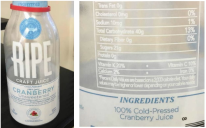
Court presumes failure to comply w/FDA labeling rules to be misleading

Campbell v. Freshbev LLC, 322 F.Supp.3d 330 (E.D.N.Y. 2018)
Campbell bought several bottles of Freshbev juices at Whole
Foods, allegedly relying on misrepresentations (1) that the juices were
unpasteurized; (2) that the juices were cold-pressed; (3) that the juices were
fresh; and (4) that the Cranberry Apple juice had more cranberry juice than
apple juice.

Initially, the court declined to resolve at this stage
whether Bristol–Myers Squibb Co. v. Sup. Ct. of Cal., ––– U.S. ––––, 137 S.Ct.
1773 (2017), meant that federal courts, not just state courts, lacked personal
jurisdiction for claims by out-of-state plaintiffs against an out-of-state
defendant that had no connection to the forum state, or whether that even
applied to nationwide classes. Without a motion to certify a nationwide class,
the issue wasn’t squarely before the court.
The court found Campbell hadn’t shown standing for
injunctive relief, because he didn’t plead a willingness to buy the juice again
if he could be confident about the truth.
Freshbev argued that the challenged statements weren’t
materially misleading. Campbell’s first argument was that “unpasteurized” was
misleading because the juices were treated with high pressure processing (HPP),
which was allegedly equivalent to pasteurization.  Freshbev responded that FDA regulations treat
pasteurization and HPP as two separate treatments and allow “unpasteurized” on
HPP-treated juice. The FDA has issued nonbinding guidance on treating juice
safely, and a proposed rule (1998!) that allowed an “unpasteurized” label as
long as that was truthful and nonmisleading. The problem was that “unpasteurized”
might be misleading insofar as it didn’t distinguish between “a product that
may contain harmful pathogens that could result in serious disease and one that
is treated using a method (other than pasteurization) that is capable of
achieving a 5–log reduction in the target pathogen.”  Thus, additional information was required on
such a label. Here, two of the labels showed that the juices were treated with
pressure, providing the requisite additional information, and the claim was
preempted. One label didn’t, so the claim was unpreempted. [Freshbev submitted
a graphic that allegedly represented the full label and had pressure
information, but that couldn’t be considered on a motion to dismiss.]
Cold-pressed: Campbell alleged that this was misleading
because the juices were treated with HPP after being cold-pressed. It was
implausible that a reasonable consumer would think that nothing had been done
to the juice except cold-pressing, in the absence of an “only” or “exclusively”
or similar modifier.
Fresh:  21 C.F.R. §
101.95 governs use of the word “fresh” on a label.  Of course there’s no private right of action
under the FDCA and its regulations, but NY “forbids the misbranding of food ‘in
language largely identical to that found in the FDCA.’” And also, “if FDA
regulations provide that a claim on a product’s label is misleading, that is
evidence that a reasonable consumer might be misled by the packaging.”  21 C.F.R. § 101.95(a) states that “[t]he term
‘fresh’ [in labeling] in a manner that suggests or implies that the food is
unprocessed, means that the food is in its raw state and has not been frozen or
subjected to any form of thermal processing or any other form of
preservation….” Syllogistically, HPP is a form of preservation, and thus juice
products treated with HPP shouldn’t be advertised as “fresh.”
There’s an exception if “the term [fresh] does not suggest
or imply that a food is unprocessed or unpreserved.” The FDA’s example was
pasteurized whole milk, which consumers understand to “nearly always” be pasteurized;
by contrast, “fresh” cannot be used to describe pasteurized pasta sauce because
pasta sauce is not always pasteurized, so consumers would assume that “fresh”
sauce is unprocessed.  Because juice is
widely sold with and without processing, the exception didn’t apply here.  Freshbev argued that the labels’ disclosure
of “pressure” would avoid any consumer confusion, but “because the term ‘fresh’
is misleading in isolation, it is not clear as a matter of law that confusion
generated by the misuse of the term would be resolved by additional statements
elsewhere on the label.”
“Cranberry Apple”: Campbell argued that this was misleading
because the product had more apple juice than cranberry. Freshbev argued that
that the name of the product wasn’t plausibly read as a proportion claim, and
that any confusion could be resolved by reading the ingredients list.
21 C.F.R. § 102.33(b) states that names “must be in descending
order of predominance by volume unless the name specifically shows that the
juice with the represented flavor is used as a flavor (e.g., raspberry-flavored
apple and pear juice drink).”  Defendants’
label was a pretty clear violation of this rule without the “flavored” caveat. “Because
it violates FDA labeling requirements, a reasonable consumer may be misled into
believing that Cranberry Apple juice has more cranberry juice than apple.”
However, a common law fraud claim against the failure to put
an unpasteurized warning label on the bottles failed; the most plausible reason
Whole Foods failed to do so was not an intent to defraud, but an understanding
that HPP avoided the risk of untreated, unpasteurized juice.

from Blogger https://ift.tt/2Cc9hzD

Posted in Uncategorized | Tagged , , | Leave a comment

Third Circuit holds that misrepresentation of safety isn’t actionable false advertising for consumables that didn’t cause individual harm

In re: Johnson & Johnson Talcum Powder Products
Marketing, Sales Practices & Liability Litig., 903 F.3d 278 (3d Cir. 2018)
Plaintiff Estrada alleged that perineal use of Johnson &
Johnson’s Baby Powder can lead to an increased risk of developing ovarian
cancer.  Over a dissent, the court of appeals held
that a plaintiff suffered no Article III injury when she bought a product that
she now believes she should never have bought: buyer’s remorse is not
cognizable, and a purchase is itself not an economic injury where the buyer got
the benefit of the bargain.
Estrada didn’t allege even an increased risk of cancer, or
emotional injury from the fear of developing cancer, or medical monitoring
costs.  Nor did she allege that the
product didn’t live up to its claims: “designed to gently absorb excess
moisture,” “keep[ ] skin feeling soft, fresh and comfortable,” and “reduce the
irritation caused by friction.” Nor did she allege that she still possessed a
durable but now-useless product; she’d consumed what she’d bought, so she also
didn’t allege transaction costs associated with reselling or returning Baby
Powder. The core allegation was that, if she’d known of the risk, she wouldn’t
have bought the powder in the first place.
She might have successfully pled economic injury by pleading
that she’d have bought a less expensive alternative, and her complaint did
suggest that alternative cornstarch-based products existed that didn’t pose the
same risk. But she failed to allege that cornstarch-based products would have
been cheaper, or that there was a price premium associated with J&J’s
superiority claims for its products.
On appeal, she argued that she hadn’t received the benefit
of the bargain: she paid for a product that didn’t increase the risk of ovarian
cancer but received one that did, which was worth less than what she paid. But
she got baby powder that “successfully did what the parties had bargained for
and expected it to do: eliminate friction on the skin, absorb excess moisture,
and maintain freshness.” But wasn’t she also, at least implicitly, promised
that the product would do that safely?
 To have Article III standing, a
plaintiff has to allege “facts that would permit a factfinder to value the
purported injury at something more than zero dollars without resorting to mere
conjecture.”
Although courts often “credit allegations of injury that
involve no more than ‘application of basic economic logic,’ … there is a
difference between allegations that stand on well-pleaded facts and allegations
that stand on nothing more than supposition.” References to future expert
opinions weren’t enough to establish constitutional standing, even though the majority
also said that “a plaintiff need not develop detailed economic models at the
pleading stage to establish that she has standing.”  Here, all Estrada alleged was that, although she
bought the product at a given price, she later wished that she hadn’t.
But what about that implied promise of safety? Why not
presume that Estrada would pay more for safe than unsafe powder?  First, to presume that “would turn the
standing question on its head” because federal courts lack jurisdiction unless
the record shows that it exists. [That’s a weird move. Not all allegedly
implied promises are promises of safety; especially since we can rely on other
economic theories in the standing inquiry, it seems very commonsensical to
infer the relevance of safety, which wouldn’t provide standing in every case even if it would provide
standing in every case about safety.] “[O]ur refusal to leap to such a
conclusion is supported by Estrada’s apparent desire to continue purchasing
Baby Powder in the future despite being aware of its alleged health risks.” That
desire apparently wasn’t conditioned on receiving a price discount in the
future.
Second, Estrada’s own allegations indicated that the powder
she received was safe for her, given
the absence of allegations about risk to her.
The majority clarified that there was no conflict with its
reading of Kwikset Corp. v. Superior Court, 51 Cal.4th 310, 120 Cal.Rptr.3d
741, 246 P.3d 877 (2011), which held that, “[f]or each consumer who relies on
the truth and accuracy of a label … the economic harm is the same: the
consumer has purchased a product that he or she paid more for than he or she
otherwise might have been willing to pay if the product had been labeled
accurately.” The key language was “paid more”: in Kwikset, there was a sufficient pleading that the plaintiffs didn’t
receive the benefit of their bargain.
Thus, Estrada’s claim for restitution also failed.  And her claims were “further weakened by her
alleged desire to purchase Baby Powder in the future despite knowing of its
alleged health risks,” which suggested that other consumers might want to do so
too. Also, “consumers are already highly informed of the alleged health risks
associated with Baby Powder given the numerous publicly available studies and
publications that she cites in her complaint. Estrada’s complaint refers to,
inter alia, … a pamphlet allegedly distributed ‘to all ovarian cancer patients
at nearly every medical facility in the United States.’ Wouldn’t such
widespread knowledge already have been factored into the current market price
of Baby Powder? And if so, how did Johnson & Johnson earn unlawful profits
by withholding information that the market might have already taken account of?”
[This argument is unworthy of a circuit court. 
As far as I can tell, Estrada never alleged that consumers of baby
powder are “highly informed” of the health risks, even if other people know
(ovarian cancer patients strike me as finding out too late, for example).]
And for injunctive relief, Estrada’s knowledge of the risks
made her unlikely to suffer future injury; the court wouldn’t allow a “stop me
before I buy again” claim.  “The law
affords Estrada the dignity of assuming that she acts rationally, and that she
will not act in such a way that she will again suffer the same alleged ‘injury.’”
Judge Fuentes dissented, beginning with the possibly relevant
fact that juries around the country have found J&J liable for its powder’s
propensity to increase ovarian cancer risks. Estrada alleged that, if she’d
known that, she wouldn’t have bought the powder. In the abstract, it was
correct that a plaintiff who gets the benefit of her bargain can’t claim injury
in fact. But the majority ignored key terms in that bargain, in the dissent’s
view, specifically safety. Estrada alleged that J&J held the product out as
safe.
The powder need not be unsafe as to Estrada in order for
safety to be part of her bargain. Her economic harm wasn’t an increased risk of
cancer. Her harm was the economic harm caused by purchasing a product due to
J&J’s misrepresentation about safety. 
She alleged that she wouldn’t have bought the product had she known the
truth, and that’s an Article III injury in fact.  Its actual safety as to her was non-economic
harm, not at issue.
The dissent addressed the majority’s hypothetical—what if
J&J had been able to go back in time 50 years, when Estrada first started
buying the product, and reassure her (based on what we know from her
allegations) that she personally wouldn’t be among the people harmed by the
product? The majority concluded that this “legal fiction” proved that she hadn’t
been harmed. 
But safety representations have two related meanings: First,
“is this going to hurt and/or kill me?” That was the realm of products
liability.  Second, “is this product safe
in general?”  Consumers might want to
know this because, among other things, they might be buying the product for
others’ use.  And they also might want to
know this simply because it’s among the reasons to choose one product over
others.  Kwikset showed why Estrada did suffer injury: she wanted something
that she didn’t get, despite the alleged misrepresentation that she would get
it. “I see no reason we should devote ourselves to understanding why a
plaintiff values what she values.”  We
don’t ask whether an observant Jew’s preference for kosher meat represents
anything real, or a Rolex consumer’s preference for a real Rolex over a
substantively identical counterfeit. All they had to do was plausibly allege
that they wouldn’t have bought a properly labeled product, or wouldn’t have
paid as much for it.  So too here.
Estrada alleged that she valued “safety.” That should be enough. [There is a
real basis for this preference, too.  Time-travel
fantasies aside, I want to know what general risks products pose when I buy
them. I don’t expect Dr. Who or J&J to pop out and reassure me that I’ll dodge a bullet, and
I doubt I’d believe them if they did.] 
There was no attenuated causal chain here; she alleged that she wouldn’t
have bought the product had she known the truth, making the injury the total
sum she paid.
The dissent would further hold that injury was “no more than
application of basic economic logic.”  “Dealing
only with the allegations of the pleadings, it seems sufficiently elementary
that a product held out as safe will command a higher price than a product held
out as markedly increasing a woman’s risk of developing ovarian cancer.”  As for allegations about willingness to
purchase again, the majority read her pleadings to state that she was willing to
buy the product as-is, but it made more sense that her pleaded desire to buy
baby powder in the future was contingent on J&J credibly offering a product
that met the terms of her bargain.  “She
is only unlikely to suffer future economic injury if we presume that Johnson
& Johnson has lied and will continue to lie in its labeling, or that
Estrada will assume that any label offered by Johnson & Johnson is
untruthful.”
Plus, the majority’s interpretation of lack of standing to
seek injunctive relief essentially struck down a part of California’s UCL,
which was not a good idea.

from Blogger https://ift.tt/2CGE5JQ

Posted in Uncategorized | Tagged , , | Leave a comment