closing SeaWorld during pandemic didn’t make “unlimited” entry passes deceptive

Kouball v. SeaWorld Parks & Entertainment, Inc., 2020 WL
5408918, No.: 20-cv-870-CAB-BGS (S.D. Cal. Sept. 9, 2020)

Kouball failed to state a claim under the usual California
statutes and common law causes of action by alleging that SeaWorld deceptively
failed to disclose that it intended to keep charging her for her annual pass
while its amusement and water parks were closed due to the pandemic. The parks
closed in March; in April, Kouball was charged the full amount of her monthly
payment of $48.99 for her annual passes. Kouball alleged that she would not
have paid for the membership had she known that she would not have access to
the park and that SeaWorld continues charging its customers monthly fees while
the parks remain closed.

Kouball failed to identify an affirmative misrepresentation
of “unlimited access,” but pled only her own subjective belief in such access.  “The complaint does not identify when and
where she purchased the annual membership passes, nor does it identify any
specific statement that SeaWorld made that she read, viewed, or heard, that led
her to a belief that she would have unlimited access to the parks.” (She did
cite the website where annual pass options say “unlimited omission” but didn’t
allege reliance on the website or on this statement. This seems easily fixable.
Under each annual pass option it also states, “Restrictions may apply…hours
and services are subject to change or cancellation without prior notice.” Would
reasonable consumers think the park could be completely closed under these
terms?)

Nor did she successfully plead a deceptive omission. Since
she relied on her own subjective belief, disclosure wouldn’t have helped, and
also she didn’t allege that SeaWorld had a duty to disclose. “Under California
law, an allegedly fraudulent omission is actionable only if the omission is ‘contrary
to a representation actually made by the defendant, or an omission of a fact
the defendant was obliged to disclose.’” In particular, “SeaWorld, like the
rest of the world, would not have been aware it would need to temporarily close
its parks due to an unprecedented global pandemic. Moreover, such temporary
closures were likely required under state or local orders and the decision on
how to charge customers or provide other relief would be dependent on the
agreements between them.”

Also, the CLRA covers only “goods or services,” and an unlimited
entry pass is neither.

from Blogger https://ift.tt/2ZBgkwU

Posted in Uncategorized | Tagged , , | Leave a comment

sunglasses reseller liable for (c) infringement, maybe TM/false advertising/tortious interference

Maui Jim, Inc. v. SmartBuy Guru Enters., No. 1:16 CV 9788,
— F.Supp.3d —-, 2020 WL 4435320 (N.D. Ill. Feb. 24, 2020)

Maui Jim alleged that the defendants sold non-genuine
Maui-Jim-branded sunglasses while using its copyrighted photographs to falsely
advertise that they are an authorized retailer. The defendants counterclaimed
that Maui Jim’s statements about their legitimacy constituted defamation or,
alternatively, unjust enrichment. The court partly granted and partly denied
cross-motions for summary judgment, because first sale is now so narrow a
defense that it is almost unavailable for non-used goods; MJ established
liability on its copyright claims outright but must go to a jury on
trademark/false advertising. Also, there are a troubling number of redactions here, including for facts that the court relies on in its holding; hard to see how this can properly inform the public of the legal basis for the decision.

Defendants sold a redacted number of non-prescription and
prescription pairs of Maui-Jim-branded sunglasses into the United States
between 2009 and 2019. The prescription sunglasses contained third-party
prescription lenses glazed into a Maui-Jim-branded frame. Maui Jim alleged that
its sunglasses incorporate patented technology to “wipe out glare and UV rays,
and boost[] color via lens treatments.” Its sunglasses have earned the Skin
Cancer Foundation’s Seal of Recommendation as an effective UV filter for the
eyes and surrounding skin. Maui Jim has registered trademarks, and registered
copyrights for the 93 professional photos at issue here, each issued within
five years of Maui Jim’s first publication. 

Maui Jim averred that it required all Maui Jim sunglasses be
sold with authentic Maui Jim lenses, frames, and parts, and not modified in any
manner. Defendants disputed this, noting that nothing in Maui Jim’s European
authorized retailer agreements stated that its warranty would be voided if an
authorized retailer sold Maui Jim sunglasses to third parties or if third-party
lenses were glazed into its frames, and claiming that Maui Jim authorized
retailers in the U.S. had glazed third-party lenses into Maui Jim’s frames
without consequence.

The parties disputed whether their warranties differed, and
whether Maui Jim’s warranty was an integral part of its product offering. Along
with some redacted information, Maui Jim’s representative indicated that
customers used Maui Jim’s repair department for, on average, three to four
non-Maui Jim prescription lenses per week between 2015 and 2018.

Defendants ship all their Maui-Jim-branded sunglasses sold
to the United States from Hong Kong, , and some number of shipments of
Maui-Jim-branded sunglasses contained a packaging slip that identified a
different party as the manufacturer, which defendants blamed on faulty computer
coding. Defendants
also admitted that they wrongly included a Maui Jim’s 2009 Drop Ball
Certification (a certification that lenses comply with certain regulatory
requirements) in a limited number of shipments to U.S. consumers. Defendants
additionally admitted to at least twenty examples of delayed shipments to its
purchasers of Maui-Jim-branded sunglasses, thirteen of which were delayed due
to FDA or customs issues.

Defendants’ webpage touts the supposed authenticity of
eyewear that it sells from “some of the world’s leading eyewear manufacturers” and
their “relationships with some of the world’s leading suppliers.” It oece
contained a diagram indicating that their supply chain is direct from the
manufacturer to the customer rather than the “traditional supply chain” that
routes from the manufacturer to an exporter to an importer to a wholesaler to a
shop and then to a customer. An accompanying sentence said: “By offering the
world’s largest range of authentic designer eyewear, sourced directly from the
world’s leading eywear [sic] suppliers, we are here to help you find what you
love.” Defendants argued that this “was accurate and consistent with
SmartBuyGlasses’ practice for the majority of its sales including
manufacturers/brands – such as [redacted] and [redacted] – from which it buys
genuine products from the manufacturer of the brands and ships it to its
consumers.”

MJ alleged that the FAQ falsely answered “Can I trust the
authenticity of the products?” with “All of our products have a 100%
Authenticity Guarantee, no exceptions. SmartBuyGlasses takes great lengths to
ensure the high quality and product authenticity that our customers have come
to expect, and all products are accompanied with official tags and manufacturer
warranties.”

Defendants’ website does say that “SmartBuyGlasses is not
affiliated with nor an official re-seller for Maui Jim ….” when consumers
select a MJ-branded frame, and it has small, grey type on the bottom of the
pages, stating that it is “a leading independent retailer of the world’s best
designer eyewear since 2006 and is not owned by or affiliated with the brands
it sells unless stated otherwise.” MJ, however, commissioned a survey that allegedly
found that 40.1% of respondents, net, took away the false impression that
SmartBuyGlasses is an authorized MJ retailer. Also, the MJ-specific language,
which goes on to say “therefore we provide our own comprehensive 24 month
warranty, as Maui Jim do not support their own 24 month warranty with us,” was
added after litigation began. The parties also disputed whether defendants’
website adequately informed consumers that they were purchasing third-party
prescription lenses rather than MJ lenses.

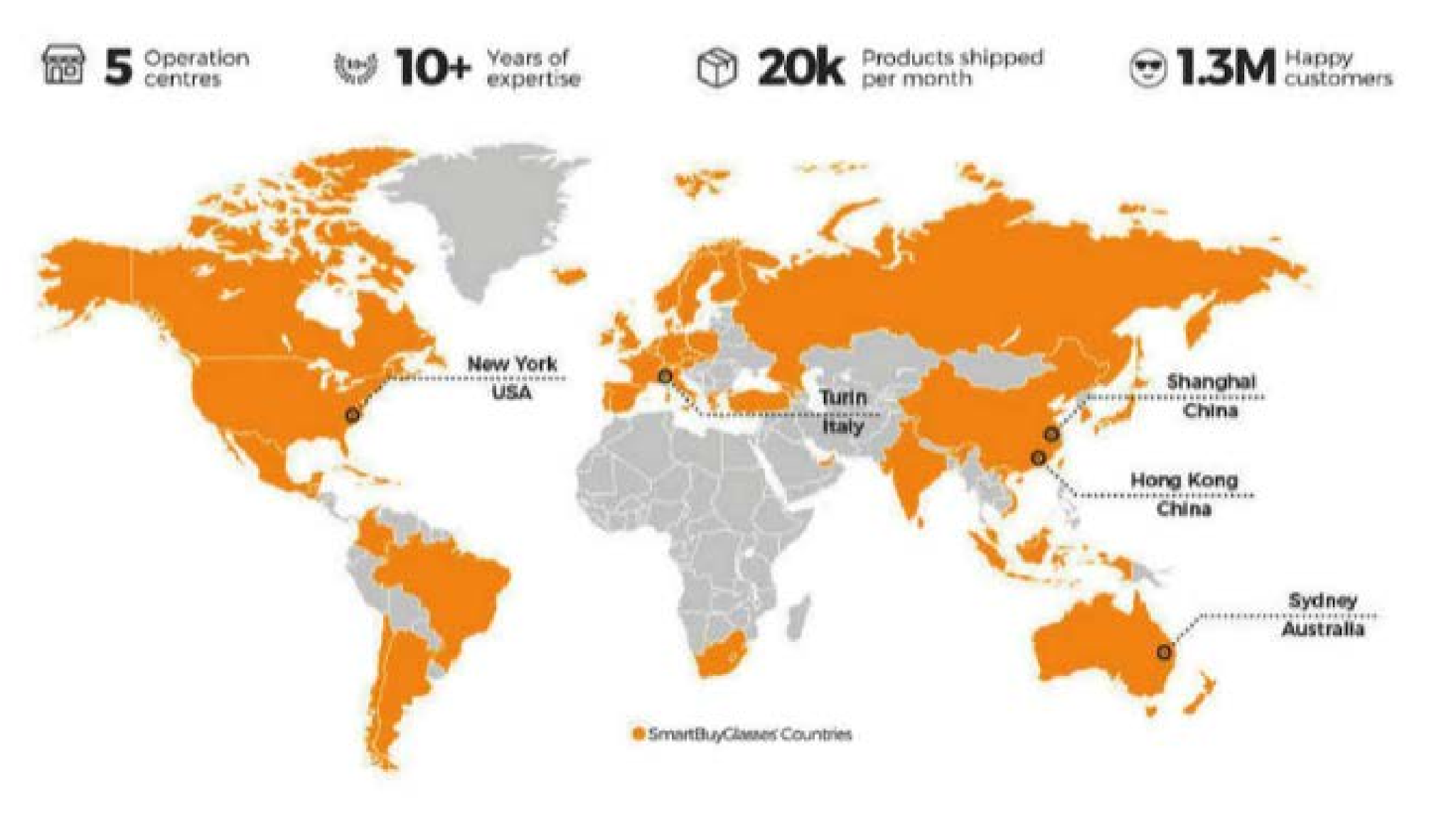
MJ also argued that the website falsely suggested that defendants
had an “operation centre” in New York. Although defendants don’t have physical
location or physical office in New York, they do have an “operational dropship
location in New York.”  [Query how MJ
plans to show this misrepresentation, if it is one, harmed them.]

Authenticity: There was a material dispute over the
authenticity of (some of) the MJ branded sunglasses based on MJ’s claim that it
hadn’t sold enough pairs to the third parties from whom defendants bought to
make up their supply, though MJ apparently wasn’t able to determine from test
purchases that there were any counterfeits or stolen products.  Since the burden was on defendants to show
that first sale applied, they weren’t entitled to summary judgment on that
ground alone.

Separately, there were issues about material difference,
which would prevent a first sale defense. At least twice, a MJ CSR told a
customer that Defendants’ omission from Maui Jim’s authorized retailers list didn’t
automatically mean that defendants’ Maui-Jim-branded sunglasses were
inauthentic. But MJ still argued that none of defendants’ MJ sunglasses had
been subject to an authorized first sale by Maui Jim. Its digital marketing
manager told CSRs to respond to customer inquiries about unauthorized retailers
“that these sites are not listed and therefore are selling diverted, used,
damaged or counterfeit goods and they void our 2 year warranty by purchasing on
these sites.”

The court first addressed the burden of proof for a first
sale defense: the party asserting the defense has the burden to “show ownership
through lawful acquisition.” “Defendants are best suited to know who gave them
the Maui-Jim-branded sunglasses they sell on their website.” And “blanket
self-serving testimony and testimony from third-parties” was insufficient to
grant summary judgment, at least in light of MJ’s own evidence that it hadn’t
sold (enough) pairs to the identified third party sources. But nor was MJ
entitled to summary judgment, because there was a material question of fact on
sourcing.

What about material differences?

The first sale doctrine does not
apply to products that have been materially altered from their original form.
It is incumbent upon the reseller to show that the differences are not of the
kind that consumers would likely consider in purchasing the product. An
alteration is material if it changes something about a product that is relevant
to consumers’ decision to purchase the product.

I note that the application of this rule has made first sale
defenses almost unwinnable for unused goods, despite Supreme Court precedent
recognizing that used goods are subject to first sale even though they are
basically always materially different from unused goods. For used goods, proper
disclosure of their used status is sufficient to avoid actionable consumer
deception despite material differences. Though courts occasionally gesture at disclosure
for unused goods too, they don’t take it seriously, I guess because they think
cutting off the used-goods market would be more socially detrimental than
allowing total trademark owner control of initial sales channels, which seems
like a competition policy decision that trademark law should not be making.
Even this relatively balanced opinion is willing to countenance this control.

MJ identified three alleged material differences, two of
which the court accepted as creating material factual issues. (1) Defendants’
sunglasses customers experience inordinate delays; (2) Defendants’ sales do not
qualify for Maui Jim’s warranty program; (3) Defendants “sold MAUI JIM-branded
sunglasses after removing the original lenses and mounting in the frames
prescription lenses that did not come from Maui Jim” but rather were
“manufactured using a process over which Maui Jim had no control.”

Shipping delays: Although case law holds that “a physically
identical product is nevertheless ‘materially different’ from the genuine article
if ‘the bundle of services’ that attach to that genuine article is not
available to the consumer,” shipping delays are different from other alleged
service differences because they would naturally be attributed to the seller,
not the manufacturer, and “are wholly unrelated to the product’s brand.”

Warranty: MJ argued that its warranty didn’t apply to
sunglasses purchased outside of its authorized dealers; defendants argued that
MJ’s “own communications with customers belie that contention.” The court
disagreed: Instances where MJ told customers that they would repair and replace
a customer’s sunglasses as long as they were authentic didn’t indicate that the
repair would be made pursuant to a warranty. 

So the next question was whether MJ’s warranty was
materially different from defendants’ own warranty. “[A]bsence of or a
different warranty has been held to be a material difference.”

The court relied on a prior case about Hyundai equipment,
which illustrates Jeremy Sheff’s point about the damage that post-sale
confusion reasoning has done to direct infringement doctrine. In that case, the
defendant’s customers agreed that they knew they were purchasing a product
without a warranty, but the defendant still lost on summary judgment because, “[w]hile
it may have been [his] intention to warn all of his customers … this would
not protect subsequent customers who may purchase the equipment from [his]
customers.” (How often are sunglasses resold compared to large vehicles, by the
way?)

It was undisputed that the parties have received inquiries
from both present and potential customers about their respective warranty
coverages. But whether their respective warranties were identical was disputed.
Defendants argued that their warranty was identical or better, but: (1) Maui
Jim’s warranty offers repair in addition to replacement, while SmartBuyGlasses’
does not; (2) Maui Jim’s warranty is tracked from the date the customer
receives the product, whereas SmartBuyGlasses’ tracks it from the order date,
meaning that Maui Jim’s is longer (without even accounting for alleged slower
shipping speeds); and (3) both warranties only cover manufacturer’s defects, so
MJ, as manufacturer, was “logically better suited to determine whether an issue
is a manufacturer’s defect or not.”

These differences must be material to overcome first
sale. It was defendants’ burden to show the absence of materiality. Defendants
hadn’t done so: (citation to redacted materials) and there was evidence that
the warranty did matter “as highlighted in consumer complaints and consumer
inquiries directed to both Maui Jim and SmartBuyGlasses.” And “the fact that
warranties and repair services were ranked [redacted] in consumer priorities
when choosing premium sunglasses could support a finding that Maui Jim’s
warranty is a material part of a consumer’s purchasing decision, especially
given Defendants do not offer repair services.” [Look, if the court is relying
on this for its legal conclusion, it should not be redacted—I have no idea what
the justification for this is. Any concept of trade secrets that covers this
information is appallingly overbroad.]

In addition, “a jury could find that the difference in
warranty provider alone could warrant a material difference even if the
warranties’ terms were identical. For example, we conjecture that a warranty
from an institutional manufacturer would certainly be perceived more valuable
to a consumer than the same warranty term provided by a discount retailer.”

Quality control: MJ argued that, even if the glasses were
“once authentic,” MJ’s inability to control their quality once they arrived in
defendants’ hands constituted a material difference. Of course, this rationale,
taken seriously, would make the unauthorized resale of any used product
unlawful—my Toyota has been out of Toyota’s control for over ten years!
Anything could have happened! (And admittedly, much has.) However, the court reasoned
that “[q]uality control measures may create subtle differences in quality that
are difficult to measure but important to consumers.” Thus, courts don’t require
trademark owners to show differences in actual quality. That would be
too hard! But “quality control” also isn’t a magic phrase. “Rather, the test is
whether the quality control procedures established by the trademark owner are
likely to result in differences between the products such that consumer
confusion regarding the sponsorship of the products could injure the trademark
owner’s goodwill.” MJ needed to show that “its quality control procedures
create a likelihood that their sunglasses are different from those that it does
not control,” in particular that it stops enough substandard product from
reaching a consumer “to create a material difference between the categories of
authorized and unauthorized sales.” That wasn’t clear on this record.  

Finally, MJ argued that the “sponsorship exception” to first
sale applied because defendants falsely indicated that they were authorized
resellers. “Thus, use of a plaintiff’s trademark in promotional materials such
as advertising or displays is not protected by the first sale doctrine, but use
of a plaintiff’s trademark solely to identify a product up for sale is
protected.” [This is a weird way to phrase it: advertising or displays are
often ways to identify a product for sale. If a used car dealership truthfully
advertises that it has Toyotas for sale, that can’t itself falsely imply
sponsorship.] The court rephrases: “conduct that goes beyond the mere resale of
trademarked goods and its incidental advertising may not be protected by the
first sale doctrine.”

“Maui Jim chiefly takes issue towards SmartBuyGlasses.com’s
representation that it works directly with leading eyewear manufacturers and
suppliers,” such as the diagram showing a supply chain direct from the
manufacturer. Even SmartBuyGlasses’ VP testified that this diagram was a poor
representation of SmartBuyGlasses’ procurement model. Also, MJ submitted [redacted]
instances where defendants’ customer service representatives supposedly
indicated that they were an authorized Maui Jim dealer. One example: a customer
asked “Are you an authorized Maui Jim’s dealer?” and a CSR responded: “Yes, we
are.” The court also worried about the statement “all our products are 100%
authentic[ ] [w]e source the authentic items through authorized distributors,”
even though that doesn’t say that defendants are authorized
distributors. That statement was in response to the following message: “your
section ‘Authenticity’ says you work directly with the manufacturers, in this
case Maui Jim, so why is it that they don’t know where you get your MJ
sunglasses from.” More plausibly, a customer asked how defendants can
“guarantee authenticity when [its] not an authorized dealer of Maui Jim
products?” The CSR stated that it “source[s] it from the manufacturer itself.” When
the customer responded by telling the representative that Maui Jim had told
that customer that they “aren’t supplying you guys with glasses,” the
representative changed course: “we do not source the item from Maui Jim brand,
we source it from the factory or manufacturer on where they also ordered their
items.” While defendants called these statements mere mistakes, they at least
created a factual issue.

I’m not sure why this misrepresents sponsorship as
opposed to misrepresenting the quality of the product, but defendants also at
least sometimes included “Maui Jim’s 2009 Drop Ball Certification,” which
certified that the lenses had been tested for impact resistance, which was not
true.

What about the website disclaimers? First, “SmartBuyGlasses
may have confused customers with its contradictory statements throughout its
website that it is authorized by ‘all’ brands rather than a more accurate word
like ‘most’ or ‘many’ brands.” Second, the survey showed 40% net deception,
though 60% didn’t perceive sponsorship. Too many disputed material facts!

Likely confusion: also disputed. If the goods were in fact
counterfeit, there would be a presumption of confusion. MJ’s digital marketing
manager oversaw secret test purchases and testified that some were not
manufactured by MJ. MJ’s VP of Marketing also testified that he could tell that
some of the glasses sold through SmartBuyGlasses.com were counterfeit because
they were sold “without our Maui Jim lenses.” Is that counterfeiting? Well,
there’s a question of material fact over whether defendants adquately notified
customers about the lenses.

As to the multifactor test, the analysis here is wonky
because the usual multifactor test is not suited to the question of whether
actual Maui Jim frames sold by someone else confuses people about source, which
is why first sale and nominative fair use and other defenses are important.
Interestingly, the court finds degree of care to be neutral, because “Maui Jim
sunglasses are both premium (and so relatively expensive) and widely accessible
on the internet.” MJ’s alleged instances of actual confusion, though disputed,
were admissible hearsay because they were business records of a regularly
conducted activity that were made at or near the time they transpired.

Dilution: summary judgment also denied (no discussion of
fame).

False advertising claims covered four (or maybe five) things:
(1) Defendants’ CSRs’ statements in response to customer inquiries about
authenticity, (2) the website’s authenticity guarantee, (3) the website supply chain
image, (4) the alleged statement that defendants have a U.S. location, and (5)
the non-MJ lenses inserted in MJ frames.

CSR statements: Were these “advertising or promotion”? No;
they were individual statements made in response to customer inquries,  not “promotional material disseminated to
anonymous recipients.”

Website authenticity guarantee: Defendants pointed to their
disclaimers, including “With some of the brands that we sell, the
manufacturers’ warranty will be available worldwide however for other brands
the official warranty may not be available in your country due to territorial
limitations and/or brand policies. To cover all scenarios, we offer our own
exclusive 24-month warranty against all manufacturers’ defects without
exception” and the MJ-specific disclaimer it added. There was a question of
material fact on falsity, despite the existence of the survey, given the
disclaimers and other questions discussed in the trademark section. The survey
wasn’t enough because it didn’t specifically evaluate the effects of the
disclaimers.

comparative supply chain graphic

Supply chain image: There was a factual dispute over the
misleadingness of showing a direct supply chain from manufacturer to consumer,
rather from manufacturer to an exporter to an importer to a wholesaler to a shop
and then to a customer. Defendants argued that the diagram was accurate and
consistent with their practice for the majority of sales including [redacted]
brands, and that disclaimers took care of remaining uncertainty.

Operations graphic showing NY “operation centre”

U.S. location: Also a material question over whether the
U.S. dropship location made this truthful.

one prescription lenses statement

another, including ridiculous redaction from public website

Third-party lenses: These were less than 1% of defendants’
sales. MJ argued that defendants advertised that their prescription lenses were
manufactured by MJ, but defendants used words like “our” rather than “Maui
Jim’s prescription lenses” to describe them; this question was for the jury.

Reverse passing off: At one point, defendants incorrectly
identified [redacted] as the manufacturer of MJ branded sunglasses on
commercial invoices it sent to its customers. Defendants attributed this as a
computer coding error and there was no evidence that there was any benefit to
them from doing so, but regardless it wasn’t reverse passing off as defined by Dastar
because they didn’t represent the goods as their own. Following the
“precise words” used by the Supreme Court and the Seventh Circuit, “Defendants
must have substituted its own name for the true manufacturer to be liable for
reverse passing off.” Even without binding law, the court would still reject
reverse passing off, because MJ didn’t show likely damage based on the
invoices, though the result might be different if the mislabeling had been in
ads.  

Illinois Uniform Deceptive Trade Practices Act claims
survived for the reasons discussed above.

example of MJ photo compared to image on defendants’ site

As for the copyright claim, the court easily rejected a fair
use defense: the use wasn’t transformative, the modest creativity of the photos
was enough, they were used in their entirety, and there was a licensing market
for the photos insofar as “a benefit of contracting to act as one of Maui Jim’s
authorized retailers is the right to use these copyrighted photographs in
advertisements.” And the court found infringement:

 “Although Defendants
ask us to infer that this is merely the same pairs of sunglasses shot at
standard angles against a standard white background, we hold that no reasonable
jury would find these photos are anything but identical.” Damages were a
factual issue for trial.

Tortious interference: Whether Maui Jim produced enough evidence
to establish the existence of its contracts with third parties was a disputed
issue. However, the court rejected the argument that those contracts were
unenforceable under European law: “the European Court of Justice squarely
addressed the legality of authorized retailer contracts and distribution
networks … in the context of luxury or high-end goods and ruled such contracts
are not prohibited when three conditions are met: (1) the product necessitates
a selective distribution system because it is high quality or technical; (2)
resellers must be chosen on the basis of objective criteria; (3) the criteria
defined must not go beyond what is necessary. Case C-230/16, Coty Germany GmbH
v Parfumerie Akzente GmbH, 2017 EUR-Lex CELEX LEXIS 62016CJ0230, at ¶ 24.” [I
don’t really see the court analyzing whether (2) and (3) were satisfied,
especially given the factual issue about whether there were such contracts.]

Also, there was no question of material fact that defendants
were aware that Maui Jim contracted with authorized retailers and that
authorized retailers were prohibited from selling to other retailers (like defendants).
In 2008, Maui Jim wrote to defendants: “By purchasing Maui Jim sunglasses from
any authorized Maui Jim account, you are inducing that retailer to breach its
contract with Maui Jim, which will subject you to civil liability for
interference with a contractual relationship.” Defendants acknowledged receipt.

And there was evidence that Maui Jim incurred financial harm
from the interference. So defendants’ summary judgment motion was denied.

Counterclaims for defamation: Defendants alleged that Maui
Jim’s corporate headquarters and customer service representatives “falsely
instructed potential SmartBuyGlasses’ customers that SmartBuyGlasses sells
counterfeit goods, that the Maui-Jim-branded sunglasses they sell are ‘fake’ or
‘not authentic,’ and that SmartBuyGlasses ‘is not an authentic website,’” as
well as falsely telling customs officials that Maui-Jim-branded sunglasses
shipped by SmartBuyGlasses to U.S. Consumers were “not genuine,” causing U.S.
customs to seize their authentic sunglasses. Since truth is a defense, the
court denied summary judgment here.

from Blogger https://ift.tt/33edcIc

Posted in Uncategorized | Tagged , , , , , | Leave a comment

“made with aged vanilla” can be misleading even if not the main ingredient

Sharpe v. A&W Concentrate Co., — F.Supp.3d —-, 2020
WL 4931045, No. 19-cv-768 (BMC) (E.D.N.Y. Aug. 24, 2020)

Plaintiffs alleged that defendants violated NY GBL §349 by
misleadingly labeling their root beer and cream soda beverages as “MADE WITH
AGED VANILLA,” even though the vanilla flavor comes predominantly – if not
exclusively – from an artificial, synthetic ingredient called ethyl vanillin. Although
the court found that plaintiffs lacked standing for injunctive relief because
they knew the truth now, it rejected defendants’ argument that a reasonable
consumer couldn’t be misled because the products contain real vanilla and were
conspicuously labeled as “Natural and Artificially Flavored.”

The complaint alleged that, even if the products contain any
aged vanilla, “it is in trace or de minimis amounts not detectable by advanced
scientific means.” Therefore, defendants’ misleading message that the drink
contains “aged vanilla” wasn’t dispelled by the information that the beverages
are “Natural and Artificially Flavored,” “which fails to communicate that the
quantity of the artificial flavoring far exceeds the quantity of natural
vanilla.” Plaintiffs alleged that they relied on the label, believing flavor of
the product was vanilla and that any flavor came from macerating the bean and
infusing/extracting the flavor. They also alleged that, in a March 2020 survey
of 411 consumers, around 89% of the consumers stated this representation led
them to believe that the product was vanilla flavored:

These consumers also interpreted
the representation to mean that the vanilla flavor came exclusively (if not
predominantly) from the natural vanilla – not artificial sources. Specifically,
around 68% of surveyed consumers believed that the statement meant that the
vanilla flavor “comes from a vanilla plant, such as a vanilla extract, which is
made from vanilla beans from the vanilla plant.”

Scientific testing by an independent laboratory allegedly revealed
that the vanilla flavoring of the products does not come from the vanilla
plant. Instead, testing allegedly disclosed that the predominant, if not
exclusive, source of the vanilla flavor derives from an artificial, synthetic
ingredient – ethyl vanillin. This is allegedly a cheap and inferior substitute
for real vanilla, and plaintiffs alleged that they wouldn’t have paid a premium
price for the beverages if they’d known the truth, though they also alleged
that they’d buy the drinks again in the future if they were reformulated with
real vanilla or no longer deceptively labeled.

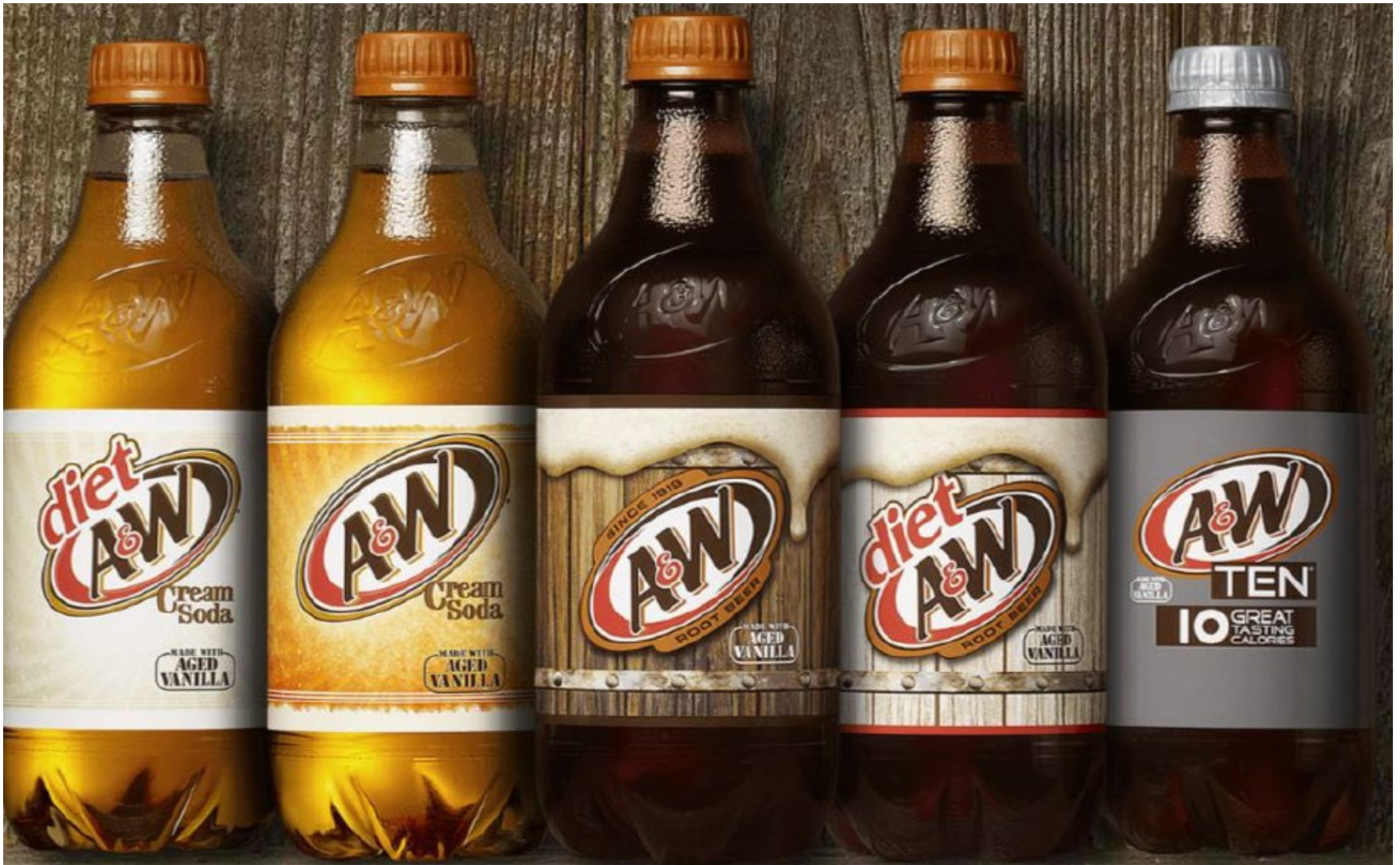
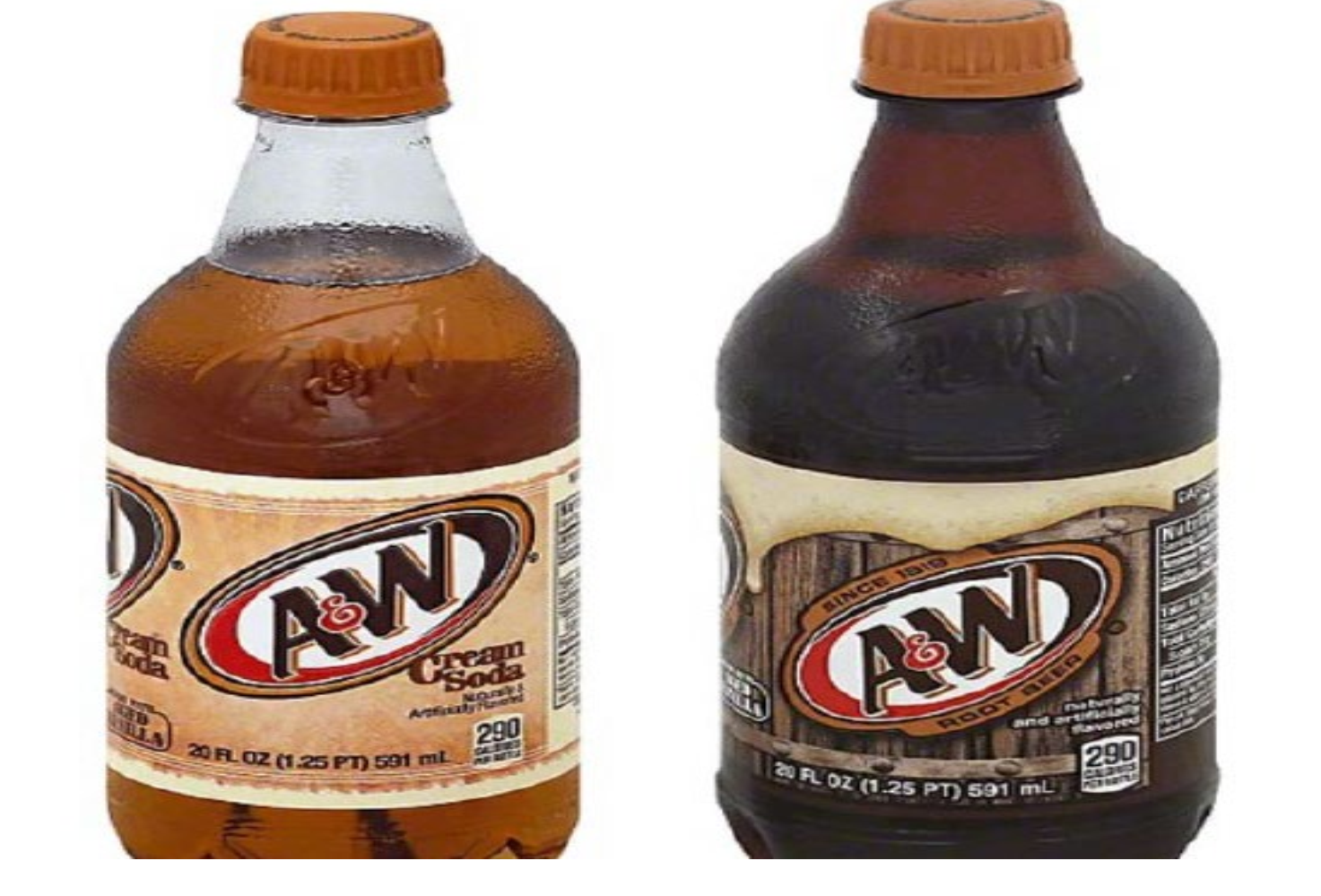
The parties used competing images of the products; the
images plaintiffs used show the products prominently displaying the “MADE WITH
AGED VANILLA” label and from an angle from which the “Natural and Artificially
Flavored” disclosure defendants relied upon is not visible, while plaintiffs
shot the product from a different angle, in which the “MADE WITH AGED VANILLA”
statement was masked and unintelligible, while the statement “Natural and
Artificially Flavored” was clearly visible. The court considered both images,
while drawing all reasonable inferences in plaintiffs’ favor.

plaintiffs’ image
defendants’ image

Even if plaintiffs conceded that the products contained aged
vanilla (which they did not), that was not enough to conclude that reasonable
consumers wouldn’t be misled. The key case is Mantikas v. Kellogg Co., 910 F.3d
633 (2d Cir. 2018), which held that prominent “WHOLE GRAIN” and “MADE WITH
WHOLE GRAIN” labeling could mislead a reasonable consumer on a product that was
predominantly enriched white flour, even when the ingredients list accurately
disclosed “enriched white flour” as the first ingredient and disclosed the
number of grams of whole grain per serving.  The Second Circuit held that “a reasonable
consumer should not be expected to consult the Nutrition Facts panel on the
side of the box to correct misleading information set forth in large bold type
on the front of the box.”

So too here. The court emphasized that “the use of the word ‘aged’
suggests to consumers that the vanilla content is naturally derived and has
acquired a desirable quality upon the passage of time.” In Mantikas,
whole grain was “at least present in a discernable quantity,” while plaintiffs
alleged that vanilla wasn’t, making this a stronger case. And the Nutrition
Facts panel in Mantikas was undisputedly accurate, while here “the existence
of ethyl vanillin, the substance plaintiffs allege is exponentially present
compared to natural vanilla, is never explicitly disclosed to consumers.”
Advanced scientific testing was required to reveal its presence.

Plaintiffs plausibly alleged that the “MADE WITH AGED
VANILLA” representation – “prominently displayed underneath the A&W logo
and on front of the bottle or box, bolded and in all capital letters” – falsely
implied that any vanilla content derives “predominantly” from the vanilla plant.
The court said that “the persuasive extrinsic evidence that the overwhelming
percentage of consumers share this misconception” bolstered this conclusion.

True, the labels disclose that the beverages are “Natural
and Artificially Flavored.” “A consumer, however, does not know if this is
referring to vanilla or to the host of other ingredients present in the drinks,
including the root beer or cream soda flavoring.” And more importantly, Mantikas
says that consumers don’t have to rotate the package to correct misleading
information in large bold type on the front.

Nor was Mantikas distinguishable on the basis that
the case involved a misrepresentation as to the cracker’s primary or main
ingredient. The Second Circuit did mention this fact, but the court found that Mantikas
actually rejected the argument that only primary ingredients count:

[T]he rule that [d]efendant
contends emerges from these district court decisions – that, as a matter of
law, it is not misleading to state that a product is made with a specified
ingredient if that ingredient is in fact present – would validate highly
deceptive advertising and labeling. Such a rule would permit [d]efendant to
lead consumers to believe its Cheez-Its were made of whole grain so long as the
crackers contained an iota of whole grain, along with 99.999% white flour. Such
a rule would validate highly deceptive marketing.

This principle is equally true when dealing with a “preferred,
non-primary ingredient”:

A chocolate chip cookie may not
necessarily be comprised predominantly of chocolate (one can only dream), but
it would still likely be misleading to label it as “Made With Natural Chocolate”
if the cookie’s chocolate’s content is 99.999% artificial and synthetic. Likewise,
a frozen pizza manufacturer that labels its products as “Made with Real
Pepperoni” likely cannot prevail at the motion to dismiss stage under Mantikas
by unabashedly using 99.999% artificial or synthetic meat fillers and simply
arguing a pizza’s main ingredient is dough.

from Blogger https://ift.tt/3hnapBn

Posted in Uncategorized | Tagged , , | Leave a comment

Keratindose hair products may be misleading about keratin content even without a survey

Price v. L’Oréal USA, Inc., 2020 WL 4937464, No. 17 Civ. 614
(LGS) (S.D.N.Y. Aug. 24, 2020)

Plaintiffs brought California and New York claims against L’Oréal
based on its Matrix Biolage Advanced (MBA) haircare product. This includes the
Keratindose system of three products: the Pro-Keratin + Silk Shampoo, the
Pro-Keratin + Silk Conditioner and the Pro-Keratin + Silk Renewal Spray “Keratindose”
appears on the front with the first seven letters of the word in bold. But:

Keratin is a protein that is found
in human hair and is also a treatment that customers administer to their hair.
The Products do not and have never contained keratin as an ingredient, and the
ingredients lists on the back labels of the Products do not include keratin.

The court partially granted and partially denied L’Oréal’s
motion to exclude the testimony of Bruce Silverman as a marketing, advertising
and branding expert. He opined, inter alia, that “a reasonable consumer would
fully expect a family of hair care products named Keratindose to include
keratin, just as they would expect of any product that includes a well-known
ingredient as part of its name.” L’Oréal argued that his expertise was inadequate
because his “career has provided him with no experience in in-salon hair care
products or the salon channel generally.” However, “Silverman has an impressive
fifty years of experience in advertising,” including reviewing thousands of
studies, interviewing thousands of consumers, and attending thousands of focus
group sessions, many devoted to health/beauty aids. His opinions premised on
his own experience were admissible, including that a reasonable consumer “would
expect [ ] any product that includes a well-known ingredient as part of its
name” to include that ingredient, and “consumers would see the Challenged
Claims as branded ingredient(s) that differentiate the Challenged Products from
competitive products.” However, his opinion that keratin is a well-known
ingredient in hair products, and that “many women … are already aware of (or
have ample opportunity to be aware of) the restorative properties of keratin”
in hair products was not based on his experience, nor is it based on a reliable
methodology, just on an internet search and a review of emails and testimony
from L’Oréal employees and the PTO ruling on L’Oréal’s trademark application.  Thus, his opinion on consumers’ awareness of
keratin as an ingredient in haircare products and consumers’ resulting
perception of the challenged terms were excluded as unreliable, including his
opinion that “many shampoos actually contain keratin and feature that word on
their labels,” and the subsequent conclusion that “[c]learly, keratin is a
desirable ingredient that many consumers would believe to be a valuable
component in a shampoo, and if they see that word on a label, they would expect
it to be in the product.”

The court also excluded plaintiffs’ expert’s damages
calculation. The presently unchallenged model concluded that 21% of the price
reflected keratin content claims or a price premium of 7% of the price charged.
Defendants do not seek to exclude this opinion in their current motion. But the
calculation of aggregate economic damages was excluded. The expert used the
formula:

Aggregate Economic Damages = (# bottles) × ($ price) × (%
damages)

But the actual retail price of the products was not
produced, so the expert used the low end of the range of the manufacturer
suggested retail prices (MSRP). And L’Oréal doesn’t report bottle sales by
state, so he used the percentage of conjoint survey respondents who reported
that they had purchased a Matrix Biolage Advanced Keratindose
“shampoo/conditioning product,” and who also reported that they were residents
of California or New York, to apportion bottle sales to the two states. Also,
because L’Oréal only provided wholesale data, and because in practice not all
wholesale bottle sales will be resold to consumers, he proposed either a
shrinkage rate of 5% or, alternatively, using only wholesale orders that have a
corresponding re-sale order at a later date, on the assumption that re-sale
orders occur only when customers have sold their previous inventory.

This was excluded because certain of the assumptions about
quantity and price were are unreliable. The evidence about MSRP was that, though L’Oréal believed that “the MSRP lists
represent good proxies for the prices that salons charge consumers for L’Oréal
Products,” non-salon retailers charged widely varying and unpredictable prices. Since the class here wasn’t restricted to salon purchasers, MSRP
could not be used as an accurate substitute for the actual prices paid by Class
members. 

This unreliable methodology for calculating price was exacerbated by
questionable assumptions about number of bottles. The proposed shrinkage rate
of 5%, “more than two to three times the average of reported shrinkage rates in
the United States,” wasn’t sufficiently justified; just being “conservative”
wasn’t enough. Nor was there enough information about reorders for that measure
to be accurate. In addition, the conjoint survey was initially designed to
measure consumer preferences and economic damages as a percentage of actual
price charged, and for that purpose had a sample size of one thousand
respondents. It wasn’t appropriate to retro-fit that to determine the
percentage of the total sales that occurred in California and New York,
especially given the small sample size (105) for the damages calculation, and
there was no confidence interval provided, which was significant “since the
addition or subtraction of a single survey respondent living in California or
New York stating they had purchased the shampoo could account for hundreds of
thousands of dollars in class damages, and millions in statutory damages under
the GBL.”

However, defendants weren’t entitled to summary judgment
based on the claim that reasonable consumers wouldn’t be fooled. Plaintiffs offered
an expert opinion, and there was also anecdotal evidence showing that keratin
was a known ingredient among consumers; the named plaintiffs each testified
that they believed, at the time of purchase, that the products contained
keratin based on the labeling. This was enough to go forward. (However, emails
between L’Oréal employees and the PTO ruling weren’t evidence of deception
because they didn’t show the perspective of a reasonable consumer—which would
make the PTO sad to hear, I think.)

“In essence, Defendants are arguing that, because that the
Challenged Terms are not false on their face, Plaintiffs must proffer extrinsic
evidence to show consumers’ understanding of the terms in the form of consumer
data or a survey.” But California courts have expressly rejected a survey
requirement for misleadingness, and there was no authority that an expert
opinion was insufficient under the GBL.

L’Oréal also wasn’t entitled to summary judgment for failure
to show damages. The expert formula for  calculating
aggregate class-wide damages wasn’t excluded, and non-expert evidence might be
applied to this formula to prove aggregate class-wide damages (citing precedent
that classwide damages calculations under California law are “particularly
forgiving” and require only “some reasonable basis of computation”).

Equally, plaintiffs weren’t entitled to summary judgment on
deceptiveness. The meaning of the claims was ambiguous. “ ‘Pro-Keratin’ has no
clear meaning, and consumers could understand “Keratindose” to mean that the
product is designed to deliver ‘a daily dose of keratin’ as Plaintiffs allege,
or understand it to mean that the product is designed to treat hair that has
undergone a keratin treatment as proposed by Defendants, or understand it to
mean something else entirely.” A reasonable jury could reject Silverman’s
expert testimony and agree with L’Oréal.

from Blogger https://ift.tt/3hfxC8F

Posted in Uncategorized | Tagged , , | Leave a comment

advertising/marketing law job: Advertising & E-Commerce Law Attorney (4+ yrs)

From Gordon Rees Scully Mansukhani. Ideally in DC/Northern Virginia area. See more here.

from Blogger https://ift.tt/3inyU2Q

Posted in Uncategorized | Tagged | Leave a comment

“wasabi peas” can be made with horseradish without injuring consumers given widespread use

Yothers v. JFC Int’l, Inc., No. 20-cv-01657-RS, 2020 WL
5015262 (N.D. Cal. May 14, 2020)

Defendants sell “wasabi peas,” which, “allegedly like 95–99%
of ‘wasabi’ products sold in North America, contains not Wasabia japonica but
Amoracia rusticana, more commonly known as horseradish.” Plaintiffs alleged
that they wouldn’t have bought the product if they’d known it didn’t contain
wasabi. Wasabi allegedly “is the most expensive crop in the world to grow
because it is very difficult to cultivate.” While fresh wasabi can cost as much
as $113 a pound, horseradish has a similar taste but costs only about $6 a
pound. Thus, plaintiffs alleged, “95–99% of the wasabi products sold in North
America substitute horseradish and green dye for authentic wasabi.” Defendants’
product is labeled as “wasabi coated green peas,” but the ingredients list
includes not wasabi but horseradish and green food coloring.

The court found that plaintiffs failed to show statutory
standing. They couldn’t show they paid a premium when the product they bought
was not, apparently, priced differently from other similar products. “Importantly,
plaintiffs have not alleged why they selected defendants’ product, as compared
to other products which are labelled and priced almost identically,” but
instead alleged that almost all other products on the market had the same
defect (and didn’t specify whether they knew that at the time of purchase).  “Unless that fact has recently become known to
them, ‘wasabi coated’ must have implied ‘horseradish coated’ to plaintiffs at
the time of purchase.” Plus, they alleged they reviewed the “labelling,
packaging, and marketing materials” before purchasing, and the package as a
whole clearly discloses that the product contains not wasabi but horseradish.
Williams v. Gerber Product Co., 552 F.3d 934 (9th Cir. 2008), which held that reasonable
consumers don’t have to “look beyond misleading representations on the front of
the box to discover the truth from the ingredient list in small print on the
side of the box,” was inapposite because that was about a Rule 12(b)(6) motion,
not a jurisdictional motion under Rule 12(b)(1). “The analysis in the present
case involves not what a ‘reasonable consumer’ would do, but what [plaintiffs]
actually did do.” Further, plaintiffs alleged that they wouldn’t have bought
this product “on the same terms” if they’d known the truth, but they didn’t
allege whether they would have bought another competing horseradish product
instead or a more expensive wasabi product. “Whether plaintiffs would have
spent the same amount of, more, or less money had they known about the
substitution determines whether they suffered an economic injury.”

from Blogger https://ift.tt/33erPv5

Posted in Uncategorized | Tagged , , | Leave a comment

seller’s private definition of “Made in USA” fails; disgorgement appropriate

Newborn Bros. Co. v. Albion Engineering Co., 2020 WL 5015571,
No. 12-2999 (NLH/KMW)

After a bench trial, the court found Albion liable for
falsely advertising its caulk dispensing guns as “Made in the USA” (a bit
ironic given the name, no?).

There are different kinds of dispensing guns. Manual guns have two key components: a material containment unit (“MCU”) and a handle
assembly. Some tasks require additional parts, including caulking knives or
spatulas.

Newborn imports dispensing guns, parts, and accessories from
China and Taiwan in finished condition. Its current president, Lee, testified
that the industrial/professional market tends to purchase more “heavy duty
caulking guns,” including bulk and sausage guns, while the paint and hardware
market tends to focus on less durable products like “inexpensive cartridge
guns.” Newborn introduced two new manual bulk dispensing guns, designed to
compete with Albion’s bulk guns. Newborn was trying to create “something as
similar to the Albion gun as possible,” but priced at $32, $6 less than
Albion’s models. Despite this lower price, Newborn had limited success. Lee
investigated the reasons, and “a salesperson told him that while the salesman
believed Newborn created a superior and less expensive product, Newborn had
trouble competing in the industrial/professional market because Albion,
Newborn’s competitor, manufactured its products in America.” Lee testified that
one of Newborn’s independent sales representatives “confirmed that many
customers had inquired whether Newborn products were made in America like
Albion products.” Upon investigation, Lee determined that at least some of
Albion’s products were in fact made overseas. He visited distributors in a
number of states; some Albion displays stated that the products were made in
America.

A 2010 internet post says the author bought a $30 Albion
caulking gun and found a hang tag that says, “Made in Taiwan.” The post says
that, when the author called, Albion stated that “the page on their website is
incorrect. They import most of their guns from Taiwan.” The post encouraged
others to “be wary of anyone claiming to make products in the U.S.” and said “Albion
refused to update their website and they are still actively deceiving customers
into buying foreign made products with a Made in U.S.A. label.”

By the end of 2011, Lee sought help from Customs; a customs
agent recommended a private lawsuit. In 2012, he used a SurveyMonkey survey
that posed both multiple choice and open-ended questions to distributors about
what Newborn products they buy; their reasons for not purchasing from Newborn;
their thoughts about the quality of Newborn’s products; and their preferences
on discounts. He received fifteen responses showing a variety of factors. “Seven
out of fifteen respondents answered that the reason they do not buy all or more
from Newborn is that Newborn’s products are not made in the USA.”

Another witness testified about attempts to sell to a
specific purchaser, where there was “a kind of firewall” and that he “couldn’t
get past the fact that we were not made in the U.S.A.” [More testimony of this
type omitted.] A West Coast distributor similarly transitioned away from
Newborn to Albion in 2010 because “Mark Schneider [of Albion] is always talking
about how his products are made in the U.S.A. at the SEAL meeting, in his
presentations, and in sales calls and I have to support that.”

Newborn sued in 2012 (yikes) and issued a press release,
after which Albion made some changes.

Evidence of materiality/harm. Among other things,
Newborn’s sales to Canada increased because Albion was no longer issuing NAFTA
certificates that entitled customers to a 6.5% tariff savings for products made
in America. Sales to one company increased from $6,600 in 2011 to $44,000 in
2015. An independent sales representative testified that following this suit,
he was able to sell to distributors that had previously been exclusive to
Albion, doubling his commissions between 2012 and 2017, despite only small
adjustments to Newborn’s prices and sales force. He testified that the highest
increase in sales was in accessories, but he also saw an uptick in sausage and
cartridge guns. When he informed another company that Albion’s spatulas were
not in fact made in America, it confirmed that fact and then began ordering
spatulas from Newborn. Etc.

The actual country of origin situation. Albion is a
New Jersey corporation established in 1929. In recognition of the founding Schneider
family’s continued control over Albion, Albion described itself as a
“third-generation American manufacturer.”  Until 2000, Albion manufactured all its guns
and accessories in its Philadelphia plant. Its original guns were stamped with
the phrase “ALBION ENG. CO. PHILA. PA U.S.A.” starting in the 1930s “and
continued to be labeled this way into the twenty-first century.” But in the new
millennium, the board pushed for low-cost overseas manufacturing alternatives,
and in 2001, Albion begain using a Taiwanese company to make four models. Later,
it began sending handle components made in Philadelphia for partial assembly in
Taiwan, then final assembly back in Philadelphia, and it also began
“supplementing” its barrels with barrels made in Taiwan. It expanded the handle
export/re-import practice and began importing caulking knives from Taiwan. Then
it began importing spatulas. By 2008, it was importing more “loosely assembled
guns” that were complete other than adjustment and lubrication when imported.
Some Albion guns still included handle assemblies that were made only in
Albion’s U.S. plant without any imported components.

Labeling and marketing. “Schneider testified that it
was his belief that it was appropriate to identify products as being ‘Made in
America’ if over fifty percent of the cost of the tool were incurred within the
United States.”  He didn’t explain where
this formula came from or why it was justified. He used a formula (calculations
not disclosed at trial) for calculating production costs including labor,
overhead at the manufacturing plant, items made in the United States, and
post-production packaging. Using this formula, Albion decided to stop applying the
“Made in the U.S.A.” label to its guns with imported subassemblies in 2008.
Given the absence of hard evidence of how the formula was applied to particular
products or lines, the court characterized it as “either an ad hoc, or worse
post-hoc, attempt to create the illusion that Albion’s imprecise and at times
indiscriminate use of ‘Made in America’ was a good faith mistake.”

Ultimately, at least until the case was filed, and, for
export certificates, up through trial, “Albion lacked any systematic or
disciplined program designed to insure that its products met Department of
Homeland Security marking requirements, that its export certificates were
truthful, or that its website and product literature regarding foreign-made
products sold domestically adequately and accurately revealed the country of
origin.” Albion “deliberately kept its head in the sand content to free-ride
on, and at times promote, the false illusion that it was a purely ‘Made in the
USA’ company.” Concerns expressed within the company supported this conclusion.

Among other details, Albion produced a line (B-line) that
was initially marked with a gold and black sticker reading “Made in Taiwan” on
the recoil plate. Schneider testified that a distributor told him that the gold
sticker was “loud” and Albion switched to using a no-contrast stamp which
Schneider described as “out of the way, difficult to see” and speculated that
he thought the distributor “would be pleased.”

In 2004, Albion instructed its Taiwanese manufacturer to
print “75 Year History – USA Manufacturer and Designer” on one line of guns.
This statement was updated in 2011 to read “80 Year History – USA Manufacturer
and Designer.” It was removed in 2012.

Albion also switched for some guns to a hang tag with a
Taiwan mark and asked its Taiwanese manufacturer to remove its information from
the products. The hang tag would likely be removed before use; nothing left on
the gun identified it as originating overseas. “Anyone examining the tool in
such a condition post-sale and examining the banner sticker … would easily be
misled into believing the product was domestically produced.” Now, Albion uses
a metal stamp on the recoil plate of these tools to indicate Taiwanese origin.

In 2004, Albion’s website contained a page entitled “The
Albion Difference,” which included the claim: “All our dispensing products and
accessories are designed and manufactured in the USA, from our location in
Philadelphia, Pennsylvania.” In 2007, it was updated to read: “all of our
dispensing gun products and accessories are designed and manufactured in the
USA, from our location in Philadelphia, Pennsylvania.” (US manufacturing was
actually in New Jersey by then.) In 2010: “All of our dispensing gun products
and accessories are designed in the USA, from our location near Philadelphia,
Pennsylvania.” There were other publications, such as a catalog stating “All
Albion Products are Made in America” in the bottom right-hand corner of its
cover. A later catalog omitted that statement and said that the B-line was “USA
engineered with the savings of an import” and that “Albion is a third
generation American manufacturer.” Old catalogs continued to circulate widely.

The Albion’s Owner’s Guide includes the statement “All
Albion products are made in America.” This guide provides instructions for
users on how to use Albion’s cartridge and bulk guns. But because these
instructions do not apply to B-line users, the Owner’s Guide was generally not
distributed with B-line guns.

Interactions with customers. Albion’s customers
requested a NAFTA certificate of origin from Albion between fifteen and twenty times
per year. These certificates read “Meets FTC all or virtually all made in
U.S.A. eligibility requirements.” The responsible employee testified that she
did not know what the FTC is or what it requires in terms of product labeling. A
certificate of origin introduced into evidence indicated that she had (falsely)
certified to 3M that Albion’s product met the FTC’s “all or virtually all” made
in U.S.A. standard.

Among the specific events: In 2004, an adhesives retailer in
the roofing industry asked to return guns stamped with “Taiwan” on the body
because they “need[ed] applicators that we can sell as being made in the
U.S.A.” Albion replied that it would “replace quote, made in Taiwan recoil
plates with a no-labeled recoil plate.” Albion did so, using unstamped recoil
plates that were made in Taiwan. Albion did not seek legal counsel before it
did this. For another adhesive manufacturer, Albion customized guns and acceded
to its request that the “Made in Taiwan” mark be “move[d] to an obscure segment
of the box.”

In 2009, Albion told ABC Supply, a distributor with around
900 retail locations, that it could place “Made in USA” labels on all Albion’s
tools. Schneider told ABC that one model was the only tool with significant
overseas costs, and that he would want an additional $3.96 if ABC elected to
put “Made in USA” on it.

Post-suit actions. Albion contended that it stopped
most if not all of this once Newborn sued, and that it prioritized asking
distributors to take products labeled “Made in U.S.A.” down. Its witness
testified that “some [distributors] comply, others do not.” In June 2012, the
U.S. Customs and Border Protection Agency issued a “Notice to Mark” that the
hang tag on the B-line was “not in close proximity to line stating USA
Manufacturer and Designer.” Albion began putting a white with black lettering
“Made in Taiwan” sticker on the handle of its B-line product.

Still, in September 2015, Albion’s Amazon listings for its
imported accessories included the claim “Made in U.S.A.” There was testimony
that a seller doesn’t always control what Amazon’s listing says.

Non-parties. Various non-party testimony came in
about the structure of the market and why Albion and Newborn were more direct
competitors than other market participants. Testimony also covered demand for
American-made products: although durability and price are important to many,
USA orgin is also often preferred, though there was also some testimony that
origin wasn’t the overriding consumer concern. Other parties testified that
they believed the products were made in the USA.

Experts. Newborn’s marketing expert, Wallace, prepared
an expert report on the impact of the “Made in America” claim based on a number
of third party surveys in which a significant number of respondents identified
“Made in USA” as a factor in their purchasing decisions, if not one of the most
important factors. Albion’s expert, Nowlis, rebutted this report but also
didn’t conduct a survey. He criticized existing surveys’ aided questions, lack
of control group and peer review, and reliance on a market different from the
one at issue here. “Nowlis expressed skepticism about the FTC’s statements that
consumers take into consider whether a product was ‘made in America,’ noting
that ‘[t]he FTC does surveys sometimes and sometimes it doesn’t, so I don’t
know where they’re getting this recommendation from.’” He further stated: “we
could all agree that sometime ‘Made in the USA’ is material to some people, but
sometimes it isn’t.” People say they care, but it isn’t clear that they follow
through on this purported commitment.   

Albion commissioned a marketing consultant to help Albion
decide whether to begin producing and selling an imported line of tools between
1989 and 1991. The relevant witness testified that he recalled that the expert
reported that “all other things being equal, that at the point of purchase, if
a buyer was comparing a USA versus a foreign product, that somewhere around ten
or eleven percent premium price was about as much as the average end user of a
caulking gun would pay.”

Housekeeping elements for liability: “actionable statements
must be made by the defendant,” but a defendant can be liable for statements by
third parties, for example, when the speech was “created, sponsored, and
presented by the defendant” or when there is contributory false advertising. Also,
some courts have held that “statements made inside the product’s packaging,
available only to consumers after the purchase has been made, do not affect the
choice to purchase” and therefore are not actionable under the Lanham Act.

Albion made several false statements, even though it didn’t
have a duty to disclose country of origin under the Lanham Act. [Given the
legal requirement to label foreign origin, this might be a case where
nondisclosure necessarily implies US origin as well, but that’s not super
important here.] Statements such as “All Albion products are Made In America,”
and “All our dispensing products and accessories are designed and manufactured
in the USA, from our location in Philadelphia, Pennsylvania” were false.
Statements made (or disseminated, really) by the distributors were attributable
to Albion, which “created, sponsored, and presented this information.”

These statements were factual and deceptive; third parties’
reliance on them to sell Albion’s products to end consumers were “evidence that
the third parties themselves were deceived by Albion’s false origin claims and
evidence that Albion has never corrected the false perception it created about
the origin of its products.”

Even the statements available after purchase were
actionable. Although statements in instruction manuals might not be made to
influence consumers in product choice, the statement “All Albion Products are
Made in America” “brands Albion falsely as a manufacturer of products made
entirely in the United States” and Albion specifically lists other Albion
products available for purchase in the catalog it includes in product boxes, “supporting
a finding that these materials were meant to influence future purchasing
decisions.” Also, these materials were available on Albion’s website before
purchase.

In its introductory discussion, the court concluded that “Made
in America” also wasn’t puffery. America is a specific location, and “Made in
America” is “a specific standard defined by Government agencies.” [Notably, it
doesn’t matter whether consumers know the details of the definition; they rely
on there being such a definition. You can see the tension between cases like
this one and the cases rejecting, say, the US government’s definition of
“butter.”] Newborn’s own research confirmed that the claim was measurable and
falsifiable: comparative research could establish its empirical truth or
falsity.  The evidence also showed
materiality.

Then, in its later discussion, the court noted that another
decision found that a “Made in USA” claim was ambiguous, Honeywell Intern. Inc.
v. ICM Controls Corp., 45 F. Supp.3d 969 (D. Minn. 2014), because of different
definitions of “made” in FTC guidelines and policies, other federal regulations
and dictionary definitions. The mere fact a statement does not conform with a
federal agency’s guidelines is usually “insufficient evidence that a claim is
literally false or misleading.” Yet “customs and FTC standards remain relevant
for the Court to consider in its decision-making process, especially when the
agency has developed an expertise in the area.”

Here, Albion made both literally false and ambiguous,
misleading statements. Literally false: certificates of origin falsely stating
that Albion’s products met the FTC’s standard. Albion argued that these weren’t
“advertising or promotion,” but that argument failed. The court is somewhat
confusing in its discussion here: the claim to meet the FTC’s standard could
readily be treated as a separate claim from “made in the USA,” just as “X is
clinically proven” is a separate “tests prove” claim from “X is true.” This
would be particularly appropriate given customers’ apparent demand for the
certificates of origin referencing the FTC standard over and above their demand
for simple “made in the USA” labeling. But it’s not clear that’s how the court
reasoned.

Some of the labeling was also literally false, when Albion
allowed special orders to bear labels that claimed Albion products were made in
the United States. However, “Albion’s practice of replacing recoil plates and
relocating country of origin claims is not literally false because these
messages are ambiguous and rely on the viewer to integrate information to
interpret this message.”

Also literally false: Website claims that “All our
dispensing products and accessories are designed and manufactured in the USA,
from our location in Philadelphia, Pennsylvania” and catalog statements that “All
Albion products are made in America.”

Misleadingness: Stamping products that were made at least
partially abroad with “ALBION ENG. CO. PHILA. PA. U.S.A.” was not just merely
an address or a “piece of legacy information.” Also misleading: Printing “75
[later 80] Year History – USA Manufacturer and Designer” on B-line guns; “third
generation American manufacturer”; a new product announcement for the B-line identifying
Albion’s products lines as “U.S. manufactured professional tools as well as
commodity guns”; comparison of the B-line to Asian and European imports without
acknowledging that the B-line is also imported; and advertising models as “Made
in the USA” when significant portions of these guns were manufactured in
Taiwan.

Some of the statements were even false by necessary
implication. In context, statements such as “third generation American
manufacturer” and “USA manufacturer” claims, “when considered in the context of
Albion’s blanket statement, its other marketing, and its employees’ emphasis on
country of origins, convey by necessary implication that Albion products are
made in America. These statements do not rely on consumers to integrate
separate components and draw a conclusion.”

However, the comparison to other imports did require
inference, as did Albion’s statement that it manufactures “professional tools
as well as commodity guns.” These ambiguous statements were shown to be likely
to deceive.

Were the catalogs merely outdated? No. [It’s not clear this
matters; most cases to reach the issue hold that falsity is falsity, even if
the falsity is created by subsequent developments.] Albion began producing its
B-line in Taiwan in 2001 but engaged in “continual distribution of outdated
literature containing statements that had not been true for years as part of a
pattern of deception in the marketplace.” Albion also said its “general
statements” in small font were corrected by specific literature that
acknowledges that the B-line was built overseas. But “these occasional acts of
candor” were insufficient.

Albion argued that no reasonable consumer could be misled by
these claims because Albion used a factually accurate, unambiguous statement of
the geographic origin of the B-line guns, as in the Pernod Ricard case.
But in that case, both the name “Havana Club” and “Made in Puerto Rico” appear
on the same label, so consumers could see the true geographic origin when they
saw the name. Here, “there is no guarantee that a customer reading a catalog or
a section of Albion’s website would also encounter Albion’s blog post, press
release, or a B-line gun itself.” In the “entire context,” the statements were
literally false or misleading. The court pointed out that the statement “All
Albion Products are Made in America” was not often coupled with the caveat that
Albion’s B-line guns were manufactured in Taiwan, and Albion apparently never
disclosed its self-administered lesser standard for Made in America.

Nor did the Honeywell case mean that “Made in
America” could never be literally false:

Honeywell did not involve
products made entirely abroad, nor did it involve end products that were
required by law to be marked legibly, permanently, and conspicuously with their
foreign country of origin pursuant to specific decisions thereon by U.S.
Customs and Border protection. Honeywell also did not present a blanket
statement regarding a country of origin. Under any of the thresholds discussed
in Honeywell, Albion’s B-line guns do not meet the standard for being
“Made in America” as they are wholly manufactured in Taiwan.

The customs rulings were relevant to falsity even if not
binding: Customs held that certain Albion guns should not be labeled “Made in
America.” Likewise, by Albion’s own admission, Albion’s products didn’t meet
the FTC standard. Its claims were literally false.

As for proof of deception/harm to the plaintiff, “there is
no quantitative measure of the degree to which an advertisement must mislead or
deceive consumers to prevail.” A qualitative approach suffices.

However, since Newborn sought monetary damages and relied in
part on misleading, not just literally false, statements, it had to show actual
deception. It did so. Newborn didn’t need a survey given the evidence it did
have, and the court refused to draw an adverse inference based on Newborn’s
decision not to introduce a survey. The existing surveys about “Made in the
USA” and related expert testimony were admissible, helpful, and at least
“suggestive” of consumer deception. And even without the expert, Newborn showed
several instances of actual consumer deception, including “a number of
conversations with Albion customers.” One, for example, testified that he
believed Albion products were made in America because it was “printed right on
the side of the box.”

Because Newborn sought monetary damages, the court refused
to presume materiality even from literal falsity, but again there was both
direct and circumstantial evidence of materiality, along with evidence that
Albion and Newborn products were “reasonable substitutes” for one another. “Newborn
was not required to demonstrate that customers were purchasing Albion products
only because they were made in America.” It sufficed that “many customers
consider it a relevant factor.”

Injunctive relief: Newborn showed irreparable injury by
showing that, “[d]espite Newborn’s best efforts to emphasize its added features
and lower prices, Newborn has struggled to compete with Albion in the
professional/industrial market. Newborn’s evidence demonstrates that its
competitive advantages were undercut by Albion’s claims that its products were
made in America.”

Monetary relief: Newborn showed that it was entitled to
disgorgement. It showed prior diverted sales by showing that, once the truth
about Albion began to penetrate the market, its own sales increased. Newborn
saw the greatest growth in products that compete directly with Albion products,
without any changes in pricing or sales force at Newborn. Albion argued that
Newborn’s growth was attributable to Newborn’s innovations and the rebounding
of the market following the global recession in 2008 and 2009 and that it also
experienced growth in all business segments during this time period, but
Newborn argued that it hadn’t suffered greatly in the downturn. This chronology
alone might not have been enough, but Newborn also provided evidence of sales
it never made because they were diverted to Albion based on false beliefs about
Albion’s lack of foreign content.

Equity weighed in favor of disgorgement, since “Albion
intended to distinguish itself from Newborn by stating that all of its products
were made in the United States to the detriment of its customers understanding
of where Albion products were made,” and made the statements for years. Albion argued
that Newborn’s delay in filing suit weighed against disgorgement, but the court
wouldn’t “penalize Lee and Newborn for conducting an investigation into the
origin of Albion products, assessing its own market position, and consulting
with the U.S. Customs and Border Patrol Agency before filing this suit.”

After considering Albion’s affirmative defenses not resolved
here, the court would consider the amount of disgorgement if necessary.

from Blogger https://ift.tt/2Zoi6Bo

Posted in Uncategorized | Tagged , | Leave a comment

Dastar no bar to claims that using images of P’s product is deceptive where D’s product differs

Primesource Building Products, Inc. v. Lee Gp. Int’l, Inc.,
No. 3:19-CV-02878-X, 2020 WL 5038176 (N.D. Tex. Aug. 25, 2020)

PrimeSource alleged that Lee Group wrongly used images and
product descriptions of PrimeSource’s concrete curing blanket to sell its own
competing product. It brought a §43(a)(1)(B) false advertising claim, which the
court agreed wasn’t barred by Dastar.

PrimeSource alleged that Lee Group used PrimeSource’s
product descriptions and images, including depictions of PrimeSource’s “innovative
edge overlay,” but that the descriptions and images didn’t accurately describe
Lee Group’s products. This was plausibly misleading and deceptive. It was
plausibly material because “claiming a technologically innovative advantage … will
likely influence consumers’ decision-making.”

This was not a barred attempt to recast a copyright claim or
inventorship claim as a trademark claim. No mention of copyright or inventorship would be necessary to
prove the claim. This seems exactly right and consistent with the Dastar Court’s suggestion that false advertising claims could still survive under appropriate circumstances.

from Blogger https://ift.tt/2FokzV3

Posted in Uncategorized | Tagged , | Leave a comment

social media posts using models’ images could be false advertising etc.

Two cases in this burgeoning genre, with different results on conversion claims but otherwise similarly highly favorable for the plaintiffs, including on statute of limitations/single publication rulings.

Moreland v. Beso Lounge & Restaurant LLC, 2020 WL
5302312, No. 19-cv-00958 (VLB) (D. Conn. Sept. 4, 2020)

Plaintiffs, professional models, plausibly stated a false
advertising claim for unauthorized use of their images by alleging that their
reputations required selectivity about the companies/brands for which they
modeled. The court accepted the failure to pay them as injury in fact (though
it’s not Lanham Act injury) and also accepted the allegation that “any improper
or unauthorized use of their [i]mages substantially injures their careers …
insofar as each of Plaintiffs’ [i]mages have been associated with a night club,
and the implication of Defendants’ use of Plaintiffs’ [i]mages is that they are
employees, endorse a night club, or are otherwise associated or affiliated with
a night club.”

False light claims also survived; damage isn’t an element of
the claim, and false perceptions that plaintiffs work at or endorse a night
club could be highly offensive to a reasonable person because plaintiffs
alleged that clients might refuse to hire them as a result.

CUTPA (state consumer protection law) claims similarly
survived; plaintiffs alleged an “ascertainable” loss. In what can only be
described as cause-of-action stampeding, the court also refused to dismiss
conversion claims based on copying photos, even though (a) that’s clearly
preempted by copyright law, and (b) conversion doesn’t make sense for copies
anyway. Relying on very different cases (e.g., misappropriation of domain
names, which are exclusive under the DNS), the court ruled that, “to the extent
that embodiment of intangible rights in a document is required, Plaintiffs have
alleged that their intangible rights were reduced to documents, namely, their
photographs” and “Defendants allegedly deprived Plaintiffs of the right to
choose how their images would be used and of the value of their use,” conflating
“image” with the digital copies. Urgh.

On statute of limitations issues, the court declined to find
a presumption of laches for the Lanham Act claim despite some of the initial
publication dates being more than 3 years before suit (3 years being the most
analogous state limitations period, borrowed by the Lanham Act). It wasn’t
clear when plaintiffs knew or had reason to know of the injury.

For the appropriation/false light claims, the court declined
to apply the single publication rule and instead found that the continuing
course of conduct doctrine allowed the claims to persist, given the allegations
that the uses occurred “over time” and that the images were “republicized … so
as to reach a new audience and/or promote a different product.”  Given the allegations that the posts were hard
for the plaintiffs to find because they were “pushed down” by new social media
posts from defendants, one wonders what damages could be shown over time/within
the limitations period, but in its CUTPA discussion the court highlighted the
fact-intensive nature of that query.

Souza v. Algoo Realty, LLC, 2020 WL 5300925, No. 19-cv-00863
(MPS) (D. Conn. Sept. 4, 2020)

Another models v. restaurant/nightclub case with very
favorable rulings for the plaintiffs (at the motion to dismiss stage). This one
seems potentially stronger as a false endorsement claim than some others given
the allegations that their images were altered/combined with actual images of
patrons or performers at the restaurant. Notably, the court accepts allegations
of harm to their reputations, including for false light claims, even though the
defendant doesn’t offer nude or semi-nude performances. The offensiveness was
in the alleged alteration of plaintiffs’ images “so as to reach a new audience
and/or promote a different product,” and the allegation that their
“[a]ffiliation with a night club could lead to significant potential career and
personal damage to a professional model because it could lead other clients to
refuse to work with her or drop her as a model.” The court found this a “close
call,” but ok for a motion to dismiss to allege that a reasonable person “would
be highly offended by such an implied connection.”

Here, the conversion claim failed because plaintiffs didn’t
plead how defendants’ use excluded them from their ownership rights. “The
Plaintiffs do not allege that they are unable to use their images as a result
of the Defendants’ alleged conversion.”

from Blogger https://ift.tt/2Zoi5NQ

Posted in Uncategorized | Tagged , , , | Leave a comment

I can’t believe it’s not (vegan) butter: First Amendment invalidates standard of identity for butter as applied to vegan product

Miyoko’s Kitchen v. Ross, No. 20-cv-00893-RS (N.D. Cal. Aug.
21, 2020)

Eric Goldman’s far
more anti-regulatory take is here
.

The California Department of Food and Agriculture told
Miyoko’s not to call its “vegan butter” product “butter” (it challenged certain
other aspects of the marketing but some of those challenges have been
abandoned). Miyoko’s sued and won a ruling that California law—and thus the
federal law that it adopts—violates the First Amendment insofar as the standard
of identity for butter prevents the use of “vegan butter” as a name for food
that clearly signals its nondairy status. “Lactose free” and “cruelty free”
also were literally true and could not be regulated on this record. However,
Miyoko’s did not receive a preliminary injunction against enforcement that
challenged its use of “hormone free” and 
“revolutionizing dairy with plants,” both of which the court thought
were likely misleading.

“For nearly a century, the standard of identity for butter
has required a product ‘made exclusively from milk or cream, or both . . . and
containing not less than 80 per centum by weight of milk fat.’”

Both parties agreed that Central Hudson applied. If
the speech at issue is false or misleading, it can simply be banned under part
1 of the original CH test, which was the result for “hormone free” and  “revolutionizing dairy with plants.”

First, “because plants contain naturally-occurring hormones,
and because Miyoko’s vegan butter is made of plants, it necessarily contains
hormones as well. That the claim is literally false places it beyond the bounds
of protected commercial speech, fatally undermining Miyoko’s right to use it
without fear of reprisal.” Miyoko’s argued that consumers would understand the
phrase, in context, to mean that it didn’t contain “the artificial hormones
that are sometimes added to animal-based dairy products.” [The last I saw,
though there may be new evidence, the artificial hormones given to cattle have
not been shown to exist—much less be “added”—n the resulting dairy products.]
The court was unpersuaded. “Central Hudson insists, at the threshold,
that commercial speech be true, and provides no exception for falsities made
true by the target consumer’s supposed contextual awareness. … [N]o court has
ever repudiated a regulator’s authority to demand that products claiming to
lack hormones actually lack hormones.” It wouldn’t be illogical for any
consumer to believe that a product labelled “hormone free” does not contain
hormones.

“Lactose free” and “cruelty free” were literally true, but
also had to be analyzed in the context of their “quasi-close” proximity to
“vegan butter” in case they helped create or maintain deception.  Miyoko’s highlighted the “numerous phrases on
its label that point in an unmistakably non-dairy direction”: “vegan,” “made
from plants,” “cashew cream fermented with live cultures,” and “cashew &
coconut oil spread.” Without more, the state’s evidence of deceptiveness
(discussed in greater detail below) wasn’t enough to show deception.

However, “revolutionizing dairy with plants” was false
enough to regulate. Using the dictionary definition of “revolutionize,” the
phrase “denotes direct interaction with animal-based milk products in a way
that leaves them ‘fundamentally’ different than they were before.” But dairy
replacements do not revolutionize dairy; they leave it behind. Similarly, you
can’t “revolutionize leather with cotton,” or “revolutionize whiskey with
seltzer.” This claim was “plainly misleading,” relying purely on dictionary
definitions. [Which we all
know are always uncontroversial and relevant
.]

Miyoko’s, however, succeeded in its core aim: “vegan butter”
was not inherently misleading. California pointed to the federal definition of
butter as being made “exclusively” from milk and cream, in place since 1923,
which the court found “circular”; Miyoko’s pointed to the long history of
apple, nut, and similar butters. Neither party’s use of definitions was itself
dispositive, so the court turned to other evidence, focusing on whether Miyoko’s
specific use of the word “butter,” “in immediate or close proximity” to terms
like “vegan,” “made from plants,” “cashew cream fermented with live cultures,”
and “cashew & coconut oil spread,” was misleading.

“Butter” was the most prominent word on the front of the
label, preceded by the smaller “European style cultured vegan” and directly
followed by the smaller “made from plants.” “Cashew cream fermented with live
cultures” was in even smaller text on the middle of the label’s bottom-left
quadrant, and “cashew & coconut oil spread” was tinier still.

The state didn’t meet its burden of showing misleadingness. As
to precedents: Courts have found that soymilk and almond milk aren’t deceptive,
and “even the least sophisticated consumer[] does not think soymilk comes from
a cow.” [This is empirically untrue, by the way, but then again there is a
tranche of consumers who say that peanut butter has dairy in it.] And
plant-based “meat” products have
also been allowed to use “meat” terms
when framed with “ample terminology
to indicate [their] vegan or vegetarian nature . . . .” Nor was it convincing
to argue that butter was different because “[n]either milk nor meat has a
plant-based analog as well-known as margarine” given the current prevalence of
products like “soymilk,” “almond milk,” and “coconut milk.” Although eggless
“mayonnaise” might be deceptive, Duran v. Hampton Creek, 2016 WL 1191685 (N.D.
Cal. Mar. 28, 2016), that case involved an “uniquely unrepresentative label,” which
was “Just Mayo” and the picture of an egg, without any accompanying qualifiers
such as “vegan” or “made from plants.”

As to consumer evidence: the state’s showing of confusion
around plant-based dairy alternatives was “empirically underwhelming.” Although
some research exists—I used some for my advertising law midterm last year—the
state didn’t submit any. Miyoko’s submitted a study indicating, in relevant
part, that the public “accurately identifie[s] the source of animal-based milk
products 84% of the time, plant-based milk-products 88% of the time,
animal-based cheese products 81% of the time, and plant-based cheese products
74% of the time.” Even if 26% of the participants were confused by plant-based
cheeses, 19% were confused by animal-based cheeses; while 12% misidentified
plant-based milks, 16% misidentified animal-based milks. At most, consumers are
“perhaps a bit better at identifying traditional cheeses than vegan cheeses,”
and perhaps the opposite for vegan v. traditional milks. This “modest” result  “hardly cuts in favor of finding Miyoko’s use
of ‘butter’ inherently misleading.”

Finally, the court found “using the government-issued
dictionary” to be “troublingly self-fulfilling.” I find this objection
overblown. Especially where there is no clear definition or where consumers
might just not know the technical details, government definitions can
consolidate consumer expectations and, more importantly, insufficiently
signaled deviations can be deceptive. Suppose Miyoko’s just called its product
“just butter” and only explained what was going on in the ingredients list—as
in Just Mayo. Is there any question but that the government definition,
enforced for nearly a century, would be helpful in figuring out whether
consumers were likely to be deceived?

But the court found that the federal standards—which
distinguish between “butter” (dairy), “margarine” (which Miyoko’s product would
have to be called if it was slightly fattier), and “spreads”—have to reflect
“identifiable linguistic norms” to justify regulatory power over commercial
speech. But: Where are such norms to come from? Why wouldn’t they plausibly
come from nearly 100 years of regulation? What happens when a margarine producer
wants to call its product “butter” and argues—quite plausibly—that no
reasonable consumer knows the exact legal definition of butter or margarine?
Maybe the answer is that this is really about labeling, and vegan butter
labeling is cost-justified (helps more people than it hurts) while labeling
margarine as butter would not be. But those are usually considered to be
ordinary regulatory judgments, which is why First Amendment commercial speech
doctrine has latterly been accused of Lochnerism. Anyway, the court didn’t
credit the state’s “opinion” of what “butter” was.

Without misleadingness, CH factors two through four
also favored Miyoko’s. Although the court thought that, in the abstract,
government definition of terms might not be “more extensive than is necessary
to serve [the state’s] interest” in consumer protection, this restriction
didn’t directly advance the state’s interest. “In the narrow context of an
as-applied constitutional challenge, the State might satisfy this requirement
with a moderate showing of the ban’s tendency to redress harms caused by
Miyoko’s vegan butter in particular, if not the dairy-alternative market writ
large.” But the state didn’t show that this label had tricked anyone or
otherwise show a “unique[]” threat from the label. [Unique can’t possibly be
the right standard. Ordinary deceivers—which I’m not saying Miyoko’s is—are far
from unique. I think the court has to mean “something about the label’s use of
‘butter’ increases deception potential more than other uses of ‘vegan butter.’”]


from Blogger https://ift.tt/3274CM7

Posted in Uncategorized | Tagged , , | Leave a comment