
Y/S/H Junior Faculty Forum, June 5-6 2019 Request for Submissions (including IP)

Yale/Stanford/Harvard
Junior Faculty Forum

June 5-6, 2019, Yale Law School

Yale,
Stanford, and Harvard Law Schools announce the 20th session of the Junior
Faculty Forum to be held at Yale Law School on June 5-6, 2019.

The
Forum’s objective is to encourage the work of scholars recently appointed to a
tenure-track position by providing experience in the pursuit of scholarship and
the nature of the scholarly exchange. Meetings are held each year, rotating
among Yale, Stanford, and Harvard. Twelve to twenty scholars (with one to seven
years in teaching) will be chosen on a blind basis to present their work at the
Forum. One or more senior scholars will comment on each paper. The audience
will include the participating junior faculty, faculty from the host
institutions, and invited guests. The goal is discourse both on the merits of
particular papers and on appropriate methodologies for doing work in that
genre. We hope that comment and discussion will communicate what counts as good
work among successful senior scholars and will also challenge and improve the
standards that now obtain. The Forum also hopes to increase the sense of
community among American legal scholars generally, particularly by
strengthening ties between new and veteran professors.

TOPICS: Each year the Forum
invites submissions on selected legal topics. For the upcoming 2019 meeting,
the topics will cover the following areas of the law:
Antitrust
Bankruptcy
Civil
Litigation and Dispute Resolution
Contracts
and Commercial Law
Corporate
and Securities Law
Intellectual
Property
International
Business Law
Private
Law Theory and Comparative Private Law
Property,
Estates, and Unjust Enrichment
Taxation
Torts

A jury of accomplished
scholars, with expertise in the particular subject area, will choose the papers
to be presented. There is no publication commitment. Yale, Stanford, or Harvard
will pay presenters’ and commentators’ travel expenses, though international
flights may be only partially reimbursed.

QUALIFICATIONS:
Authors who teach law in the U.S. in a tenured or tenure-track position and
have not been teaching at either of those ranks for a total of more than seven
years are eligible to submit their work. American citizens or permanent
residents teaching abroad are also eligible provided that they have held a
faculty position or the equivalent, including positions comparable to junior
faculty positions in research institutions, for less than seven years and that
they earned their last degree after 2009. We accept jointly authored
submissions, but each of the coauthors must be individually eligible to
participate in the Forum. Papers that
will be published prior to Forum are not eligible.
There is no limit on the
number of submissions by any individual author. Faculty from Yale, Stanford,
and Harvard Law Schools are not eligible.

PAPER SUBMISSION
PROCEDURE: Electronic submissions should be sent to Katherine Pothin (katherine.pothin@yale.edu)
with the subject line “Junior Faculty Forum.” The deadline for submissions is February
1, 2019. Please remove all references to the author(s) in the paper. Please
include in the text of the email a cover note listing your name, the title of
your paper, any coauthors, and under which topic your paper falls. Each paper
may only be considered under one topic. Any questions about the submission
procedure should be directed both to Christine Jolls (christine.jolls@yale.edu) and
her assistant, Katherine Pothin (katherine.pothin@yale.edu).

FURTHER
INFORMATION: Inquiries concerning the Forum should be sent to Christine Jolls (christine.jolls@yale.edu)
or Yair Listokin (yair.listokin@yale.edu) at Yale
Law School,
Norman
Spaulding (nspaulding@law.stanford.edu)
at Stanford Law School, or Matthew Stephenson (mstephen@law.harvard.edu)
or Rebecca Tushnet (rtushnet@law.harvard.edu) at Harvard Law School.

from Blogger http://bit.ly/2QoDlMa
Posted in Uncategorized | Tagged , , , , , , , , | Leave a comment

Y/S/H Junior Faculty Forum, June 5-6 2019 Request for Submissions (including IP)

Yale/Stanford/Harvard
Junior Faculty Forum

June 5-6, 2019, Yale Law School

Yale,
Stanford, and Harvard Law Schools announce the 20th session of the Junior
Faculty Forum to be held at Yale Law School on June 5-6, 2019.

The
Forum’s objective is to encourage the work of scholars recently appointed to a
tenure-track position by providing experience in the pursuit of scholarship and
the nature of the scholarly exchange. Meetings are held each year, rotating
among Yale, Stanford, and Harvard. Twelve to twenty scholars (with one to seven
years in teaching) will be chosen on a blind basis to present their work at the
Forum. One or more senior scholars will comment on each paper. The audience
will include the participating junior faculty, faculty from the host
institutions, and invited guests. The goal is discourse both on the merits of
particular papers and on appropriate methodologies for doing work in that
genre. We hope that comment and discussion will communicate what counts as good
work among successful senior scholars and will also challenge and improve the
standards that now obtain. The Forum also hopes to increase the sense of
community among American legal scholars generally, particularly by
strengthening ties between new and veteran professors.

TOPICS: Each year the Forum
invites submissions on selected legal topics. For the upcoming 2019 meeting,
the topics will cover the following areas of the law:
Antitrust
Bankruptcy
Civil
Litigation and Dispute Resolution
Contracts
and Commercial Law
Corporate
and Securities Law
Intellectual
Property
International
Business Law
Private
Law Theory and Comparative Private Law
Property,
Estates, and Unjust Enrichment
Taxation
Torts

A jury of accomplished
scholars, with expertise in the particular subject area, will choose the papers
to be presented. There is no publication commitment. Yale, Stanford, or Harvard
will pay presenters’ and commentators’ travel expenses, though international
flights may be only partially reimbursed.

QUALIFICATIONS:
Authors who teach law in the U.S. in a tenured or tenure-track position and
have not been teaching at either of those ranks for a total of more than seven
years are eligible to submit their work. American citizens or permanent
residents teaching abroad are also eligible provided that they have held a
faculty position or the equivalent, including positions comparable to junior
faculty positions in research institutions, for less than seven years and that
they earned their last degree after 2009. We accept jointly authored
submissions, but each of the coauthors must be individually eligible to
participate in the Forum. Papers that
will be published prior to Forum are not eligible.
There is no limit on the
number of submissions by any individual author. Faculty from Yale, Stanford,
and Harvard Law Schools are not eligible.

PAPER SUBMISSION
PROCEDURE: Electronic submissions should be sent to Katherine Pothin (katherine.pothin@yale.edu)
with the subject line “Junior Faculty Forum.” The deadline for submissions is February
1, 2019. Please remove all references to the author(s) in the paper. Please
include in the text of the email a cover note listing your name, the title of
your paper, any coauthors, and under which topic your paper falls. Each paper
may only be considered under one topic. Any questions about the submission
procedure should be directed both to Christine Jolls (christine.jolls@yale.edu) and
her assistant, Katherine Pothin (katherine.pothin@yale.edu).

FURTHER
INFORMATION: Inquiries concerning the Forum should be sent to Christine Jolls (christine.jolls@yale.edu)
or Yair Listokin (yair.listokin@yale.edu) at Yale
Law School,
Norman
Spaulding (nspaulding@law.stanford.edu)
at Stanford Law School, or Matthew Stephenson (mstephen@law.harvard.edu)
or Rebecca Tushnet (rtushnet@law.harvard.edu) at Harvard Law School.

from Blogger http://bit.ly/2QoDlMa

Posted in Uncategorized | Tagged , , , , , , , , | Leave a comment

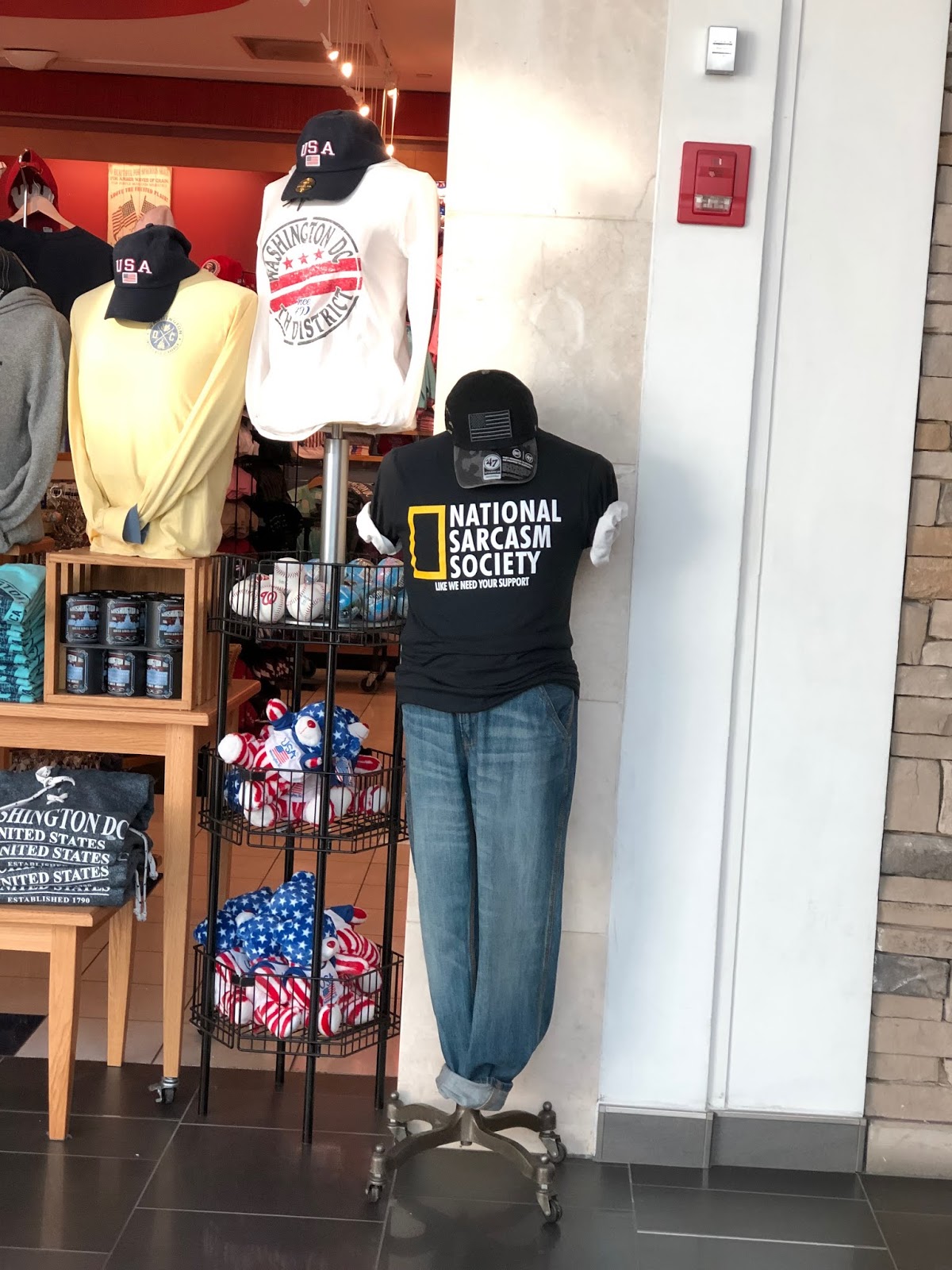
Parody as evidence of fame?

I was skeptical about the idea that the National Geographic golden frame was recognizable as a mark on its own, but parodic use (in conjunction with “society,” so not entirely on its own) seems to me to be evidence to the contrary:

from Blogger http://bit.ly/2QfQGGu

Posted in Uncategorized | Tagged | Leave a comment

Actual confusion provides evidence of irreparable harm

Home Comfort Heating and Air Conditioning, Inc. v. Ken
Starr, Inc., 2018 WL 3816745, No. 18-cv-00469-JLS-DFM (C.D. Cal. Jul. 24, 2018)
Home Comfort Heating & Air Conditioning provides HVAC
services in Los Angeles County and the surrounding area; it asserted rights in
marks “wholly or partially comprised of the word elements ‘HOME COMFORT,’ ” including
“HOME COMFORT SERVICES,” and “HOME COMFORT HEATING AND AIR CONDITIONING.” It
had some registrations.  Ken Starr Inc. subsequently
began operating an HVAC business under the name “Home Comfort USA” in Southern
California, including Los Angeles County and the surrounding area.
Notable findings: The court found strong evidence of
confusion from negative online reviews, including one negative Yelp review, and
oral complaints with regard to products and services that were supplied by KSI.
In the prior year, Home Comfort received five attempts by customers seeking to
return products purchased from KCI, two refund requests arising out of KCI’s
services, thirty inquiries about KCI’s special pricing offers, and forty
inquiries about available services from customers who saw KCI’s ads. A few of
the voicemails were generic requests for quotes, but the majority reference
specific accounts, appointments, and issues with prior work done by KCI.
The district court applied the 9th Circuit’s
screwed-up “can you determine the product just from knowing the mark?” test to
determine that the marks were suggestive. 
Twenty-six HVAC businesses around the nation that use some combination
of the terms “home” and/or “comfort” in connection with their services didn’t
diminish the strength of the mark, especially without more evidence of use and
given that “HVAC customers will, necessarily, seek a local source for these
products and services.” Of the three businesses that did serve California, each
used other distinguishing words as well: “Stephan’s Home Comfort Services,”
“Engineered Comfort,” and “US Comfort.” Nor did Home Comfort’s addition of “Heating
& Air Conditioning” to its marks, KCI’s slogan “Call the Comfort Guys,
We’re There!” or the parties’ different colors deminish the likely confusion.
The word marks “Home Comfort” and “Home Comfort USA” were essentially
indistinguishable and adding generic words didn’t create a meaningful
distinction “from the perspective of a consumer.” The stylized marks included
“Home Comfort” as their dominant portion and had a depiction of a house and
appeared substantially similar; the colors and the slogan weren’t how consumers
would make a primary identification.
Purchaser care was neutral because almost everyone needs
HVAC services, making the target market average, but they tend to be expensive,
increasing consumer care.
Given that the factors favored a finding of likely
confusion, was there irreparable harm? The rule is that “[e]vidence of loss of
control over business reputation and damage to goodwill could constitute
irreparable harm,” and the court found that the actual confusion shown here
satisfied that standard.  However, delay
works against a finding of irreparable harm, and Home Comfort delayed 20 months
after discovery of the problem to seek relief. 
The court found that the delay was sufficiently explained by Home
Comfort’s oppositions to KCI’s trademark registration applications and
extensive settlement discussions. In addition, the dates of the voicemails
indicated that confusion was increasing over time, making delay less probative.
 With that, the other requirements for
injunctive relief were easily satisfied.

from Blogger http://bit.ly/2ER7rWj

Posted in Uncategorized | Tagged | Leave a comment

Almond milk name isn’t deceptive to reasonable consumers

Painter v. Blue Diamond Growers, No. 17-55901, 2018 WL
6720560, — Fed.Appx. —- (9th Cir. Dec. 20, 2018)
Painter alleged that Blue Diamond mislabeled its almond
beverages as “almond milk” when they should be labeled “imitation milk” because
they substitute for and resemble dairy milk but are nutritionally inferior to
it. The court of appeals affirmed the district court’s finding of FDCA
preemption. “The FDCA sets forth the bare requirement that foods imitating
other foods bear a label with ‘the word “imitation” and, immediately
thereafter, the name of the food imitated.’”  Painter’s argument that Blue Diamond needed
either a nutritional comparison of almond milk to dairy milk or cease using the
term “milk” on the label of its almond milk products thus conflicted with the
FDCA.
Separately, the claim was properly dismissed as implausible.
 No reasonable consumer would be deceived
into believing that Blue Diamond’s almond milk products were nutritionally
equivalent to dairy milk based on their package labels and advertising, which
was unambiguous and factually accurate. Nor were the products plausibly
mislabeled under federal law.  Almond
milk wasn’t an “imitation” of dairy milk: “almond milk does not involve
literally substituting inferior ingredients for those in dairy milk,” and a
reasonable jury couldn’t conclude that almond milk was nutritionally inferior
to dairy milk within the meaning of the law, because it wasn’t plausible that a
reasonable consumer would “assume that two distinct products have the same
nutritional content.”

from Blogger http://bit.ly/2EUdfzj

Posted in Uncategorized | Tagged , , , , | Leave a comment

Court sanctions plaintiffs for inaccurate images of product labels in complaint

Hunt v. Sunny Delight Beverages Co., No. 18-cv-00557-JLS-DFM,
2018 WL 6786265 (C.D. Cal. Dec. 18, 2018)
Some Sunny Delight beverages bear names derived from fruits,
such as “Orange Strawberry,” “Orange Pineapple,” “Strawberry Guava,” and
“Watermelon,” while others are less fruity, such as “Smooth & Sweet” or
“Blue Raspberry.” Plaintiffs alleged they bought several different varieties, including
the “Orange Strawberry” and “Orange Pineapple.” They brought the usual
California claims, alleging that none of the Products “contain any or all of
the actual juices from the displayed fruits,” and that the labels failed to
disclose this. They alleged that that the following images were true and
accurate representations of the “Orange Strawberry” and “Orange Pineapple” labels:

Sunny Delight sought to introduce evidence that the images
weren’t in fact true and accurate depictions of the labels. The court agreed
that this was improper at the pleading stage and denied the motion to dismiss.
Sunny Delight later moved for Rule 11 sanctions, alleging that plaintiffs knowingly
included inaccurate images and induced the court to rely on them.  The labels it proffered “include much, if not
all, the information that Plaintiffs allege is unlawfully missing, including
disclosures that the Products are ‘artificially flavored.’” Its chief marketing
officer submitted a declaration that
Sunny Delight has never sold a
product labeled as the ones [depicted in] the First Amended Complaint are
labeled. Sunny Delight product labels have always included more information
about the products than shown in [the FAC]. The images in [the FAC] that
Plaintiffs claim are the true labels they read and relied on are actually just
images from an old version of Sunny Delight’s website. Those were stylized
images used on the website only. They lack numerous details on the actual
labels because people looking at the website have trouble reading all the
things that are on the actual labels given the size of the images. Sunny
Delight has never sold any products with the labels reflected in [the FAC].
In addition, if plaintiffs bought Orange Strawberry within
the last 5 years, it would have had a front-of-pack statement disclosing artificial
ingredients. Deposition testimony from the named plaintiffs corroborated Sunny
Delight’s argument that these were stylized images.  Counsel “intimated to them that the stylized
online labels were identical to the in-store labels on the Products Plaintiffs
had purchased; neither [plaintiff] could fully recall the actual contents of
the labels on the purchased Products.”
The court found that plaintiffs and their counsel had knowingly
made false factual contentions in the first amended complaint, including the
allegation that the embedded image was a “true and accurate representation” of the
labels, as well as numerous allegations that likewise incorrectly described
those labels in ways that are central to the claims in the litigation. “These
falsehoods were not the product of reasonable mistake and were not mere
inaccuracies that would ‘likely have [had] evidentiary support after a
reasonable opportunity for further investigation or discovery.’”  Plaintiffs’ counsel acknowledged at the
hearing that they based the complaint on Sunny Delight’s website, not on the
labels on the actual products. “That approach might have been acceptable had Plaintiffs
purchased the Products based on a website image, but they did not…. It is
apparent that Plaintiffs’ counsel did not undertake the most fundamental of
investigations— namely, examining the actual Product labels—before filing the
First Amended Complaint.”  Counsel had
the opportunity to acknowledge the problem when Sunny Delight identified it,
but they compounded it instead, arguing that the court should take the
allegations as true.  This wasted the
court’s and Sunny Delight’s time and resources, and was sanctionable under Rule
11.
The court struck the first amended complaint rather than
parsing the allegations for any that were salveageable. However, the court
wouldn’t strike the complaint with prejudice. 
Plaintiffs argued that at least some of their claims still had merit,
and the court didn’t rule on whether the presence of a front disclaimer would
preclude the claims as a matter of law. The court was also wary of confusing attorney
honesty with the merits; sanctions address only the former.  Nonetheless, to serve Rule 11’s deterrent
purposes, the court also awarded reasonable attorneys’ fees for preparing this
motion and the second motion to dismiss, where the misrepresented labels formed
the core of the dispute and were the primary basis for the court’s ruling.  Fees for general casework, or for the first motion
to dismiss—which was primarily about jurisdiction—were not included.

from Blogger http://bit.ly/2ENRW1q

Posted in Uncategorized | Tagged , , , | Leave a comment

9th Circuit easily rejects In re GNC’s “all scientists must agree” standard for falsity

Sonner v. Schwabe North America, Inc., — F.3d —-, No.
17-55261, 2018 WL 6786616 (9th Cir. Dec. 26, 2018)
Happy holidays to me!
Sonner sued the sellers of two Ginkgold nutritional
supplements for violations of the UCL and CLRA and breach of express warranty.
Sonner alleged that the products were falsely labeled as capable of improving
various cognitive functions when in fact they provided no such benefits, citing
expert opinion and other scientific evidence (including evidence from
randomized controlled trials showing no difference from placebo) in
support.  The district court granted
summary judgment, relying on In re GNC to
hold that she couldn’t proceed on a literal falsity claim because she didn’t
show that all scientists agreed that the claims were false.  Instead, it reasoned, where “both sides have
produced expert testimony and scientific research in support of their claims,” but
Sonner failed to critique the expert testimony and each of the scientific
studies proffered by defendants by “challenging the methodology, structure, or
independence of [Schwabe’s] studies,”  the
evidence was “insufficient to allow a reasonable juror to conclude that there
is no scientific support for [Schwabe’s] claims.”
The court of appeals reversed: “UCL and CLRA claims are to
be analyzed in the same manner as any other claim, and the usual summary
judgment rules apply.”  The plaintiff has
the burden of proving falsity or misleadingness by a preponderance of the
evidence. “Therefore, to defeat summary judgment, Sonner need only produce
evidence of a genuine dispute of material fact that could satisfy the
preponderance of the evidence burden at trial. Sonner easily met her burden by
producing expert testimony and other scientific data that Ginkgo biloba has no
more of an effect on mental sharpness, memory, or concentration than a placebo.”
Requiring her to do more than that—to foreclose any possibility that the
products worked—wrongly elevated her burden far beyond that applicable to
summary judgment. Arguments going to the bases of experts’ opinions go to the
weight of the evidence in the fact-finder’s evaluation, “an inquiry that is not
proper at the summary judgment stage.”
Schwabe argued that the Ninth Circuit should follow In re GNC, 789 F.3d 505 (4th Cir. 2015),
which required—at the pleading stage—a plaintiff to allege that “all scientists
agree that [the products] are ineffective at providing the promised [ ]
benefits” in order to allege falsity under California law.  This holding was always dumb—among other
things, it rested on a misreading of the Lanham Act’s distinction between
literal falsity and implicit falsity—and the court of appeals here rejected it.  “We are unpersuaded by the notion that a
plaintiff must not only produce affirmative evidence, but also fatally
undermine the defendant’s evidence, in order to proceed to trial.” That’s not
how civil—or even criminal—litigation works. 
“If the plaintiff’s evidence suggests that the products do not work as
advertised and the defendant’s evidence suggests the opposite, there is a
genuine dispute of material fact for the fact-finder to decide.”  
Nor were Sonner’s claims essentially “lack of
substantiation” claims, which private plaintiffs are prohibited from pursuing
under California law. “Sonner has the burden of proof as to her claims, unlike
a substantiation claim where the onus is on the defendant to substantiate the
assertions in its advertisements.” 
The breach of express warranty claims were reinstated for
the same reasons.
PS: Since In re GNC purported to interpret California law, can we now defer to the 9th Circuit to say that the case isn’t even right in the 4th Circuit?  I know, it would be better for a California state court to point this out–I can hope, though.

from Blogger http://bit.ly/2EPgcBf

Posted in Uncategorized | Tagged , , , | Leave a comment

Amicus Brief of Scholars of Corpus Linguistics in Rimini Street v. Oracle

Just found this use of linguistics super interesting. Abstract:

The question presented in Rimini Street v. Oracle is whether the Copyright Act’s allowance of “full costs” is limited to the categories and amounts of costs enumerated in 28 U.S.C. 1920 & 1821, or whether it refers to all litigation expenses. Because Congress and the Supreme Court have stated that the word “costs” is a term of art, the question turns on whether the word “full” — as the Ninth Circuit held — can cause “costs” to lose its technical meaning. This brief, filed on behalf of eleven corpus linguistics scholars, presents empirical evidence derived from corpora — electronically searchable databases of texts — that shows that it cannot. The meaning of adjectives is determined by the nouns they modify, not the other way around. That is why we judge a “tall seven year old” by a different standard of tallness than a “tall NBA player” and why the word “long” means one thing when modifying “story” and something else entirely when modifying “table.” Furthermore, the linguistic evidence shows that “full” in Section 505 should be considered a “delexicalized” adjective — meaning its purpose is to draw attention to and underline an attribute that is already fundamental to and embedded in the nature of the noun. “Full” often serves to emphasize the completeness of an object that is already presumed to be complete, like “full deck of cards,” “full set of teeth,” and “full costs.”

from Blogger http://bit.ly/2rOc4Zz

Posted in Uncategorized | Tagged , | Leave a comment

Avvo’s Pro designation is opinion/puffery

Davis v. Avvo, Inc., — F.Supp.3d —-, 2018 WL 6629269
(S.D.N.Y. Dec. 19, 2018)
Davis, an attorney, sued Avvo for false advertising in
violation of the Lanham Act and NYGBL § 349. Avvo hosts profiles of attorneys
for consumers to use; the profiles often contain client and peer reviews, as
well as a numerical “Avvo rating,” which is derived by criteria defined by Avvo.
Avvo includes profiles for attorneys who pay for advertising and related
services and attorneys who do not. Davis alleged that lawyers who pay Avvo (1)
receive higher Avvo ratings than similarly qualified nonpaying attorneys,
although the defendant represents its ratings as objectively calculated; (2)
receive a badge reading “Pro” laid on top of the profile headshot; (3)
are touted in Avvo’s advertising as “highly qualified,” “the right,”
or the “best” attorneys; and (4) have positive client reviews spotlighted and
negative client reviews removed or blocked. 
[For the last, Eric Goldman will almost certainly disagree but I think
that a bar could reasonably determine that attorneys shouldn’t pursue partnerships with entities that cook the books in the manner alleged.]
The court dismissed the claim; the challenged
practices/statements were nonactionable opinion and puffery. Quoting McCarthy: “Under
both the Lanham Act and the Constitutional free speech clause, statements of
opinion about commercial matters cannot constitute false advertising ….” Also
true of GBL §349.
First, the court ruled that the allegedly misleading
features of the defendant’s website, including its Avvo ratings, weren’t
commercial speech because Avvo’s consumer-facing side was
an informational directory of
attorneys, which consumers can consult whether or not they intend to hire an
attorney. And the complained-of website features simply provide information;
they might be considered in making, but do not themselves propose, a commercial
transaction. Moreover, that sponsored advertisements appear on the defendant’s
website does not morph the website’s noncommercial features into commercial
speech.
So that put the profiles outside of the Lanham Act anyway.
Second, these were statements of opinion, incapable of being
proven false and thus constitutionally protected:
The defendant’s rating system is
inherently subjective. The defendant chooses the inputs for its system and
decides how to weigh them. … A reasonable consumer would view an Avvo rating as
just that – the defendant’s evaluation. What factors the defendant believes to
be important in assessing attorneys, and the result of the defendant’s weighing
of those factors, cannot be proven false.
Third, the “Pro” badge appearing on the profile pictures of
attorneys who pay Avvo is intended to convey a statement of fact: that an
attorney has verified the attorney’s information as it appears on Avvo. Avvo’s
website explains this meaning with an “i” icon next to the “Pro” badge. Hovering
over the “I” discloses that “Attorneys that are labeled PRO have verified their
information as it appears on Avvo,” and the website eventually explains the
“Avvo Pro” subscription plan if you follow enough links elsewhere. Thus, the
statement wasn’t false. Davis alleged that it was still misleading because it
implied higher quality, and the disclosures weren’t sufficiently conspicuous to
avoid that implication.  The court agreed
with Avvo what this was puffery. “Pro” means, literally, a professional; that
was true [though why that’s relevant to misleadingness, especially when others
in the profession were not granted the dignity of that characterization if they
didn’t pay, is unclear]. To the extent that consumers perceived it as “conveying
that an attorney is especially experienced or skilled, the term is mere
puffery.” Davis couldn’t prove that lawyers marked “Pro” were undeserving, “because
in context the term has no definite meaning or defining factors.” Allegations
about advertising “highly qualified,” “the right,” or the “best” attorneys failed
for the same reasons, as did allegations that paying lawyers got enhanced
visibility on the website.
Fourth, the court determined that spotlighting positive
client reviews while removing or refusing to post negative client reviews in
the profiles of attorneys who pay for the defendant’s services wasn’t false
advertising. Initially, the website stated that Avvo could withhold reviews that
didn’t meet its guidelines, and that negative reviews could be put through a
dispute process at a lawyer’s request. “Consumers are therefore on notice that
every client review might not be posted in an attorney’s profile.” [That’s
really not the same thing as distorted selectivity, though—neither of those policies
discloses discrimination in favor of paying lawyers.]  Anyway, “a collection of client reviews
reflects subjective judgments. A reasonable reader would understand that each
review is merely an opinion.” Thus, the absence of some reviews didn’t render
the remainder misleading. [That doesn’t make a lot of sense to me. The overall
ecosystem can be misleading even if each input is subjective, especially where
the ecosystem is run by someone who purports to be independent.  Under the court’s reasoning, it wouldn’t be
false advertising for a food producer to claim to “win” a taste test—taste being
classically subjective—by removing the tasters who rated the product poorly and
not disclosing that. The concern about deterring individual reviews, or even
collections of reviews, is a real one, but so is the concern about undisclosed
bias driven by payment from the reviewed.]  
Further, “spotlighting positive reviews is not false advertising. Not
only are the positive reviews opinions, but simply indicating that a particular
consumer was satisfied with a service plainly does not constitute a false or
misleading statement.”  [Consider the FTC’s
Testimonial Guidelines. Under what circumstances might a positive review imply
that others can expect the same results? Or are the Guidelines also
unconstitutional in this view?]
Finally, Davis did not sufficiently allege injury by
offering facts that demonstrate a causal connection between his injury some
misrepresentation made by Avvo. Conclusorily alleging lost fees and reputational
damages, and diverted business, was insufficient absent facts indicating that
consumers on the allegedly misleading Avvo ratings, pro badges, client reviews,
or other statements “in choosing or gauging the reputation of an attorney.” “The
only fact the plaintiff pleaded to support his theory of harm is that the
defendant’s website holds a prominent presence on the internet, and thus
consumers who perform a Google search with phrases like ‘top litigation
attorney’ will see the website on the first page of results.” That wasn’t
enough.

from Blogger http://bit.ly/2LwFi8m

Posted in Uncategorized | Tagged , | Leave a comment

More B&B: Fraud on the PTO that led to years of extra litigation isn’t “exceptional” for fee purposes

B&B Hardware, Inc. v. Hargis Industries, Inc., No.
17-1570 (8th Cir. Dec. 21, 2018)
H/T C.E. Petit. This comedy of errors might (might!) be
ending. The court of appeals affirmed the district court’s judgment in favor of
Hargis and its denial of Hargis’s motion for fees and costs.
For those of you who understandably haven’t followed the ins
and outs, the opinion does an admirable job of summarizing:
In B&B’s trademark infringement
action against Hargis in May 2000, a jury found that B&B’s “Sealtight” mark
was not entitled to protection because it lacked secondary meaning. We
affirmed. In June 2006, B&B filed for incontestability status for its
trademark with the Patent and Trademark Office (PTO). The PTO issued a Notice
of Acknowledgment in September 2006, concluding that B&B’s affidavit of incontestability
met the statutory requirements.
… Immediately after its 2006 filing
for incontestability, B&B brought suit against Hargis again for trademark
infringement, unfair competition, trademark dilution, and false designation of
origin. …
[T]he Supreme Court of the United
States .. found that the district court should have given preclusive effect to
a decision of the Trademark Trial and Appeal Board (TTAB) finding that there
was a likelihood of confusion between “Sealtight” and “Sealtite.” …
At trial, Hargis argued that
B&B obtained its incontestability status through fraud, presenting evidence
that B&B failed to inform the PTO about the 2000 jury verdict that
B&B’s “Sealtight” mark was merely descriptive.…
The jury found that Hargis
infringed on B&B’s trademark but did not do so willfully, awarded B&B
none of Hargis’s profits, and found for Hargis on its counterclaims and its
affirmative defense of fraud. Based on the jury’s fraud finding, the district
court found that “Sealtight” was not entitled to incontestability status, and
that B&B therefore had not pled an intervening change in circumstances
allowing it to relitigate claims raised inthe 2000 jury trial. The district
court therefore entered judgment for Hargis on all claims.
B&B appealed, arguing that the jury verdict finding
fraud and a lack of willfulness was clearly erroneous; and that the district
court abused its discretion in refusing to disgorge Hargis of its profits. The
court of appeals found no plain error.
Incontestability requires an applicant to file an affidavit
with the PTO declaring that “there has been no final decision adverse to [his]
claim of ownership of such mark . . . or to [his] right to register the same or
to keep the same on the register . . . .” “At least one circuit treats a
district court’s finding of mere descriptiveness at summary judgment as such an
adverse decision.” [And I don’t see how one could conclude otherwise, since
descriptiveness means that the symbol is not a mark and thus can’t be owned as
a mark. Failure to disclose is important since the PTO doesn’t examine §15
affidavits on the merits as long as it’s facially complete. And the affidavit
is “especially important because a defendant accused of infringing an
incontestable trademark may raise an affirmative defense that ‘the registration
or the incontestable right to use the mark was obtained fraudulently.’” Fraud
on the PTO “consists of willfully withholding material information that, if
disclosed, would result in an unfavorable outcome.”  Here, materiality means information that a
reasonable examiner would have considered important.
Warning: bad argument alert, not fully called out by the
court of appeals.  B&B argued that the
2000 verdict wasn’t a final adverse decision. The court of appeals responded
that, in 2007, the TTAB explicitly stated that the 2000 jury verdict was an adverse
decision that extinguished B&B’s common-law rights in the “Sealtight” name,
so there was no plain error in the district court so finding. B&B then
argued that its deception wasn’t willful because it didn’t realize the jury
verdict was a final adverse decision and that it didn’t disclose that verdict based
on the advice of counsel. The jury was entitled to disbelieve B&B’s owner’s
testimony on this point. 
15 U.S.C. § 1065 specifies that the affidavit has to include statements that “(1) there has been
no final decision adverse to the owner’s claim of ownership of such mark for
such goods or services, or to the owner’s right to register the same or to keep
the same on the register; and (2) there
is no proceeding involving said rights pending in the United States Patent and
Trademark Office or in a court and not finally disposed of.
” B&B’s
predicate to its defense, that “finality” was what mattered, is thus fatally
flawed.  Of course, it is in theory
possible that its counsel was so incompetent as not to understand this very
clear provision of law, especially since courts of appeal apparently feel no
need to mention it, but the true requirements for an incontestable registration
might lend even more plausibility to the jury’s conclusion.
Given that incontestability was barred by fraud, the court
of appeals affirmed the conclusion that collateral estoppel from the 2000 trial
now applied again since there was no significant, nonfraudulent intervening factual
change. Once Hargis proved the affirmative defense of fraud, B&B lost the benefits
of incontestability, including the presumption of validity.  B&B argued that the 2000 district court
lacked subject matter jurisdiction to determine whether “Sealtight” had secondary
meaning because incontestability precludes any review of descriptiveness, but
the mark wasn’t incontestable in 2000. “Absent any evidence that B&B’s mark
has developed secondary meaning since the 2000 trial, we decline to allow
B&B to relitigate that issue.”
Hargis also wanted its fees, and I sympathize (we haven’t
even talked about the other facts B&B played fast & loose with, no pun
intended), given that it’s been fighting this ridiculous case for decades.  Despite the fraud finding, the court concluded
that “[t]his case does not present an example of groundless, unreasonable, or
vexatious litigation, as it has arguable merit on both sides—evidenced by the
fact that both parties have prevailed at various times throughout its 12-year
history. We cannot say that B&B pursued litigation in bad faith, as it
received a favorable Supreme Court ruling and reasonably believed it could prevail.”
This conclusion demonstrates the importance of selecting a starting point.  I would have started instead with B&B’s
decisions to go to the PTO seeking a workaround to the failure of the first case,
to fail to disclose that material adverse result to the PTO, and to
deliberately leverage that wrongly granted incontestability as the sole reason
to relitigate the whole case.  I would
have thought that taking a matter to the Supreme Court on a premise that itself
was based in fraud was “exceptional.”  It’s
probably also true that Hargis could have disposed of the matter earlier had
its attorneys been unusually attentive to the actual requirements of
incontestability and had the district court also understood incontestability,
but as between the parties I would attribute the responsibility to B&B.

from Blogger http://bit.ly/2AbT2AR

Posted in Uncategorized | Tagged , | Leave a comment