Brief notes on 1201 space-shifting exemption hearings

PROPOSED CLASS 3: Space-shifting
Keith Chatfield SolaByte: Electronic new media solution
developers: method for space-shifting based on licensed transactions, not
moving the files.  Support OmniQ’s proposal
on behalf of consumer—can convert content to more robust security, devices.
Future-proof content against platform obsolescence. Can watermark optical media
like DVD and Blu-Ray—can be used to disable disc in the field. These create the
capability to enable a controlled licensing transaction where you can trade in
a disc.  Allows consumer to move to new
media. Patent stage, now licensing it in the market.  It doesn’t involve TPM circumvention.  DVDs are sunsetting; 13 billion are in
circulation. We’d like to allow consumers to archive their content into a more
permanent library after we authenticate the disc.  OmniQ’s aim is similar with another type of
tech. 
John Mitchell OmniQ
Restore benefits of first sale, including the opportunity
for unlicensed resale. OmniQ’s process destroys the DVD while it transfers to a
hard drive w/one encryption key that the consumer has and we don’t.  There’s never more than one copy, as opposed
to previous technologies. 
They fought about the meaning of “copy” under the statute, Cablevision, etc.  Also about whether licensing was possible
given the size of the demands of guaranteed revenues up front/the variety of
content sources.

from Blogger https://ift.tt/2GS5GKR

Posted in Uncategorized | Tagged , , , | Leave a comment

Consumer class action fails for failure to survey on the exact statements challenged

Townsend v. Monster Beverage Corp., — F.Supp.3d —-, 2018
WL 1662131, No. 12–2188–VAP (KKx) (C.D. Cal. Mar. 20, 2018)
The Ninth Circuit remanded this case on UCL, FAL, and CLRA
claims insofar as they challenge four specific on-label representations of
certain Monster Rehab drinks, holding that even if they weren’t strictly false,
it was plausible that the statements were misleading.  The four statements were: “Hydrates Like a
Sports Drink”; “Re-hydrate”; Consume Responsibly—Max 1 can every 4 hours, with
limit 3 cans per day. Not recommended for children, people sensitive to
caffeine, pregnant women or women who are nursing.”; and “It’s an ideal combo
of the right ingredients in the right proportion to deliver the big bad buzz
that only Monster can.”
Plaintiffs argued that,“[t]o the extent that energy drinks,
including Monster Drinks, have any hydrating qualities, they do not hydrate
like a sports drink. Sports drinks contain water, salt and sugar, and are
designed to replenish the electrolytes and energy one’s body loses during
exercise.” In addition, the Hydrates and Re-hydrate statements were allegedly
misleading because “consumption of [Monster Rehab drinks] as prescribed on the
label could cause severe dehydration because the combination of caffeine and
guarana in energy drinks acts as a diuretic.” The consume responsibly/ideal
combo statements were allegedly misleading because of “potential health risks
associated with frequent consumption of Monster Drinks.”
Plaintiffs’ claims suffered numerous setbacks.  First, there was Stefan Boedeker, plaintiffs’
economic damages expert who conducted a consumer survey and choice-based
conjoint analysis to determine how much, if at all, the representations at
issue contributed to the price of the product.  However, with one exception, the phrases he
tested weren’t identical to the challenged statements and thus they were
unreliable/irrelevant.  He tested: (1)
“Long Lasting Energy;” (2) “RE–HYDRATE to Bring You Back;” (3) “Hydrates like a
Sports Drink;” (4) “Ideal Combo of the Right Ingredients in the Right
Proportion;” and (5) “Safe level of consumption incorrectly specified on label”
or “Safe level of consumption correctly specified on label.”
“In order for Plaintiffs to meet the Rule 23(b)(3)
requirement of predominance, they must show that the same representations were
specifically made to each class member. The exact wording of each statement is
thus critical to Plaintiffs’ claims and class certification.”  By substituting his own interpretations for
the exact wording, the expert rendered his tests unreliable.  For example, shortening “It’s the ideal combo
of the right ingredients in the right proportion to deliver the big bad buzz
that only Monster can” to “Ideal combo of the right ingredients in the right
proportion” wasn’t just eliminating the puffery part.  Whether that part was puffery was a legal
conclusion he wasn’t qualified to make, and the court didn’t accept his
conclusory assertion that he’d captured the essence of the claim, since his
expertise wasn’t in interpreting words and his survey didn’t measure
respondents’ understanding or interpretation of the statements. Moreover, the
second half of the statement was essential to understanding its meaning because
it informed the consumer what purpose the phrase “right ingredients in the
right proportion” serves. “Without the latter half of this statement, the
consumer is left guessing whether the ingredients are the ‘ideal combo’ for
energy, hydration, flavor, or any other possible attributes an energy drink
might tout.”
Similarly, by adding a reason to re-hydrate—“to bring you
back”—the survey became unreliable; the phrase became focused on energy rather
than hydration. “[A]dding language that confuses the re-hydrates and hydration
attributes with energy may be particularly critical to the analysis since Mr.
Boedeker’s survey shows that the energy attribute of a drink is a much stronger
market driver than the hydration attribute.”
The survey didn’t test “consume responsibly,” but rather described
in broad terms the type of statement that might be on such a label by providing
the options: “safe level of consumption incorrectly specified;” “safe level of
consumption correctly specified;” “no information on label regarding safe level
of consumption;” or nothing at all.  This
analysis was untethered to plaintiffs’ theory of liability. “Comparing the
price impact of a correct, rather than an incorrect, safety statement is
irrelevant; only a label perceived as being correct is at issue here. Further,
assigning a safety label the descriptor of ‘correct’ or ‘incorrect’ presumes
that a consumer is making this determination at all, as well as potentially
influencing such a statement’s weight.” And “safe consumption” was materially
different from “consume responsibly.” The survey thus didn’t assess the premium
paid for “consume responsibly.”
The court additionally excluded a survey that plaintiffs’
survey expert submitted in response to earlier criticisms; by providing new
data including a different survey population, not just re-analysis of existing
results, the survey became new evidence that needed to have been disclosed
earlier.
However, his earlier survey was not inadmissible just
because he didn’t ask survey participants about why they purchased Monster energy
drinks; he asked only their understanding of each statement. How reasonable
consumers perceive and interpret the statements was relevant to whether they’d
find their truth or falsity material.  One set of conclusions was unreliable,
however, because he accidentally omitted the word “bad” from the “big bad buzz”
portion of the ideal combo statement, and there was no way to tell whether this
made a difference to consumer responses. 
The specific representations are key in false advertising cases, and,
since the burden on plaintiffs was to show admissibility, they failed.
The court was equally rigorous as to defendant’s survey
expert, who was qualified to opine on the reliability/design of a consumer
survey about materiality, but not to opine on the quantitative analysis (which
he argued produced an unrealistically large damages number) because he lacked
the relevant statistical background.
The motion for class certification failed mostly because plaintiffs
failed to show that a presumption of reliance was justified. The admissible
parts of plaintiffs’ survey showed how respondents understood the Hydrates,
Re-hydrate, and Consume Responsibly statements, but didn’t provide insight into
their purchasing decisions; the survey didn’t even target people who bought
Monster branded energy drinks.  [No role
for common sense, apparently.]  “While a
challenged statement need not be the sole or even dominant factor in consumers’
purchasing decisions, a survey needs ‘to assess whether the challenged
statements were in fact material to [consumers’] purchases, as opposed to, or
in addition to, price, promotions, retail positioning, taste, texture or brand
recognition.’”
The conjoint analysis could potentially show materiality by
determining the statements’ value to consumers. But it was only admissible as
to the Hydrates claim.  And plaintiffs
didn’t show that the Hydrates statement had a common meaning.  The survey asked “What does the statement
that Monster Rehab is a ‘… triple threat that quenches thirst, hydrates like
a sports drink, and brings you back after a hard day’s night’ mean?” and “Does
the statement that Monster Rehab Energy Drink ‘Rehydrates’ or that it ‘…
hydrates like a sports drink’ say or suggest that Monster Rehab has the same
level of electrolytes as a sports drink?” But no question showed how consumers
understand the Hydrates statement alone.
Consumers’ responses also didn’t support the deceptiveness
theory.  For the first question, 24.2% of
respondents stated they understood the statement to mean “energizes;” 24.2%
said “rehydrates/aids rehydration;” 15.9% stated “thirst quenching;” 5.1%
replied “electrolytes mention/additives;” and 47.8% provided miscellaneous
responses. Plaintiffs’ misleadingness theory, that the Monster product does not
contain electrolytes like a sports drink, was only mentioned by 5% of
respondents.  Also, their answers didn’t
support any single common understanding of the Hydrates statement across the class;
“this indicates that claims related to this statement require an individual
inquiry.”
In response to a specific question asking consumers to compare
the electrolyte content of a sports drink versus a Monster Rehab Energy drink,
80.6% of respondents stated that Monster Rehab definitely or probably has the
same amount of electrolytes as a sports drink. Still, the court considered the
unprompted responses more important, and also it was unclear whether the
Re-hydrate statement or the Hydrates statement led consumers to this
conclusion. Answers to the open-ended questions indicated that electrolytes were
more often associated with the Re-hydrate statement than the Hydrates
statement.  
Nor did plaintiffs show that the Hydrates statement was
material to all class members. When their survey expert asked in an open-ended
format why respondents chose defendants’ energy drinks as opposed to another
brand, so few respondents listed hydration as a purchase driver that he didn’t
it as a quantifiable reason. Even when respondents were prompted, only 25.2% of
respondents selected hydration as a purchase motivator.  In Boedeker’s survey, only 7.3% of respondents
selected the Hydrates statement as a factor in their purchasing decision, out
of a list of 16 attributes.  Thus,
plaintiffs didn’t show the existence of a common answer to the question of
whether a reasonable consumer would consider any of the challenged statements a
material misrepresentation.
Plaintiffs also didn’t present a damages model consistent
with their theory of liability. They tried to rely on Boedeker’s model, but his
survey suffered from focalism bias, “rendering it useless for the purpose of
determining price premiums attributable to the challenged statements.”  In the list of 16 attributes driving
purchase, respondents chose flavor most often (42.8% of respondents); then
price (25.9%); then energy (25.3%); then brand (23.8%); Re-hydrates came in at 8.7%
and Hydrates like a Sports Drink at 7.3%. 
But in determining price premium, Boedeker examined only flavor, the
challenged statements, the ingredients label, and the price.  The court agreed that presenting the claims
out of context and failing to include other important attributes artificially
inflated the importance of the challenged claims. The court didn’t believe the
conclusion that “the attributes that ranked 8th, 9th, 10th, and 11th out of 16
attributes, with less than 10% of all survey respondents even mentioning each
attribute as important to their purchasing decision, constitute approximately
81% of the value of the overall product …. At the maximum price point …, the
challenged statements would constitute 52% of the value of the beverage. These
incongruous results support Defendants’ complaint that Mr. Boedeker’s survey
fatally suffers from focalism bias.” 
Plaintiffs failed to justify the selection of attributes; the court
suggested that the expert could have reproduced the conjoint analysis with
different variable attributes to see if the estimated price premium is
reliable, controlled for other highly-valued attributes, or tried to price
these other attributes.
Finally, the failure to show that Hydrates statement had a
common, deceptive meaning compounded the problem.  “In order to tie a damages model for a
misleading statement to a theory of liability, a plaintiff must show that the
price premium paid was for the attribute consumers believed the product
contained. In other words, Plaintiffs here would have to show that consumers
paid a price premium for a drink they believe contained electrolytes in order
for it to align with their theory of liability.”

from Blogger https://ift.tt/2Jyy6ai

Posted in Uncategorized | Tagged , , , | Leave a comment

we said the meal was a “value,” we just didn’t say to whom

Killeen v. McDonald’s Corp., 2018 WL 1695366, No. 17 CV 874
(N.D. Ill. Apr. 6, 2018)
Courts will only rarely protect consumers against their
inability in the moment to do math; this is not one of those times. Killeen
alleged that some of McDonald’s “Extra Value” meals were actually more
expensive than ordering the same items separately, and that this was deceptive.
For example, Killeen bought a Sausage Burrito Extra Value Meal at a Chicago
McDonald’s for $5.08 when she would have paid only $4.97 had she ordered the
individual items a la carte. “[C]ommon experience favors her assertion that
consumers expect to pay less for items bundled together and billed as a ‘value’
package than they would pay if they purchased the items separately.” But there
can be no deception where other information is readily available to dispel the
tendency to believe in savings:
[A]nyone familiar with fast-food
restaurants such as McDonald’s surely knows that prices are typically displayed
on menus located near the registers. Understandably, plaintiff may not have
wished to take the time to compare prices, but there is no question that doing
so would have dispelled the deception on which her claims are based.
Accordingly, this is not a case in which consumers would have to consult an
ingredients list or other fine print to determine whether prominent images or
labels a defendant uses in connection with its product accurately reflect the
product’s true nature or quality.

from Blogger https://ift.tt/2IIlhsG

Posted in Uncategorized | Tagged , , | Leave a comment

Recent acquisitions: really bad court decisions edition

Tarkay and Patricia Govezensky posters, from Romm Art Creations v. Simcha Int’l, Inc., 786 F.Supp. 1126 (E.D.N.Y. 1992), an absolutely terrible decision finding that the “Women and Cafes” style was inherently distinctive and thus had secondary meaning and high strength because they were artistic and imaginative (sigh); they were also therefore presumptively nonfunctional.  Defendant was enjoined.  If you ever wonder why Wal-Mart rejected so much of Taco Cabana, this case is a good reminder.

P.S. I ended up with a few extra Patricia posters, if anyone wants one for their own display purposes.

from Blogger https://ift.tt/2Ev2Sxb

Posted in Uncategorized | Tagged | Leave a comment

The truth is out there, but it might violate the right of publicity

Scott v. Citizen Watch Co., No. 17-cv-00436-NC, 2018 WL
1626773 (N.D. Cal. Apr. 4, 2018)
This case would be the poster child for the need for a true
reckoning between modern right of publicity law and the modern First Amendment,
but the poster would probably violate plaintiff David Randolph Scott’s rights
under the reasoning of this case.  The
court found factual disputes about the applicability of various exceptions to
California’s right of publicity and the Lanham Act, including a reading of
nominative fair use that makes it a dead letter/a defense only when confusion
is unlikely (cf. KP Permanent). The
only things that got kicked out were Scott’s emotional distress claims.
Scott is a retired astronaut and the mission commander for
NASA’s 1971 Apollo 15 voyage, on which Scott spent three days on the moon,
including over 18 hours outside the main spacecraft. Before the mission, Bulova
representatives gave Scott two Bulova timepieces to use in space. He wore a
chronograph to the moon and auctioned it off for $1,625,000 a few years ago.
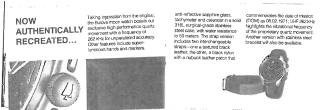
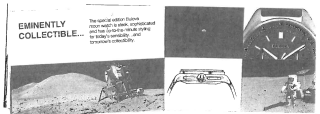
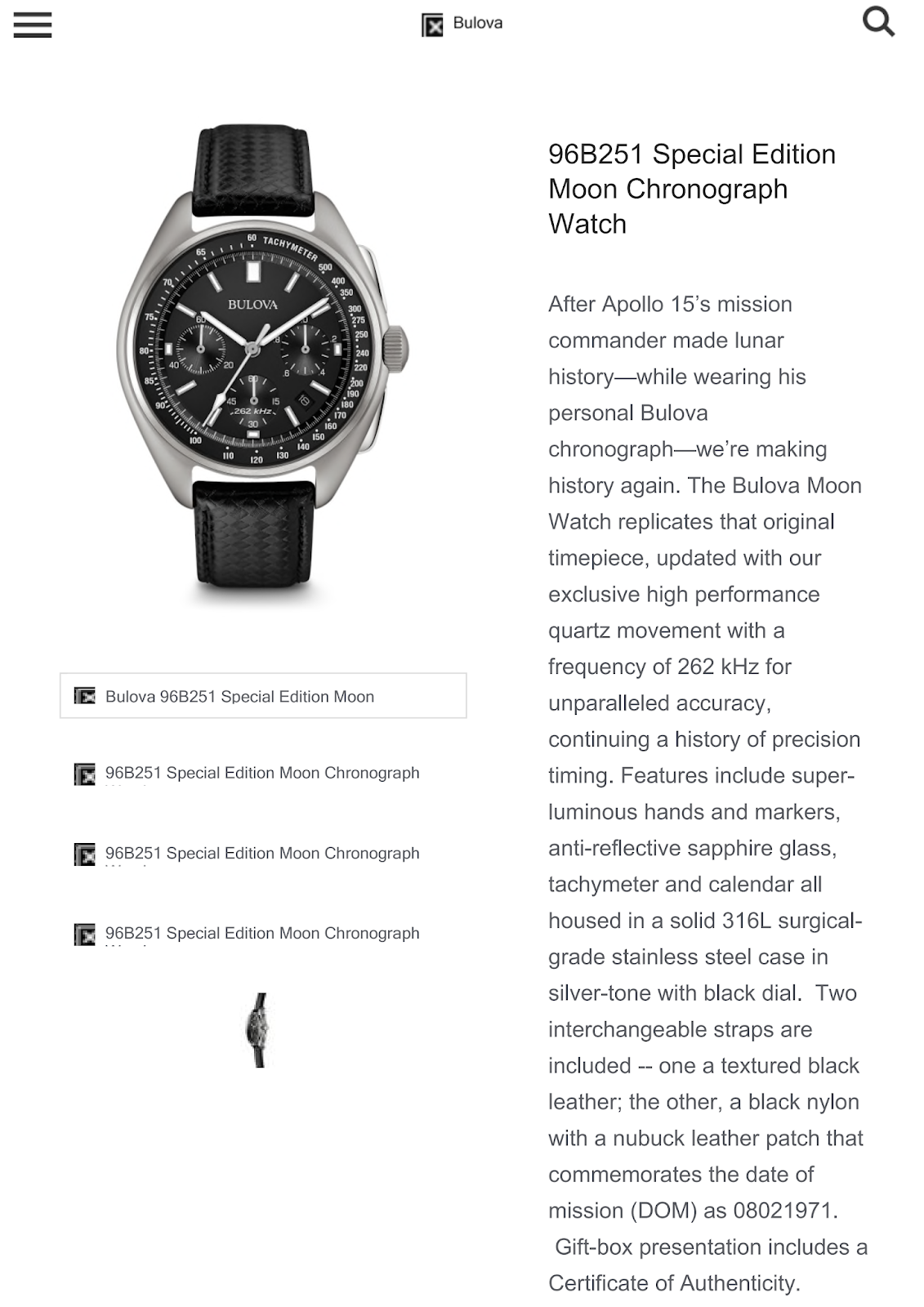
In 2014, Bulova began the Lunar Pilot Chronograph (the “Moon
Watch”) based on the original chronograph that Scott wore to the moon. Many of Bulova
and Kay’s ads and promotional materials referred the original chronograph that
Scott wore on the moon, and include Scott’s identity in various forms,
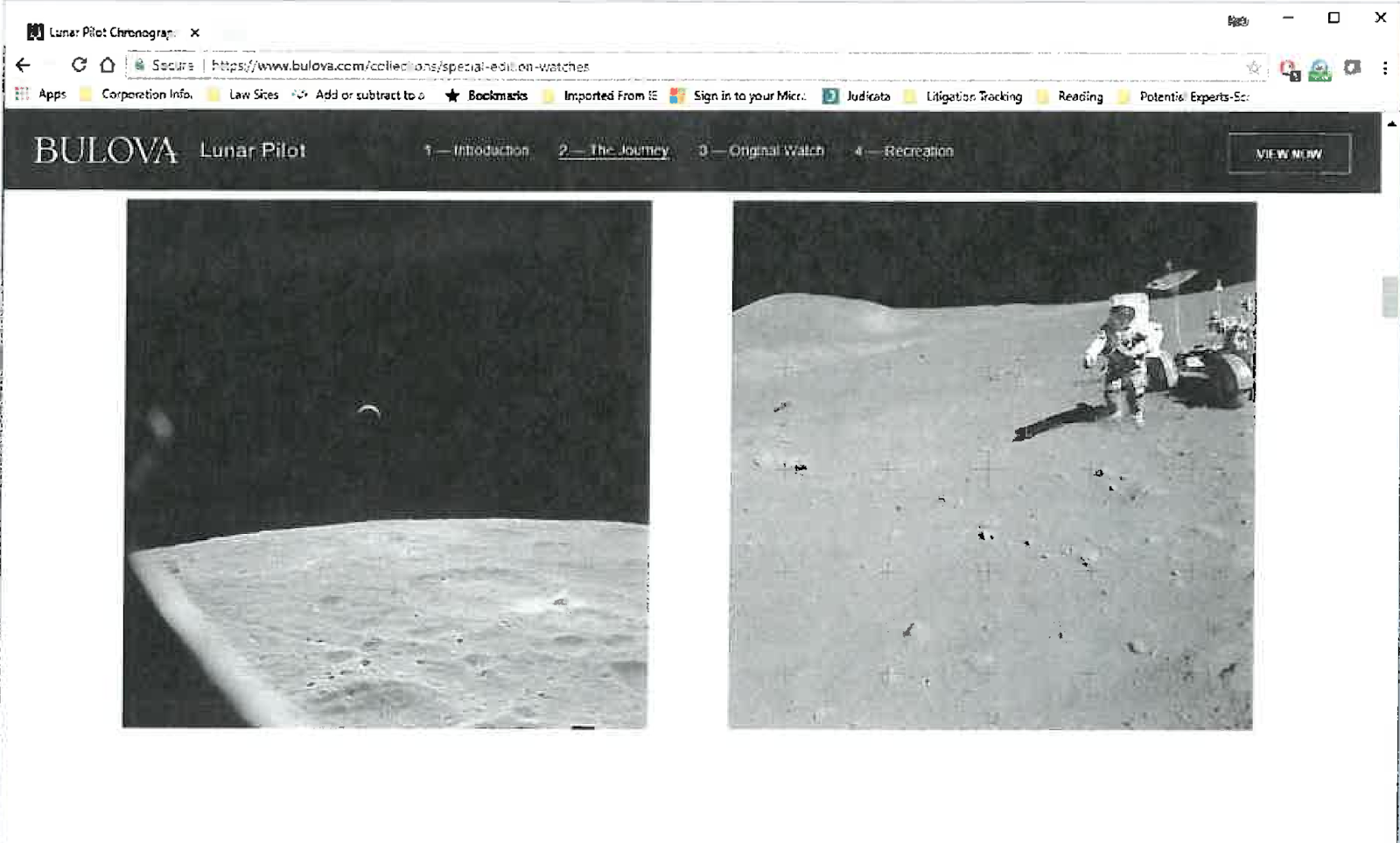
including: (1) online promotions, including descriptions of the watch, photos
of Scott, and a video that contains an audio clip of Scott’s voice (2 seconds where
Scott can be heard saying, “We have a roll program” from a 79-second video
depicting the Apollo 15 mission); (2) a promotional booklet packaged along with
the Moon Watch; and (3) other public and internal communications by Bulova and
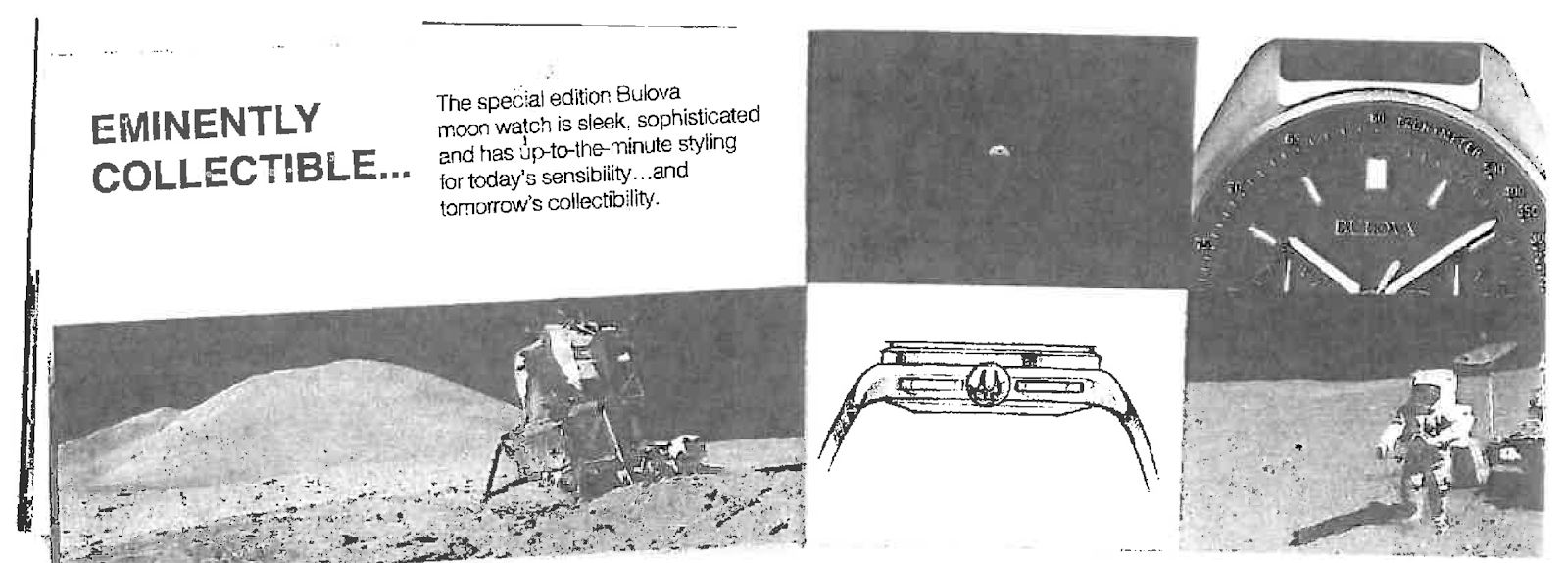
Kay.  Apparently one of the astronauts in
the spacesuits shown in the advertising is Scott, though his helmet is
apparently not see-through in the photos. 
(I can’t judge all this for myself and neither can you because,
appallingly, big chunks of the exhibits are sealed even though they are the
allegedly infringing materials.  The
court doesn’t explain why (1) internal materials could ever violate Scott’s
right of publicity or (2) it is
permissible to seal (and redact descriptions of, in the attached affidavit)
allegedly infringing materials that were in fact public.  I started out with a joke about the breadth
of Scott’s claims, but this isn’t a joke.)
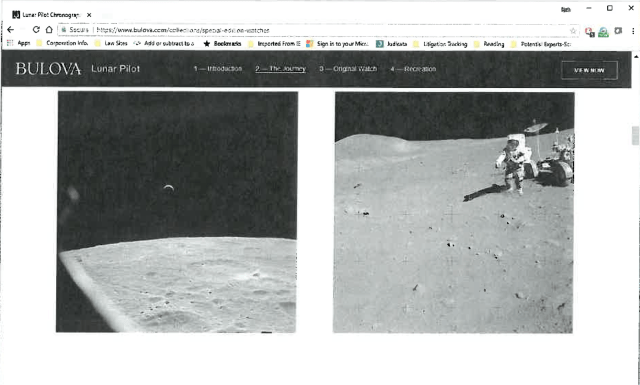
 

Bulova website

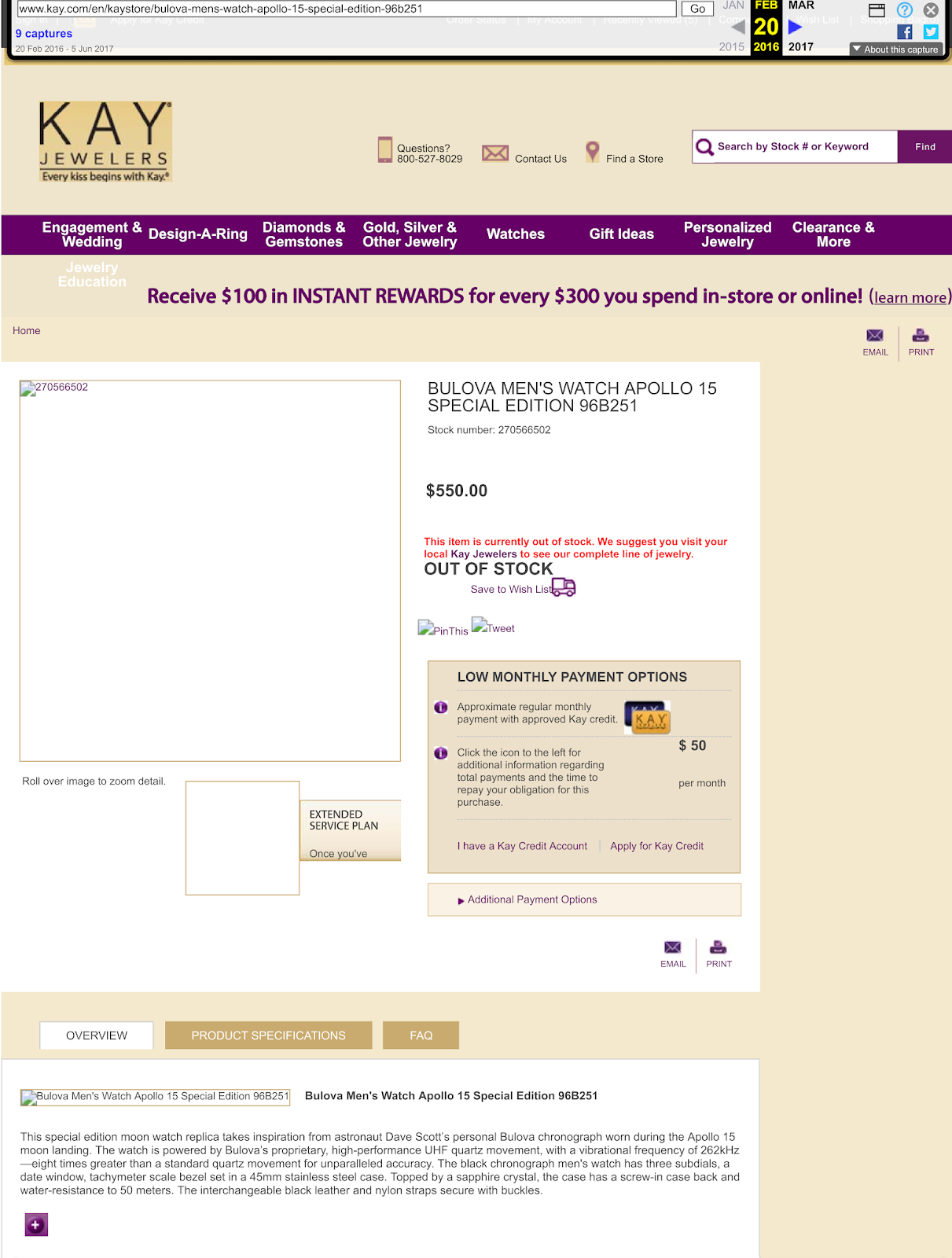
Kay website (from Archive.org) with reference to Scott in text

The court found disputed facts existed over whether the use
of Scott’s identity was incidental. “The rationale underlying this doctrine is
that an incidental use has no commercial value, and allowing recovery to anyone
briefly depicted or referred to would unduly burden expressive activity.” Relevant
factors include: “(1) whether the use has a unique quality or value that would
result in commercial profit to the defendant, (2) whether the use contributes
something of significance, (3) the relationship between the reference to the
plaintiff and the purpose and subject of the work, and (4) the duration,
prominence or repetition of the likeness relative to the rest of the
publication…. Even if the mention of a plaintiff’s name or likeness is brief,
if the use stands out prominently within the commercial speech or enhances the
marketability of the defendant’s product or service, the doctrine of incidental
use is inapplicable.”
Scott offered evidence that his identity was used “repeatedly
and in a manner intended to take advantage of Scott’s reputation.” His name and
Apollo 15 “mission commander” title appeared or appear in many of the marketing
materials, including the descriptions on Bulova’s and Kay’s websites, the
promotional booklet, marketing copy for online and third-party retailers, a
press release, an interview between a Baselworld reporter and Bulova’s CEO,
website advertisements, employee training materials, and internal communication
documents about marketing strategy. [How internal documents can violate the right
of publicity is a bit beyond me.]  For
example, an introductory power point to a third party retailer stated, “The
Moon Pilot Chronograph is based on the design of the Bulova watch worn on the
moon by Astronaut David R. Scott during 1971’s Apollo 15 space mission.” Another
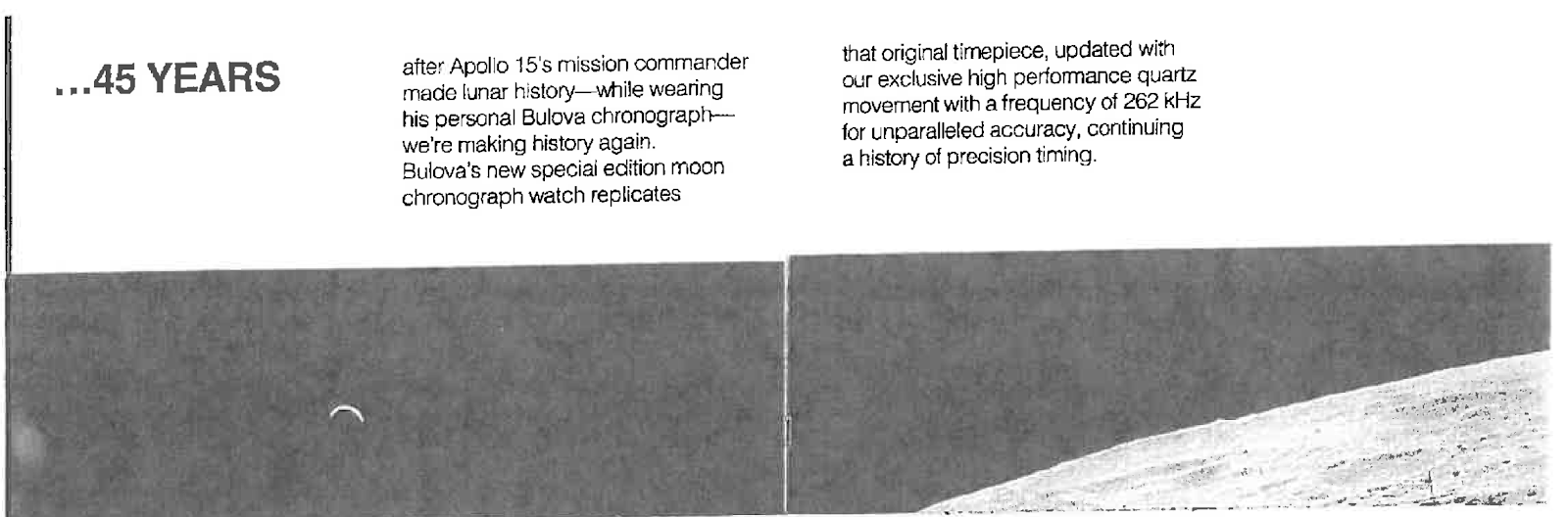
statement repeated frequently in Bulova and Kay’s advertising: “After Apollo
15’s mission commander made lunar history—while wearing his personal Bulova
chronograph—we’re making history again.”  
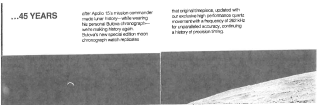
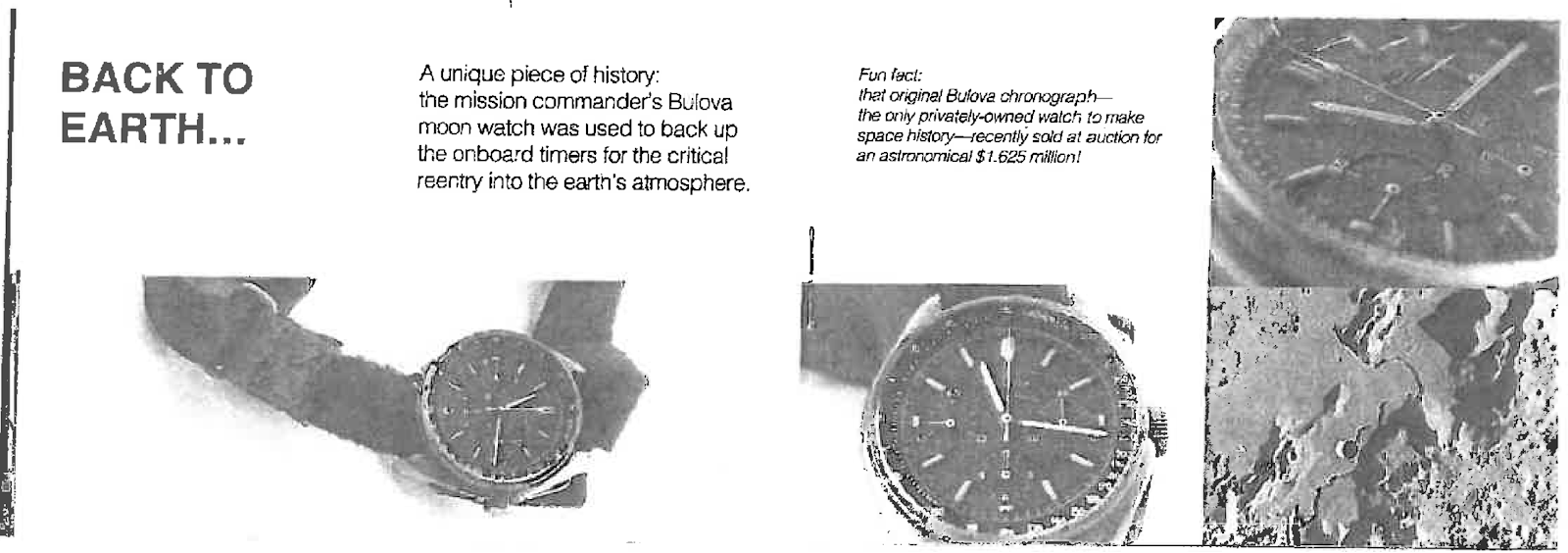
images from the  pamphlet with the watch

In the prior Yeager case,
the court reasoned that the plaintiff’s name and identity were “unique and
non-fungible” because he was known for breaking the sound barrier for the first
time, and “[t]he use of his name and identity link[ed] defendant’s new
technology to plaintiff’s name and accomplishments” to create positive
associations in customers’ minds about the AT&T brand. “The same logic
applies here,” even though Bulova happens to be reciting facts, not making an
analogy (which should have been ok too, but at least didn’t suppress a truthful
account of the past).  A jury could find
that the ads “deliberately invoked Scott’s name and historical significance as
one of the first humans to walk on the moon in order to increase the Moon
Watch’s marketability and appeal.”
There were also disputed factual issues on the public
interest exception to the common law right/the statutory “public affairs”
exception, both of which protect “publication of matters in the public
interest, which rests on the right of the public to know and the freedom of the
press to tell it.’ ”  These ads were
commercial speech, thus “subject to reduced free speech protection relative to
non-commercial speech.”  [Yes, but that
reduced protection isn’t just applied as a discount to any advertisement’s free
speech value.  Specifically, the court should
apply Central Hudson: substantial
government interest, actual advancement of that government interest, and
suppression of no more speech than necessary (though not narrow tailoring).  It does not.]
In balancing publicity against newsworthiness, courts must
consider “the nature of the precise information conveyed and the context of the
communication.” “Apollo 15 and space exploration certainly implicate some
degree of public interest,” but the context was too commercial.  “The determinative inquiry for whether the
public interest exception applies to commercial speech is whether a defendant’s
use of a plaintiff’s identity is the commercial product itself, or is instead
used to promote some other tenuously related product.”  The former is protected and the latter is
not, and this case was more like the latter, because defendants’ product wasn’t
speech, but a watch, and the [truthful] references to history and space
exploration simply helped to sell it. 
True, Scott actually wore a Bulova watch to the moon. But a “fine
line … must be drawn between the historical event that was Apollo 15 and the
person that is David Randolph Scott.”  [It
must?  Why, under Central Hudson?]  So Bulova
has “greater” license to boast about its connection to the Apollo 15 mission,
but that doesn’t “automatically” make Scott fair game.  The court pointed to the differences between the
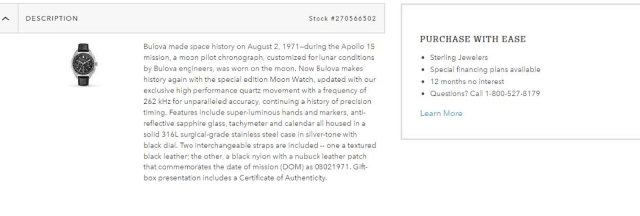
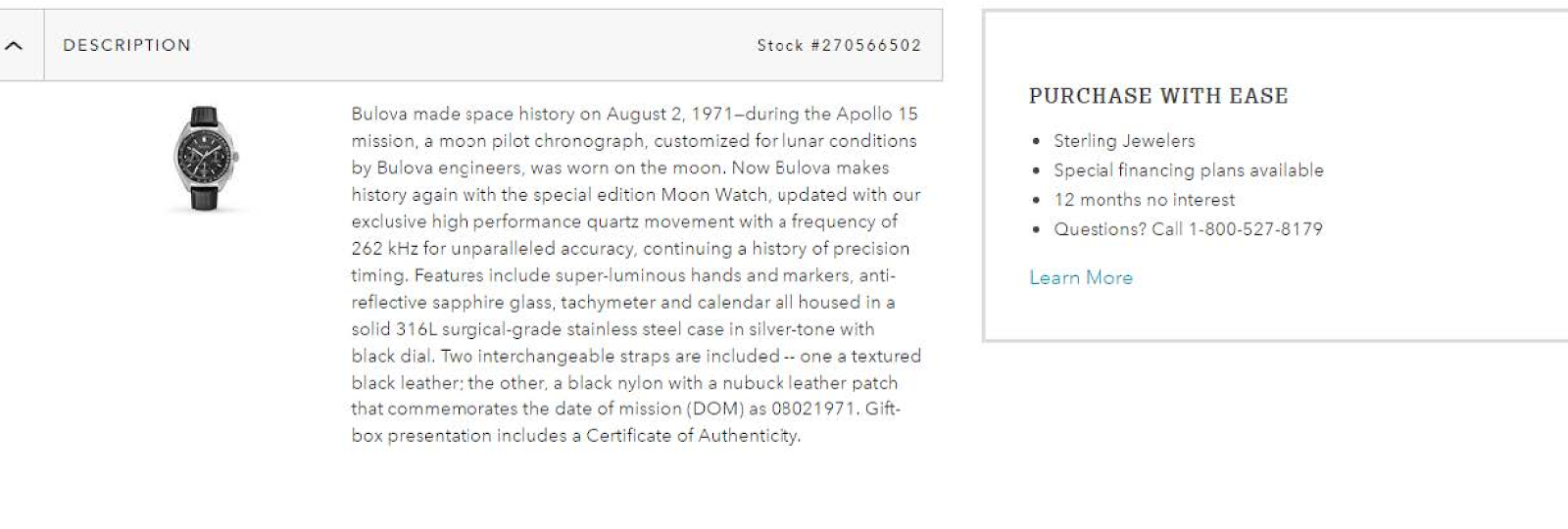
second and third versions of Bulova’s online description for the Moon Watch. The
second online description “strongly” evoked Scott’s success by stating: “After
Apollo 15’s mission commander made lunar history—while wearing his personal
Bulova chronograph—we’re making history again.” The third online description said
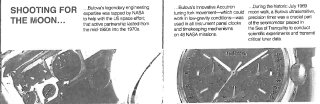
instead: “Bulova made space history on August 2, 1971—during the Apollo 15
mission, a moon pilot chronograph, customized for lunar conditions by Bulova
engineers, was worn on the moon.” This moved away from Scott and toward
Bulova’s own involvement in the historical event.  “Somewhere in that continuum there is a line.
While Bulova may legally showcase its legitimate connection to Apollo 15, the
Court cannot say as a matter of law that Defendants’ advertisements do not
cross the event horizon into the black hole of misappropriation.”
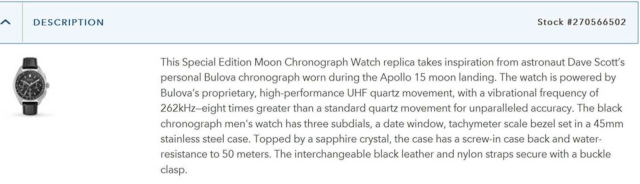
 

initial Bulova description

first revision

second revision

[I believe this test crosses the event horizon into inappropriate
vagueness.  Also, since California common
law protects identity, why doesn’t “was worn on the moon,” along with being
awkward and terrible phrasing, still evoke the astronauts’ identities?  Is it just that it doesn’t hint at who did
the wearing?  Given the other information
available—and wait for the Wikipedia bit—why wouldn’t that equally identify
Scott, especially given the various reviews of the watch (below)?]
But no: “Scott the astronaut, as distinguished from the
Apollo 15 mission or space exploration more generally, bears too tenuous a
connection to the non-speech commercial Moon Watch for the public interest
exception to shield Defendants from liability on summary judgment.”
Defendants argued that the marketing booklets included with
the watch’s packaging, the online watch descriptions, and the 79-second
advertising video contained significant transformative elements, making them
exempt from liability. They also argued Scott wasn’t “readily identifiable” in
the photograph of him on the moon.  The
court found that these weren’t sufficient grounds for summary judgment because
Scott identified other allegedly infringing materials.  And the court didn’t assess whether summary judgment
ought to be granted as to those uses,
which would seem to be the next logical question; the court said that the
result would be the same no matter what, but the result on what goes to the
jury would be very, very different, so this seems to me to be very different.
As for the other uses, Scott provided evidence that defendants
used his name and identity in interviews, press releases, internal
communications such as training materials, public Wikipedia page edits [are
these commercial speech now?], and a certificate of authenticity issued along with
the watch.
Likewise, the Lanham Act false endorsement claims involved disputed
material facts.  Scott’s most compelling
evidence was that “at least some consumers knew of Scott and his role in Apollo
15, were excited to buy the watch because of its connection to Scott, and may
actually have believed Scott endorsed the product.”  That last bit, by the way, is pure
extrapolation.

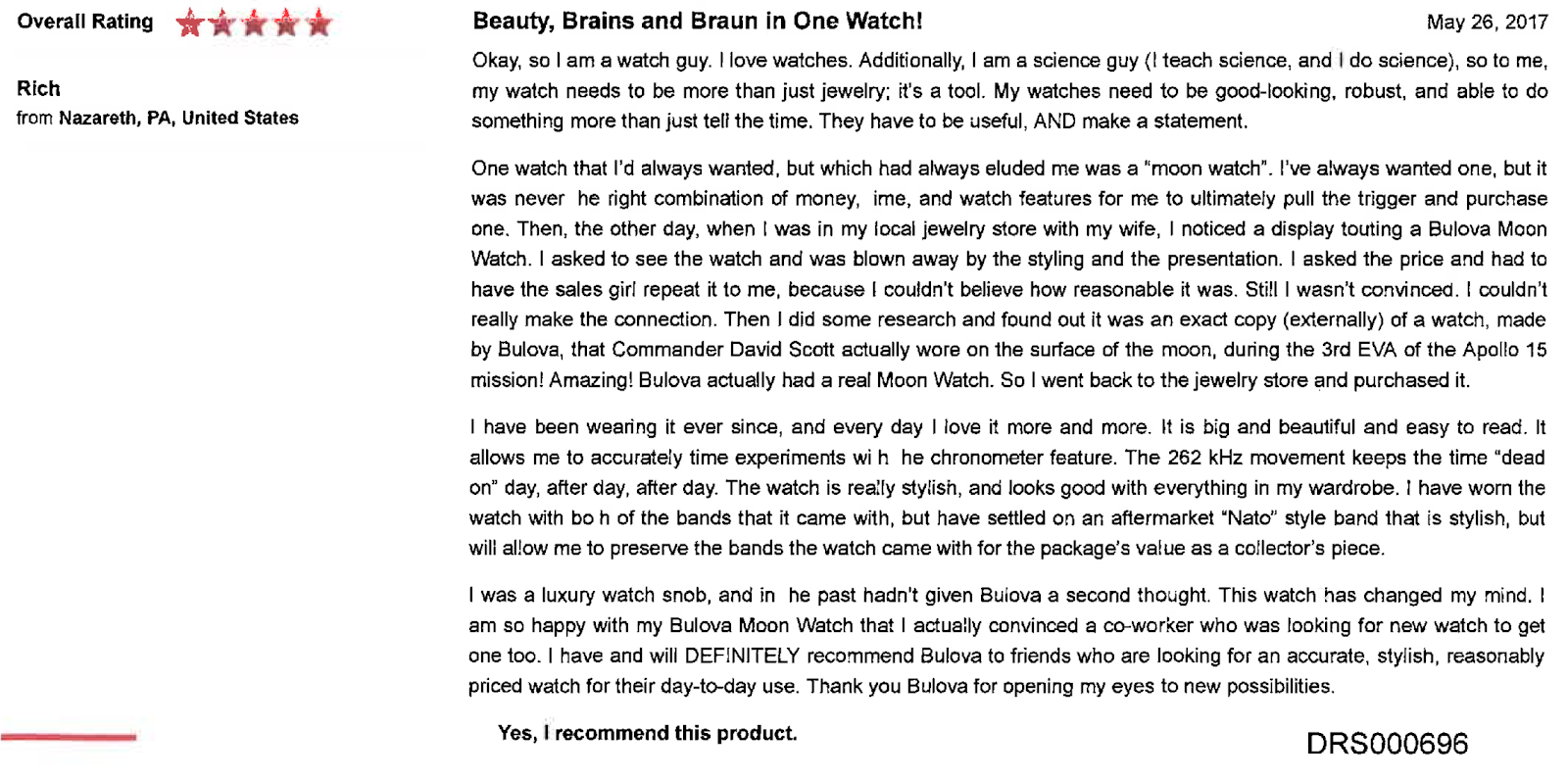
consumer reviews mentioning Scott

One consumer review on Bulova’s website reads, “[I] found out
[t]hat other than the NASA Swiss watch, one other watch had been worn on the
[m]oon by [t]he Commander of Apollo 15 ‘Dave Scott’ on EVA 2. The watch in
question was the Bulova 96B251 Moon Watch.” Similarly, a Facebook user referred
to the Moon Watch as the “Dave Scott Re-Edition.” “[I]t is entirely reasonable
to infer that Defendants’ reference to the Moon Watch, Apollo 15, and Scott in
the same breath could confuse consumers about Scott’s role in the Moon Watch’s
marketing,” especially since they used his exact name, title, and likeness. Also,
Bulova may have actively sought Scott out to serve as a “brand ambassador,”
suggesting intent.
Nominantive fair use was factually disputed for one really
bad reason and one unfortunate, but case-law-consistent, reason.  Bad reason: New Kids said that the test applies only “where the defendant uses
a trademark to describe the plaintiff’s product, rather than its own,” but defendants
used Scott’s identity to describe their own product, not Scott’s. That’s not an
accurate description of the New Kids
rule, in which the defendant’s product was a
poll about the New Kids
: talking about their own product meant talking about
the plaintiffs.  So too here.  The use is purely referential: this is the
watch that Dave Scott wore.  The use of
Scott is thus in reference to Scott himself, rather than trying to create a
different Scott mark (compare the analysis in the Grand Theft Auto/Play Pen case, where the court found no reference
to the plaintiff Play Pen).
Unfortunate reason, deepening the incoherence in case law:
Factor three of New Kids was disputed
because of evidence supporting a likelihood of confusion finding. “Scott offers
evidence that consumers may have believed Scott endorsed or sponsored the Moon
Watch, referring to it as the ‘Dave Scott Re-Edition’ and retelling in
favorable online reviews the story of Scott taking his personal Bulova
chronograph to the moon. Whether Defendants’ advertisements suggests sponsorship
or endorsement by Scott is a highly factual matter and not suitable for summary
judgment.”  But that’s not what factor
three started out as, even though other courts have done the same jiu-jitsu.  Factor three started out as whether the
defendant did anything else to suggest sponsorship, as in saying “official” or “authorized.”
 If likely confusion means that factor
three isn’t satisified, then New Kids
is neither a replacement for the ordinary confusion test (the formal 9th
Circuit characterization) nor a defense (because, as with KP Permanent, a defense that only works when there’s no confusion
isn’t actually a defense).
Also, Scott’s false advertising claim involved disputed
material facts.  Scott argued that the
characterization of the Moon Watch as a “replica” was false because the
internal components of the Moon Watch differ from the original chronograph and thus
the watch wasn’t a “100%” replica according to Bulova’s own witness. Scott testified
that he had been injured by being associated with a watch that he would not
endorse, and submitted an expert declaration that Scott has lost potential
income from future endorsement deals.  [The problem here isn’t injury, but injury causation: the lost income from future
endorsement deals, if any, isn’t plausibly connected to the falsity of any “replica”
related claims.]
However, Scott’s evidence of emotional distress was merely
his declaration stating, “I have suffered emotionally because people may now
believe I have abandoned my private life in favor of commercially promoting
products which is not how I wish to be perceived by the public,” and, “I feel
humiliated, embarrassed, and mentally distressed because of the new public
persona Bulova and Kay’s have forced upon me; an Apollo astronaut that endorses
products, let alone a cheap and deceptive product.” This wasn’t enough because “it
describes at worst discomfort with a social image Scott fears he may have,” not
distress that no reasonable person can be expected to endure. There was also no
evidence of intentional or reckless disregard by the defendants.

from Blogger https://ift.tt/2H5wjLF

Posted in Uncategorized | Tagged , , , | Leave a comment

make your own sexual reference: 9th Circuit partially reinstates male enhancement lawsuit

Sandoval v. PharmaCare US, Inc., No. 16-56301, No. 16-56710,
— Fed.Appx. —-, 2018 WL 1633011 (9th Cir. Apr. 5, 2018)
Sandoval brought a putative class action claim based on
PharmaCare’s statements about its “male enhancement” product IntenseX. The court
of appeals affirmed summary judgment on the false advertising and express
warranty claims based on the website, because reliance is required for those
claims and one named plaintiff testified that the website had no effect on his
purchase decision, while the other failed to submit sufficient evidence that he
viewed and relied on the website before his first purchase.
However, false advertising, express warranty, and implied
warranty of merchantability claims based on the IntenseX label were reinstated.
The label stated that the product would “intensify” a user’s “endurance,
stamina, and sexual performance,” and included a seal stating that IntenseX was
“Laboratory Quality Tested.” These were specific and concrete enough to be
treated as representations of fact.  “While
the word ‘intensify’ may have multiple meanings, when read in context, the
label’s statements could convey to a reasonable consumer that IntenseX will
increase the consumer’s endurance and stamina during sex and that its
effectiveness has been laboratory tested.”   Plaintiffs submitted evidence that lab tests
haven’t shown effectiveness.
The court of appeals also reversed summary judgment on the
UCL claim based on unlawfulness: PharmaCare’s alleged failure to comply with
federal law. A federal regulation requires any over-the-counter (“OTC”)
aphrodisiac drug to be approved by the FDA before marketing, and a product
marketed as a dietary supplement will be regulated as a drug “[i]f the label or
labeling of [the dietary supplement] bears a disease claim.” “Labeling” is
construed broadly and includes any article that “supplements or explains” the
product even if the article is not physically attached to it. The IntenseX
label refers consumers specifically to http://www.intensex.com, which contains information
about the ingredients’ ability to treat diseases. That was enough.
However, the court of appeals affirmed the denial of class
certification. The named plaintiffs’ claims weren’t typical of the proposed
class, “which included prospective members who, unlike [the named plaintiffs],
suffered sexual health problems and purchased IntenseX based on the website’s
representations that it can treat sexual-health conditions.” Along with
economic injury, these class members might have suffered additional harm (avoiding
medical treatment); their available claims and remedies, as well as their
incentives, might differ.

from Blogger https://ift.tt/2IFXkm2

Posted in Uncategorized | Tagged , , , | Leave a comment

Reading list: influencing juries in litigation hot spots

Megan M. La Belle, Influencing
Juries in Litigation “Hot Spots”
: The article argues that litigants and
attorneys sometimes use advertising to improperly sway the jury pool, sometimes
by making factual claims but sometimes by using image advertising to create
favorable background impressions, such as Samsung’s sponsorship of an ice rink
in Marshall, in the Eastern District of Texas. La Belle argues that this
conduct can violate the right to an impartial jury and thus can be regulated
despite the fact that the advertiser’s speech is non-false.  The examples are fascinating.

from Blogger https://ift.tt/2uTzBge

Posted in Uncategorized | Tagged , | Leave a comment

multi-million dollar award for trade secret theft & false advertising of “local” origin

Bimbo Bakeries USA, Inc. v. Sycamore, 2018 WL 1578115, No.
13-cv-00749-DN-DBP (D. Utah Mar. 29, 2018)
A relatively large trade secret/false advertising verdict in
this case.  Bimbo prevailed at trial on
its trade secret claim that Sycamore revealed Bimbo Bakeries’ secret recipe for
Grandma Sycamore’s brand “granny” style white bread, which U.S. Bakery obtained
and used in the production of its own granny bread. In addition, Bimbo
prevailed on its false advertising claim that U.S. Bakery’s use of the word
“local” in the tagline “Fresh. Local. Quality.” was misleading in markets,
including Utah, where U.S. Bakery’s bread was baked out of state.
The jury found that U.S. Bakery’s trade secret misappropriation
was willful and malicious (by clear and convincing evidence), and resulted in $1,578,942
in damages.  Syacamore was responsible $526,314
in damages, and the misappropriation was willful and malicious (by a
preponderance of the evidence).  The jury
also found that U.S. Bakery’s false advertising of “local” was willful and
resulted in $8,027,720 in profits (apparently all the profits from its sales
using the tagline, with no deductions).
The court declined to enhance damages on the false
advertising claim, because though the jury found actual damages, the verdict
form didn’t ask the jury to quantify those damages, at Bimbo’s request. Thus,
there was no basis on which the court could “enter judgment, according to the
circumstances of the case, for any sum above the amount found as actual
damages, not exceeding three times such amount,” as provided for in the statute—there
was nothing to multiply. Instead, the finding of actual damages allowed the
profit award.  The equitable factors
weighed in favor of disgorging profits, including (1) the jury’s finding that
the false advertising was willful, (2) evidence of Bimbo’s lost sales, (3) U.S.
Bakery’s direct role in marketing its products under the “Fresh. Local.
Quality.” tagline; and (4) the inadequacy of Bimbo Bakeries’ unquantified
actual damages.
The court declined to award attorneys’ fees for the false
advertising claim. This was not an “exceptional” case in terms of litigating in
an unreasonable manner, and the issues were close; U.S. Bakery “meaningfully
challenged” Bimbo on falsity and consumer confusion.
The trade secret award, however, did include exemplary
damages and fees due to the jury’s finding of “willful and malicious”
misappropriation. The court awarded a “less exacting” amount. Though the
misappropriation was willful and malicious and continued for nearly four years,
the issues were closely litigated and U.S. Bakery is the smaller company; nor
was a desire to harm Bimbo, apart from competing with it, shown.  The court also took into account the false
advertising disgorgement and awarded 50% of the compensatory damages, or
$789,471, along with reasonable attorneys’ fees.
The court also awarded a permanent injunction on the trade
secret claim, though the injunction did not extend to blocking U.S. Bakery from
producing a granny-style bread product as long as it didn’t use the trade
secret.

from Blogger https://ift.tt/2q87NQ9

Posted in Uncategorized | Tagged , , , | Leave a comment

“tougher” and “durable” aren’t puffery for shingles

Stern v. Maibec Inc., 2018 WL 1586323, No.
11-cv-3951(PGS)(TJB) (D.N.J. Apr. 2, 2018)
Maibec makes eastern white cedar shingles and offers a
50-year limited warranty against wood decay and a warranty against stain
failure. Its website touted eastern white cedar as “very durable and requires
very little maintenance.” Its brochures claimed: (1) “Timeless. Traditional.
And tougher than ever.”; (2) “At [M]aibec, we have spent the last four decades
improving the way white cedar shingles are made. Today, they are engineered to
be so durable that you just might consider them high tech.”; (3) “Best of all,
[M]aibec shingles are guaranteed to last”; and (4) “The fact that they are low
maintenance and look even better as they age is just an additional benefit.”
Plaintiff Stern alleged that she chose Maibec shingles over
a competitor’s based on her understanding that they offered the same warranties
and were maintenance free. She alleged that her shingles were warping, cupping,
and lifting three years after installation, and that a Maibec employee who inspected
her house concluded that the warping and other issues were not due to improper
installation. Plaintiff McCaffrey had a similar story.
As indirect purchasers, plaintiffs had no breach of contract
claims.  However, the court refused to
dismiss claims based on express warranties in Maibec’s ads. Maibec contended
that it never guaranteed “no maintenance” and the statements on its website
were mere puffery. The court identified “tougher than ever”; “they are
engineered to be so durable that you might consider them high tech”; and
“[they] are guaranteed to last” as statements that weren’t mere generalized
claims of superiority, but emphasized the shingle’s durability and low
maintenance.  These were objective
representations, not subjective. “Although not quantifiable, these statements
are not so grandiose or lofty as to be considered subjective; rather, these
statements leave a reasonable reader to expect the shingles to withstand the
elements of nature and last for an extended period of time.”  Nor were they incapable of influencing consumer
expectations due to how exaggerated they were.
Maibec next argued that the plaintiffs couldn’t show
reliance, since neither recalled reading or viewing the statements on the
website. However, they generally claimed to have relied on statements made on
Maibec’s website in deciding to purchase Maibec shingles. A reasonable
factfinder could find reliance.
Breach of implied warranty and merchantability claims failed
for lack of privity, which is required to recover for economic loss in New York.
 
GBL Section 349 claims were governed by a three-year statute
of limitations, and for its purposes, the injury occurs on the date that a
product is purchased, delivered, and installed. Thus, at least one plaintiff’s
claims fell outside the statute of limitations; further factfinding was
required for another, whose claims survived for the reasons noted above with
respect to the warranty claims.

from Blogger https://ift.tt/2uUytsm

Posted in Uncategorized | Tagged , | Leave a comment

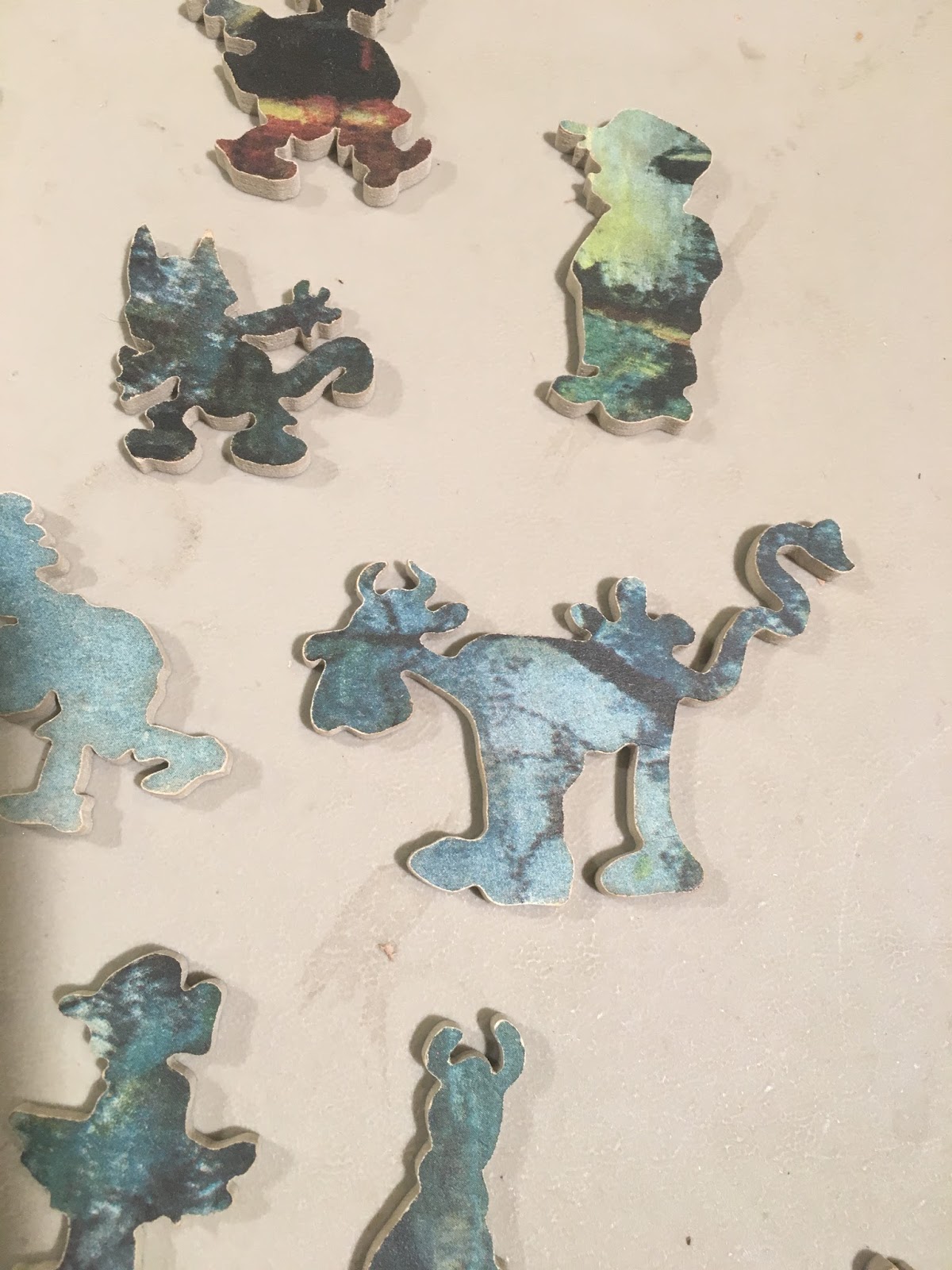
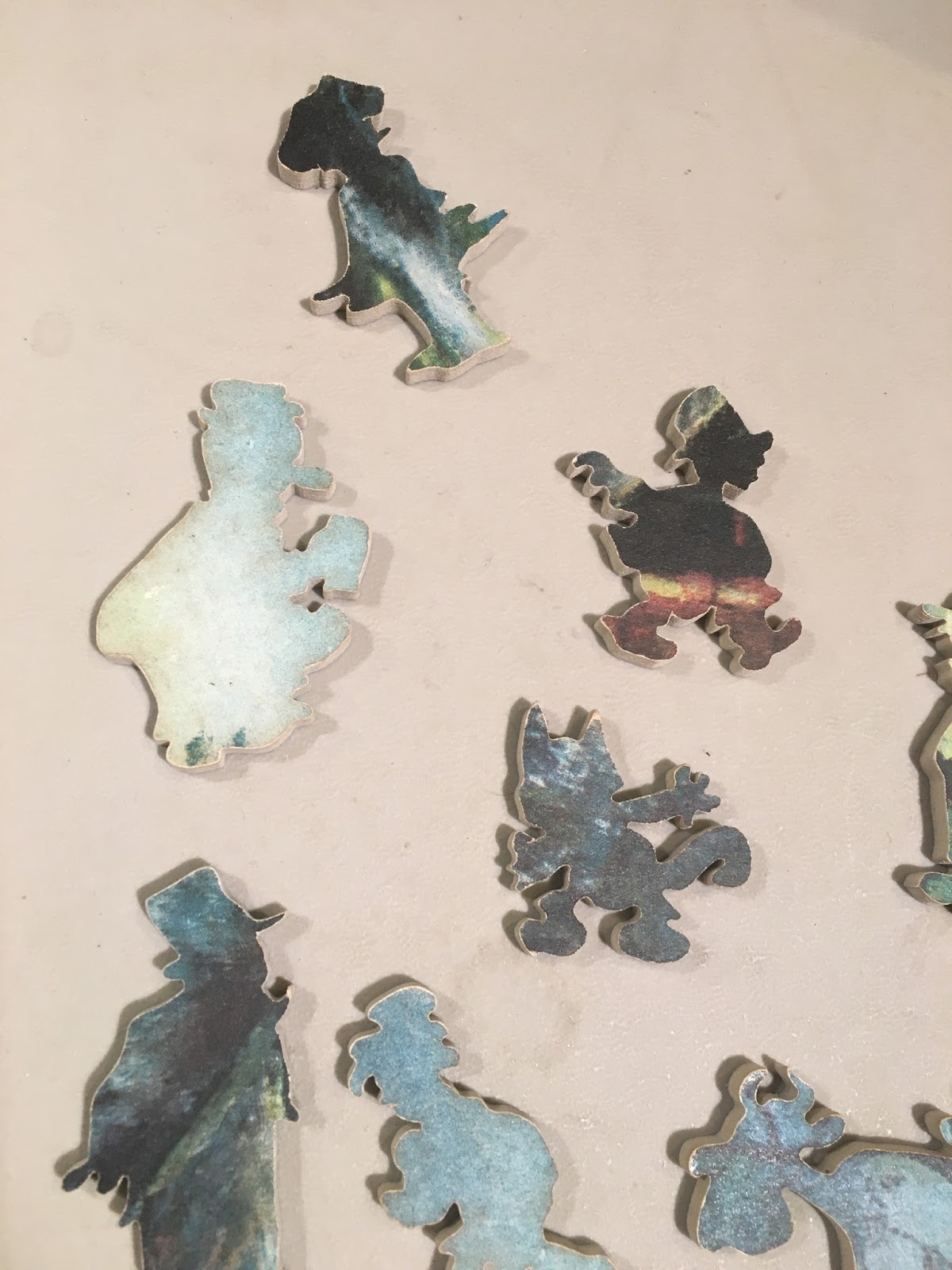
Puzzle/IP overlap with character figures

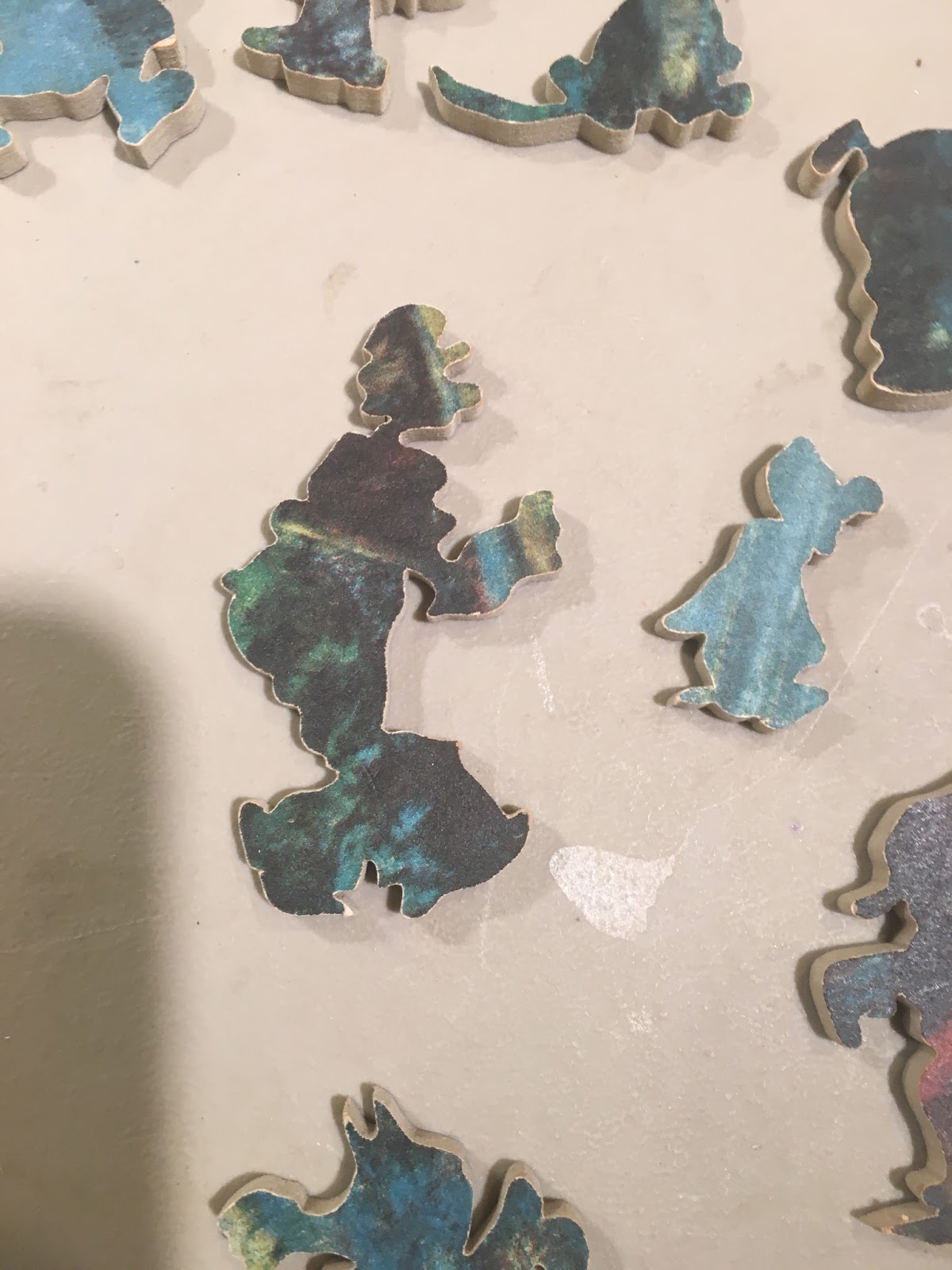
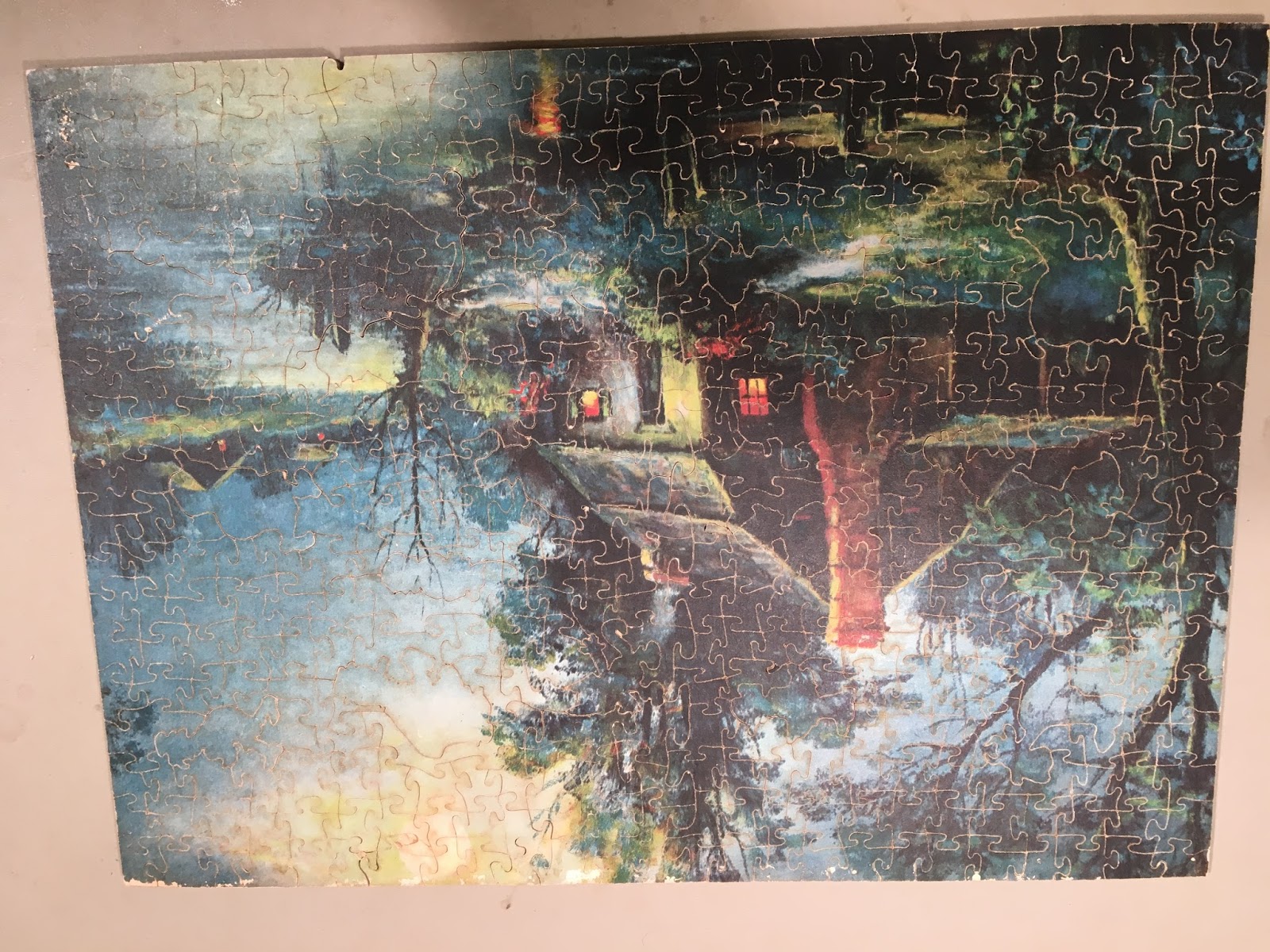
This delightful vintage puzzle contains whimsies in the shape of once popular cartoon characters–some I can ID, like Popeye, while others are more elusive.  Suggestions welcome.

Add caption

Upside down but complete

from Blogger https://ift.tt/2uIHAwe

Posted in Uncategorized | Tagged , | Leave a comment